
Emma Willard and the Evolution of Women's Higher Education
In the early 19th century, education for women was largely confined to "finishing schools," which focused on social graces and superficial skills designed to make women more appealing to men. Emma Willard challenged this status quo, arguing that women possessed the intellectual capacity to master rigorous academic subjects. Her lifelong commitment to educational reform fundamentally altered the landscape of female learning in the United States.
Willard's journey began in 1807 when she left Berlin and briefly worked in Westfield, Massachusetts, before becoming the principal of a female academy in Middlebury, Vermont, from 1807 to 1809. Dissatisfied with the limited material taught at the academy, she sought a more robust curriculum. Inspired by the advanced studies her nephew, John Willard, was pursuing at Middlebury College, she opened the Middlebury Female Seminary in her own home in 1814.
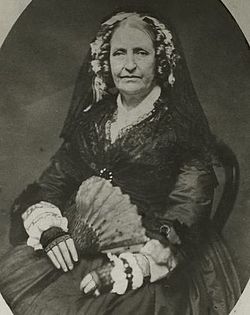
Challenging the Educational Status Quo
Willard believed that women should be taught mathematics and philosophy, subjects previously reserved for men. She rejected the contemporary notion that women did not require a scientific or literary education. This stance put her at odds with prominent figures of the era; for instance, Thomas Jefferson had suggested that women should avoid novels and excessive poetry, labeling novels a "mass of trash."
In 1819, Willard presented a pamphlet titled A Plan for Improving Female Education to the New York Legislature. In her speech, she criticized existing educational models for focusing exclusively on the "charms of youth and beauty" and preparing women solely to please others. She asserted that women are "primary existencies" rather than "satellites of men," and proposed that the state provide public funding for a women's seminary, mirroring the support given to men's schools.
The Establishment of the Troy Female Seminary
While many legislators dismissed her proposal as contrary to divine will, Willard found an ally in New York Governor DeWitt Clinton. Although she initially opened an institution in Waterford, New York, a lack of promised financial support forced her to relocate. She eventually moved her school to Troy, New York, where she secured the necessary funding and support.
The Troy Female Seminary opened in September 1821, serving both boarding and day students. It marked a historic milestone as the first school in the United States to offer higher education for women. The curriculum was a realization of Willard's vision, incorporating:
- Mathematics
- Philosophy
- Geography
- History
- Science
The institution was a resounding success. By 1831, enrollment had grown to over 300 students, primarily from wealthy or high-status families. While many of these women still entered domestic life as housewives, Willard continued to champion their right to an intellectual life.
Key Facts
- First Higher Ed: The Troy Female Seminary was the first U.S. school to provide higher education for women.
- Core Curriculum: Willard introduced rigorous subjects including philosophy, science, and mathematics to female students.
- Political Advocacy: She petitioned the New York Legislature in 1819 for publicly funded female education.
- Growth: By 1831, the Troy Female Seminary enrolled more than 300 students.
- Philosophical Stance: Willard viewed women as "primary existencies" rather than subordinates to men.
| Year | Event/Institution | Significance |
|---|---|---|
| 1807-1809 | Middlebury Academy | Served as principal; identified gaps in female curricula. |
| 1814 | Middlebury Female Seminary | Founded her own boarding school for girls. |
| 1819 | A Plan for Improving Female Education | Pamphlet presented to the New York Legislature. |
| 1821 | Troy Female Seminary | First U.S. institution for women's higher education. |
Frequently Asked Questions
What made the Troy Female Seminary unique?
It was the first school in the United States to offer higher education for women, moving beyond the basic social training of finishing schools to include science, mathematics, and philosophy.
How did Emma Willard view the role of women in society?
Willard believed that women were "primary existencies" and not merely "satellites of men," arguing that they possessed the intellectual capacity for rigorous academic study.
Did Emma Willard support the women's suffrage movement?
No. Despite her contributions to women's history, Willard did not support the suffrage movement in the mid-19th century, as she believed that women's education was a more critical priority.
Who supported Willard in establishing her school in New York?
After being ignored by the New York Legislature, she received essential support and an invitation to open her school from Governor DeWitt Clinton.
What was the primary goal of Willard's 1819 pamphlet?
The pamphlet sought to convince the New York Legislature to provide public funding for a women's seminary, similar to the funding provided for men's educational institutions.