
Enid News & Eagle: A History of Journalism in Enid, Oklahoma
The story of the Enid News & Eagle is a reflection of the growth and turbulence of Enid, Oklahoma. From its origins in the late 19th century to its current form, the publication has evolved through various ownerships, mergers, and dramatic historical events, serving as a primary record for the community for over a century.
The Early Years of the Eagle
The publication first entered the scene on September 22, 1893, as the Enid Weekly Eagle, established by C.E. Hunter. For the next several years, the paper underwent several transitions in leadership and naming. Between 1899 and 1900, W.I. Drummond published it as the Sun Eagle, and from 1900 to 1905, the Eagle Publishing Company returned it to a weekly format.
By September 1901, the Enid Publishing Company launched the Enid Daily Eagle, which operated as a weekday-only newspaper until 1989. During a brief window from December 12, 1987, to February 25, 1989, a Saturday edition was introduced under the name Enid News and Eagle. This title eventually became the permanent name of the publication in 1989.
Conflict and Competition: The Enid Daily Wave
The early press landscape in Enid was marked by fierce competition and political tension. On December 11, 1893, J.L. Isenberg launched the Enid Daily Wave (later renamed the Enid Morning News). Isenberg, a vocal Democrat, used his platform to express strong political opinions, which eventually led to a volatile conflict with R. W. Patterson, the Registrar of the United States Land Office.
The dispute began when Patterson favored a rival paper, the Tribune-Democrat, for advertisements rather than Isenberg's publication. In response, Isenberg published articles attacking Patterson. This tension culminated in a physical fight on June 26, 1895. When City Marshal E. C. Williams attempted to intervene, a shootout occurred, resulting in the deaths of both Williams and Patterson. Following the tragedy, Isenberg fled to Kingfisher and eventually relocated to California.
Despite this turmoil, the publication persisted, operating as the Enid Morning News from 1908 to 1916, and as the Enid Daily News from 1916 to 1923.
Consolidation and Family Legacy
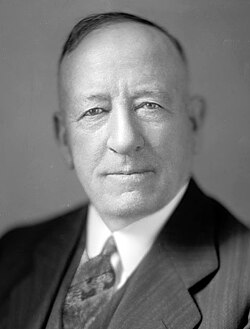
In February 1923, the competing papers merged to form the Enid Publishing Company. This era was defined by the leadership of Milton C. Garber, a former Enid Mayor and Oklahoma Congressman, who served as president and editor. He worked alongside William M. Taylor, the business manager and vice president, and co-owners Will and Edmund Frantz.
The Taylor and Garber families became the backbone of the company for three generations. Key figures who maintained the operation included John W. Taylor, Steve Taylor, Milton Garber, Jr., and Todd Garber.
Corporate Transitions and Modern Era
As the media landscape shifted toward corporate ownership, the News & Eagle changed hands several times. The Thomson Corporation acquired the paper in 1988, later selling it to Hollinger International in 1996. By 1999, Hollinger divested most of its smaller publications, and the Enid News & Eagle was acquired by Community Newspaper Holdings.
Today, the publication continues to cover local events and government actions, maintaining its role as a vital source of information for the region.

Key Facts
- Founded: September 22, 1893, as the Enid Weekly Eagle.
- Major Merger: The Enid Daily Eagle and Enid Daily News merged in February 1923.
- Key Figures: Milton C. Garber (Former Mayor and Congressman) and the Taylor family.
- Current Name: Enid News & Eagle (adopted in 1989).
- Current Owner: Community Newspaper Holdings (acquired in 1999).
| Period | Publication Name | Key Owner/Manager |
|---|---|---|
| 1893–1899 | Enid Weekly Eagle | C.E. Hunter |
| 1899–1900 | Sun Eagle | W.I. Drummond |
| 1901–1989 | Enid Daily Eagle | Enid Publishing Company |
| 1989–Present | Enid News & Eagle | Various (Current: Community Newspaper Holdings) |
Frequently Asked Questions
When was the Enid News & Eagle first established?
The publication began on September 22, 1893, originally as the Enid Weekly Eagle under the leadership of C.E. Hunter.
Who was Milton C. Garber?
Milton C. Garber was a former Mayor of Enid and an Oklahoma Congressman who served as the president and editor of the Enid Publishing Company following the merger of the city's primary papers in 1923.
What caused the conflict between J.L. Isenberg and R. W. Patterson?
The conflict arose from political tensions and a dispute over advertisement purchases. Isenberg expected preferential treatment from Patterson due to their shared Democratic affiliation, but Patterson favored a competing newspaper, leading to a series of denigrating articles and a fatal shootout in 1895.
Which corporations have owned the paper in recent decades?
The paper was acquired by the Thomson Corporation in 1988, sold to Hollinger International in 1996, and finally sold to Community Newspaper Holdings in 1999.
How did the paper transition to its current name?
The name Enid News & Eagle was first used for a Saturday edition between 1987 and 1989, before becoming the official name for the entire publication in 1989.