
Enrique Telémaco Susini: The Visionary Pioneer of Argentine Media
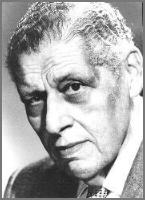
Enrique Telémaco Susini (1891–1972) was a true Renaissance man of the 20th century. An Argentine entrepreneur, medical doctor, and accomplished artist, Susini played a pivotal role in shaping the media landscape of South America. From launching the first regular radio broadcasts in Argentina to establishing a cinematic empire during the Golden Age of Argentine Cinema, his influence spanned across audio, visual, and telecommunications technologies.
Susini's journey was marked by an insatiable curiosity and a unique ability to blend scientific rigor with artistic passion. His legacy is not only found in the businesses he built but in the very foundation of Argentine broadcasting.
Early Life and Academic Foundations
Born in Buenos Aires, Susini was the son of Dr. Telémaco Susini, a professor of pathological anatomy and Argentina's first otolaryngologist (a specialist in ear, nose, and throat disorders). This familial connection to acoustics and hearing likely influenced his later fascination with radio.
A child prodigy, Susini earned his high-school diploma at age 14. While his father served as the Argentine consul in Vienna, Enrique attended the Vienna conservatory, where he trained in singing and violin. After brief studies in physics and chemistry in Berlin and Paris, he returned to Buenos Aires in 1909 to pursue medicine, graduating as a medical doctor in 1913 at the age of 22.
Following graduation, Susini explored journalism and the arts, helping found the Asociación de la Crítica (Association of theater critics) in 1915. He also served in the Argentine military, where he researched the effects of acoustic and electric stimuli on the human body and established a veterinary vaccine laboratory.
The "Locos de la Azotea" and the Birth of Radio
The spark for Susini's media career came in 1910 during a visit to Argentina by Nobel laureate Guglielmo Marconi. Marconi's successful telegraphic transmissions to Canada and Ireland inspired a community of young radio enthusiasts in Buenos Aires.
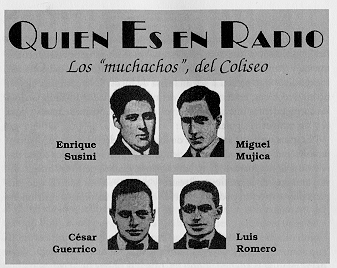
Susini, along with his nephew Miguel Mugica and friends Cesar Guerrico and Luis Romero Carranza, became central figures in this movement. They earned the nickname Locos de la Azotea ("the crazy people from the roof") because they frequently climbed tall buildings to install the long wire antennas required for early radio technology.
Driven by a shared love for music and theater, the group envisioned radio as a tool for cultural dissemination. During a research trip to France after World War I to study chemical warfare's effect on the respiratory system, Susini managed to procure and smuggle advanced radio hardware back to Argentina, providing the technical means to turn their vision into reality.
The Historic First Broadcast
On August 27, 1920, Susini and his team achieved a milestone. Using a 5W transmitter and a microphone originally designed for the hearing impaired, they broadcast a performance of Richard Wagner's opera Parsifal from the Teatro Coliseo. The transmission lasted three hours and was picked up as far away as Santos, Brazil.
This event marked the inauguration of regular radio broadcast service in Argentina. While not the first broadcast in the world, it established a consistent service that captured the public's imagination and earned commendation from President Hipólito Yrigoyen.
Expanding the Empire: Radio Argentina and Vía Radiar
Following the success of the first broadcast, the group founded Radio Argentina. In its early days, Susini acted as a one-man variety show, performing songs in five different languages—Spanish, French, German, Italian, and Russian—using different stage names to trick listeners into thinking there were multiple performers.
The station evolved through various partnerships, including a period as "LOR Broadcasting de Crítica," before Susini pivoted toward international communications. In 1927, he founded the Sociedad Anónima Radio Argentina, operating under the brand Vía Radiar. This company dominated short-wave radiotelegraphy between South America and Europe, utilizing relay stations in New York, Madrid, and Paraguay. In 1930, the company was sold to ITT for 200 million US Dollars.
Lumiton and the Golden Age of Cinema
In 1931, Susini transitioned into film, founding Lumiton (a name derived from luminosidad and tono, meaning light and sound). Lumiton became a powerhouse during the Golden Age of Argentine Cinema, utilizing a state-of-the-art studio and laboratory.
The studio released 99 films, including Los Tres Berretines (1933), the second sound film produced in Argentina. Susini himself directed several projects, including La chismosa (1938), which was entered into the Venice Film Festival. Lumiton continued its production of feature films until 1957.
A Lifelong Commitment to the Arts and Technology
Beyond his corporate success, Susini remained a dedicated artist. He served as the technical director of the prestigious Teatro Colón and directed operas at the Scala in Milan and the Teatro Reale in Rome. He authored over seventy plays and received the National Culture Award in 1951.
His pioneering spirit continued into his later years. In 1951, he served as the director of photography for Argentina's first television broadcast. In 1962, he founded TELPIN, a cooperative phone company in Pinamar that continues to operate today as a modern telecommunications provider.
Key Facts
- First Broadcast: Launched Argentina's first regular radio service on August 27, 1920.
- Educational Background: Medical doctor with formal training in music (violin and singing) from the Vienna conservatory.
- Cinema Legacy: Founded Lumiton, producing 99 films during the Golden Age of Argentine Cinema.
- International Business: Sold Vía Radiar to ITT in 1930 for 200 million USD.
- National Recognition: August 27 is celebrated annually as National Broadcast Day (Día de la Radiodifusión) in Argentina.
| Field | Key Entity/Achievement | Significance |
|---|---|---|
| Radio | Radio Argentina | First regular radio broadcast service in South America. |
| Telecommunications | Vía Radiar | Dominated short-wave traffic between Argentina and Europe. |
| Cinema | Lumiton | Major studio of the Golden Age of Argentine Cinema. |
| Theater | Teatro Colón / La Scala | Technical direction and acclaimed opera staging. |
| Telephony | TELPIN | Founded a cooperative phone company still in business. |
Frequently Asked Questions
Did Enrique Susini perform the world's first radio broadcast?
No. The honor of the first radio broadcast belongs to Enrico Marconi. However, Susini is credited with establishing the first regular radio broadcast service in Argentina and South America.
Who were the "Locos de la Azotea"?
They were a group of radio enthusiasts, including Susini, Miguel Mugica, Cesar Guerrico, and Luis Romero Carranza, nicknamed for their acrobatic efforts to install antennas on the roofs of tall buildings.
What was the significance of the Lumiton film studio?
Lumiton was one of the most modern studios of its time in Argentina, producing nearly 100 films and contributing significantly to the "Golden Age" of the country's cinema.
How did Susini's medical background influence his work?
His father was a pioneer in otolaryngology, and Susini himself researched acoustic stimuli on the human body during his military service, providing a scientific foundation for his work in audio and radio.
What is National Broadcast Day in Argentina?
Celebrated every August 27, this day commemorates the first radio broadcast performed by Susini and his team in 1920.