
Europe: A Comprehensive Overview of Geography, History, and Demographics
Europe is a continent of profound historical significance, diverse landscapes, and complex political structures. Spanning approximately 10,186,000 square kilometers, it serves as a central hub of global culture and economic activity. From the ancient civilizations of the Mediterranean to the industrial powerhouses of the north, Europe's influence is felt worldwide.
Understanding Europe requires looking at its physical makeup, its long and often turbulent history, and the modern demographic trends that shape its societies today. This article provides a detailed look at the continent's essential characteristics.
Key Facts
- Total Area: Approximately 10,186,000 square kilometers.
- Population: Over 745 million people (as of 2021).
- Economic Power: A global leader with a projected GDP (PPP) of $43.53 trillion by 2025.
- Major Languages: Russian, German, French, English, Italian, and Spanish are among the most common.
- Primary Religion: Christianity (76.2%), followed by non-religious populations (18.3%).
Geography and Climate
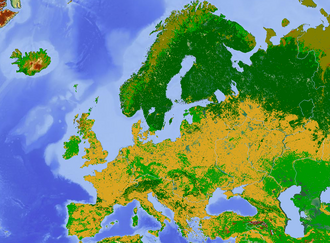
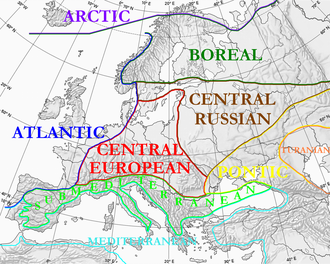
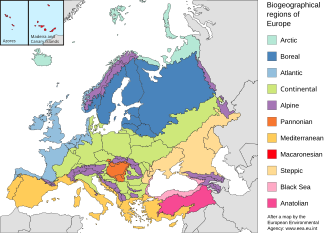
Europe's geography is characterized by a wide variety of biomes—large naturally occurring communities of flora and fauna. These range from the tundra and taiga (coniferous forests) in the north to the mediterranean forests and temperate broadleaf forests in the south.
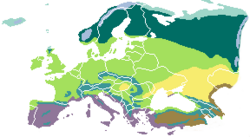
The continent's climate is highly varied, influenced by its latitude and proximity to various bodies of water. The Köppen-Geiger climate classification system helps categorize these regions, which include everything from subarctic conditions in the north to warmer, seasonal climates in the south.
![Köppen-Geiger climate classification map for Europe[242]](/images/0b/f2/0bf25273fb9df20d5251cd1c64976faca1427e9a05dcc941525620362db0cc17.webp)
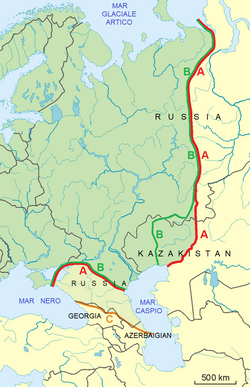
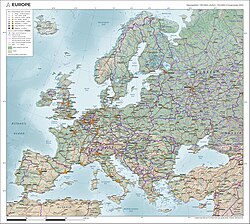
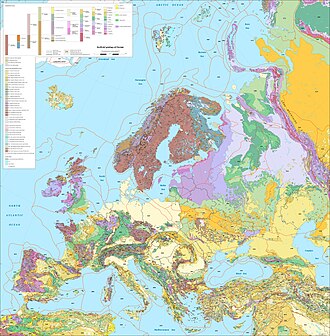
Geologically, the continent features diverse structures, including mountain ranges like the Urals and the Caucasus, which often serve as the boundary between Europe and Asia. The land use is also diverse, with significant areas dedicated to arable farmland, forests, and pastures.
| Metric | Value |
|---|---|
| Area (sq km) | c. 10,186,000 |
| Population (2021) | 745,173,774 |
| Population Density | 72.9/km² |
| GDP (Nominal, 2025 est) | $28.22 trillion |
| GDP (PPP, 2025 est) | $43.53 trillion |
| Human Development Index (HDI) | 0.845 |
Historical Evolution
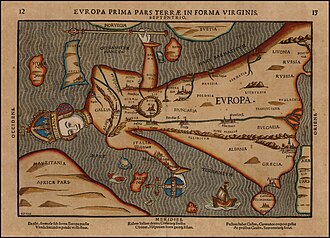
Prehistory and Classical Antiquity
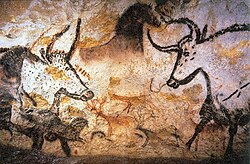
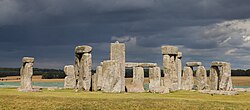
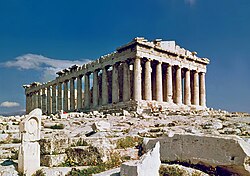
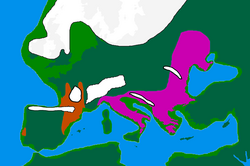
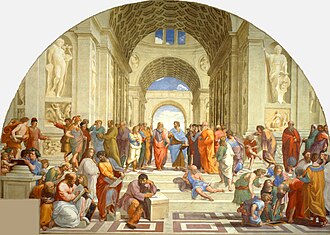
The roots of European civilization stretch back to the Paleolithic era, evidenced by ancient cave paintings. As human societies organized, monumental structures like Stonehenge and the Parthenon emerged, marking the transition into more complex social and political structures.
The Middle Ages and Early Modern Period
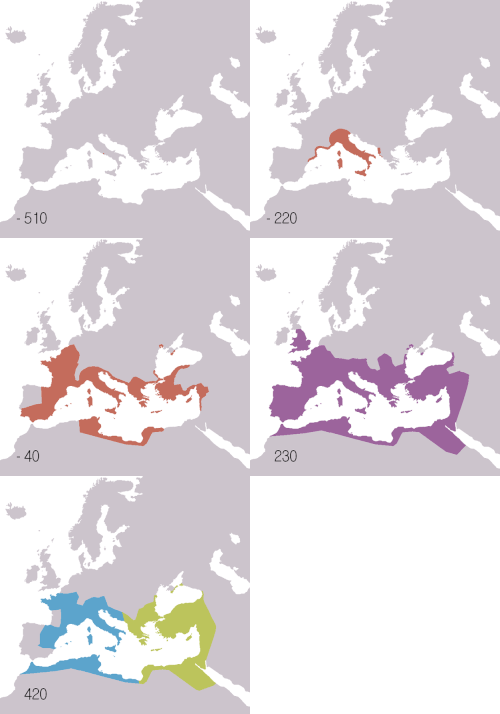
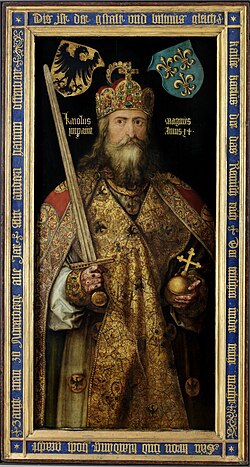
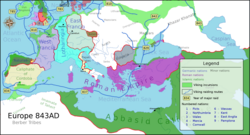
The history of Europe is marked by the rise and fall of empires. The growth of the Roman Empire provided a foundational structure for much of the continent, followed by the complex political landscape of the Middle Ages. Figures like Charlemagne, often called the "Father of Europe," played a pivotal role in shaping the territory and influence of the medieval period.
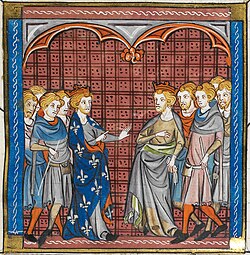
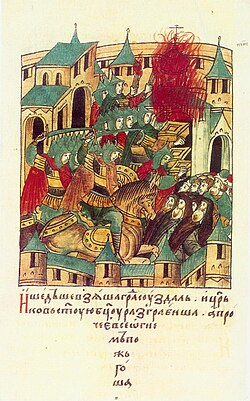
During the High and Late Middle Ages, maritime republics in Italy expanded trade networks across the Mediterranean, connecting Europe with Asia and Africa. However, the period was also marked by conflict, including the Mongol invasions and the Crusades.
![The maritime republics of medieval Italy reestablished contacts between Europe, Asia and Africa with extensive trade networks and colonies across the Mediterranean, and had an essential role in the Crusades.[97][98]](/images/14/00/14004a923371f99791d20b07f5692abeca65aaf18550a624e2158810bfd7b5bc.png)
The Industrial Revolution and Modern Era
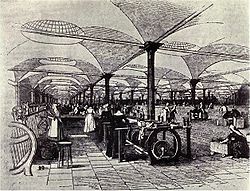
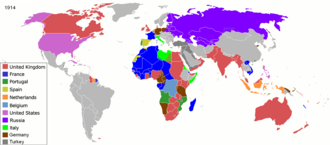
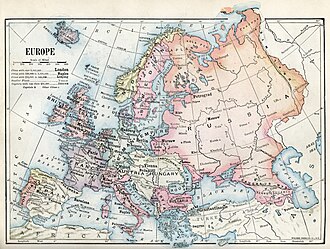
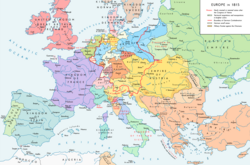
The 18th and 19th centuries saw the onset of the Industrial Revolution, which began in Great Britain and fundamentally transformed European economies and social structures. This era also saw the expansion of colonial empires and shifting national boundaries.
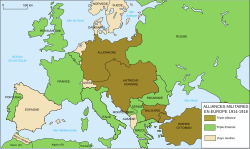
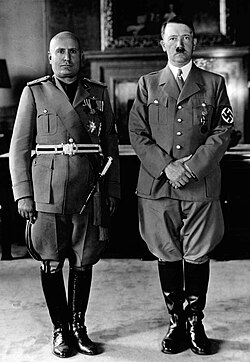
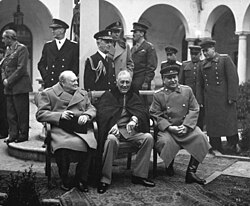
The 20th century brought unprecedented challenges, including the two World Wars. These conflicts reshaped borders, caused massive population shifts, and led to the eventual formation of new political alliances and international organizations.
Demographics and Modern Society
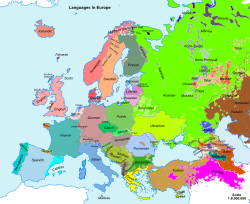
Today, Europe is a continent of diverse linguistic and religious groups. While Christianity remains the largest religious group, there is a significant and growing population that identifies as having no religion. The linguistic landscape is equally varied, with major languages such as Russian, German, and French spoken by millions.
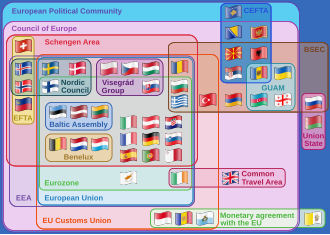
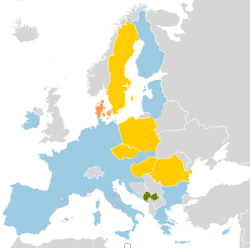
Economically, Europe remains a powerhouse. The continent contains some of the world's largest economies, with high levels of GDP per capita in many nations. The integration of many European states through organizations like the European Union has created a unique political and economic landscape.
Frequently Asked Questions
![Habsburg dominions in the centuries following their partition by Charles V, Holy Roman Emperor. The principal military base of Philip II in Europe was the Spanish road stretching from the Netherlands to the Duchy of Milan.[148]](/images/53/91/5391d68923b2780dbc9629ec12f514dbef3b262f7dc80b225abe4fdcadab94fb.png)
![Serbian war efforts (1914–1918) cost the country one quarter of its population.[196][197][198][199][200]](/images/66/93/669324cf4f74b2f68c38bfc1eaa00844bd317382ccdd174cbfdc8e2570c9e899.jpg)
![Flag of Europe, adopted by the Council of Europe in 1955 as the flag for the whole of Europe[223]](/images/c5/5d/c55dac59caee80fb34dd810c02dc95877154723e58c5a71b510f180f7e8c08ac.webp)
![Once roaming the great temperate forests of Eurasia, European bison now live in nature preserves in Białowieża Forest, on the border between Poland and Belarus.[253][254]](/images/08/02/0802e3fe2903902c92bb8bc58bf8b5a737c593b94307f6b00fc39143e8c99521.jpg)
![Democracy in Europe according to 2026 V-Dem Electoral Democracy Index with dark blue more democratic and dark red less democratic[256]](/images/34/e1/34e14f05be3b23b586dc1faa6511442a775ff8c5c53a5d057337411fbacd8d04.webp)
![One of Kosovo's main economical sources is mining, because it has large reserves of lead, zinc, silver, nickel, cobalt, copper, iron and bauxite.[275] Miners at the Trepča Mines in Mitrovica, Kosovo in 2011.](/images/10/9e/109e5dd82a634f61fd32b38724f5cad57a29237932baabdfe0bb6d4653c6dcec.jpg)
![Population growth in and around Europe in 2021[282]](/images/ad/1f/ad1f13ee54dc192a92654513e861cc5df1ed45315f1f2413ca6d5280fbac8f12.webp)
What are the largest cities in Europe?
Some of the largest urban areas in Europe include Moscow, Istanbul, London, Paris, Madrid, and Berlin.
How is the boundary between Europe and Asia defined?
The boundary is often defined by several different geographical markers, including the Ural Mountains, the Ural River, the Emba River, the Kuma–Manych Depression, and the Caucasus Mountains.
What is the most common religion in Europe?
Christianity is the most common religion in Europe, accounting for approximately 76.2% of the population.
Which languages are most widely spoken in Europe?
The most common languages include Russian, German, French, English, Italian, Spanish, Polish, Ukrainian, Romanian, Dutch, Serbo-Croatian, and more.
What is the economic status of Europe?
Europe is a major global economic force, with a projected nominal GDP of $28.22 trillion and a GDP (PPP) of $43.53 trillion by 2025.