
Fire Classifications and Material Hazards
Not all fires are created equal. Depending on the material fueling the blaze, the chemical reaction differs, meaning the method used to extinguish it must also differ. Using the wrong extinguishing agent can not only be ineffective but can actually exacerbate the danger, leading to explosions or electrical shocks. Understanding the classification of fires is essential for safety and effective emergency response.
Key Facts
- Class A fires involve ordinary solids like wood and paper and can be put out with water.
- Class B fires involve flammable liquids; using a solid stream of water can scatter the fuel and spread the fire.
- Class D fires involve combustible metals and require specialized dry powder agents, not standard dry chemicals.
- Electrical fires pose a severe shock risk; conductive agents like water or foam must never be used.
- Class F/K fires (cooking oils) have higher flash points and require smothering or specialized foam.
- Lithium-ion battery fires are electrochemical and can lead to thermal runaway, making them exceptionally difficult to extinguish.
Ordinary Flammable Solids (Class A)
Class A fires are the most common types of fires, involving organic materials such as wood, paper, fabric, rubber, and certain plastics. These materials typically leave an ash residue when burned.
These fires are generally extinguished using water, wet chemical suppression, or dry chemical powder.

Flammable Liquids and Gases (Class B and C)
Fires involving flammable liquids or liquefiable solids—such as petrol (gasoline), oil, paint, and some waxes—are categorized as Class B. In the European and Australian systems, these liquids typically have flash points (the lowest temperature at which a liquid gives off enough vapor to ignite) of no more than 93 °C (199 °F).
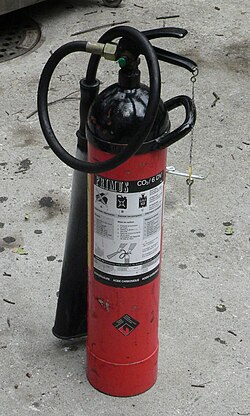
A critical safety warning: never use a solid stream of water on a liquid fire, as it can cause the fuel to scatter and spread the flames. The most effective methods include inhibiting the chemical chain reaction using dry chemicals or halogenated suppressants like FM-200. Carbon dioxide (CO2) and foam are also effective for smothering. While Halon was previously common, it is now largely restricted to aircraft systems due to its ozone-depleting properties under the Montreal Protocol.

Flammable Gases
Fires involving gases like natural gas, hydrogen, propane, and butane are classified as Class C in Europe and Australia, but grouped under Class B in the US. These are particularly dangerous because they are difficult to extinguish.
The primary strategy for gas fires is to stop the fuel flow by closing valves or displacing the oxygen supply. If the flame is extinguished while the gas continues to leak, an explosive atmosphere can form, risking reignition in other areas.

Combustible Metals (Class D)
Class D fires involve combustible metals, specifically alkali metals (lithium, potassium, sodium), alkaline earth metals (magnesium), and group 4 elements (titanium, zirconium). Some of these, such as sodium, can ignite spontaneously upon contact with air or water.
Metal fires are most hazardous when the metal is in the form of swarf (small chips or shavings), as the increased surface-area-to-volume ratio allows them to combust more rapidly than solid blocks.
Standard firefighting agents can make metal fires worse. The National Fire Protection Association recommends specialized dry powder agents—such as sodium chloride granules, graphite powder, or powdered copper—which work through heat absorption and smothering. It is vital not to confuse "dry powder" with "dry chemical" agents, as the latter can be ineffective or increase the fire's intensity. Sand may be used as a last resort, though moisture in the sand can cause a hazardous release of steam.


Electrical Fires
Electrical fires occur due to faulty wiring, deteriorated insulation, electrical arcing, or overheating components. In the US, these are Class C; in Australia, they are Class E. The European system focuses on the fuel being ignited rather than the electrical source.
The greatest risk in electrical fires is the conductivity of the extinguishing agent. Water and foam can create a conductive path from the power source through the firefighter to the ground, leading to fatal electric shocks.
Safe extinguishing agents include carbon dioxide (CO2), NOVEC 1230, FM-200, dry chemical powder, and baking soda. PKP (potassium bicarbonate powder) is considered a last resort due to its corrosive nature. Once the power is shut off, the fire typically reverts to an ordinary combustible fire.

Cooking Grease Fires (Class F/K)
Fires involving cooking oils and fats are categorized as Class F (Europe/Australia) or Class K (US). Although they are liquids, their higher flash points require different handling than Class B fires.
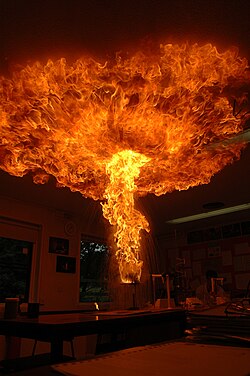
Water must never be used, as it can cause the burning oil to splash and spread. Specialized extinguishers turn the oil into a foam to smother the fire. Commercial kitchens often use automatic suppression systems in exhaust hoods triggered by fusible links.
When using a fire blanket, ensure it is heavy enough to cool the liquid below its autoignition temperature or does not act as a wick, which could cause the blanket itself to ignite. Using a solid lid to seal the container is the preferred method.
Lithium-ion Cells and Batteries
Lithium-ion battery fires are electrochemical. While they contain very little actual lithium metal, they pose a unique risk known as thermal runaway—a chain reaction where an increase in temperature leads to further heating, making the fire extremely difficult to extinguish.
Due to these risks, ISO 3941:2026 introduced Class L to recognize these hazards. This is why many airlines ban certain high-capacity handheld electronic devices.
Regulatory Status in Australia
As of 2026, Australian standards do not yet recognize lithium-ion battery fires as a separate class, nor do they have standardized testing for extinguishing agents for this hazard. Consequently, under ACCC mandatory safety standards, extinguishers sold in Australia cannot officially claim certification against Australian standards for lithium-ion fires.
Summary of Fire Classifications
| Class (Intl/US) | Fuel Type | Examples | Recommended Agents | Agents to Avoid |
|---|---|---|---|---|
| Class A | Ordinary Solids | Wood, Paper, Fabric | Water, Wet Chemical, Dry Chemical | - |
| Class B / C | Liquids / Gases | Petrol, Propane, Oil | CO2, Foam, Dry Chemical, FM-200 | Solid stream of water |
| Class D | Combustible Metals | Magnesium, Sodium, Lithium | Specialized Dry Powder (Graphite, NaCl) | Water, Dry Chemical |
| Class E / C | Electrical | Wiring, Circuitry | CO2, FM-200, Dry Chemical | Water, Foam |
| Class F / K | Cooking Fats | Vegetable Oil, Animal Fats | Wet Chemical, Specialized Foam | Water |
| Class L | Lithium-ion | EV Batteries, Scooters | Specialized Agents (ISO 3941:2026) | Standard agents (often ineffective) |
Frequently Asked Questions
Why can't I use water on a grease fire?
Water is denser than oil and will sink to the bottom of the pan, where it instantly vaporizes into steam. This rapid expansion ejects a plume of burning oil into the air, spreading the fire instantly.
What is the difference between dry powder and dry chemical extinguishers?
They are not the same. Dry chemical agents are used for Class A, B, and C fires. Dry powder agents are specifically designed for Class D metal fires. Using a dry chemical extinguisher on a metal fire can be ineffective or even increase the fire's intensity.
What is thermal runaway in lithium-ion batteries?
Thermal runaway is a process where an internal short circuit or external heat causes a battery cell to heat up, which then triggers neighboring cells to heat up in a self-sustaining cycle, leading to intense fire or explosion.
How should I handle a flammable gas fire if I can't turn off the valve?
If the gas source cannot be controlled, the priority is to manage the fire to prevent it from igniting other fuels. Extinguishing the flame while the gas is still leaking is dangerous, as it can create an explosive atmosphere that may reignite elsewhere.
Is a fire blanket safe for all liquid fires?
Not necessarily. If the blanket is too thin or made of a material that acts as a wick, the hot liquid can soak into the fabric and lead to the self-ignition of the blanket. A heavy blanket or a solid lid is preferred.