
Fitznells: A History of Transition in the 20th Century
Throughout the 20th century, Fitznells underwent a remarkable evolution, shifting from a sprawling agricultural estate to a center for musical education and eventually into a modern professional space. Its journey reflects the broader societal changes of the era, moving from rural farming to specialized institutional use.
From Farmhouse to Private Ownership
For the early part of the century, Fitznells operated as a traditional farmhouse. In 1927, the estate was purchased from the Gadesden family by S. E. Parkes of Modern Homes & Estates. At the time of this sale, the property was a significant landholding, encompassing 125 acres (0.51 km²), various farm buildings, and five cottages.
By 1930, the ownership shifted again when William Batho acquired the house and its immediate surrounding grounds, marking the beginning of the property's transition away from large-scale farming.
War-Time and Educational Use
The mid-century period saw Fitznells repurposed for public and educational needs. During the Second World War, the house was requisitioned—officially claimed by the government for public use—to serve as a clothing exchange.
Following the war, the building became a hub for the arts. It was occupied by the Surrey College of Music, which was also known as the Southern Music Training Centre. This tenure lasted until 1956, when the lease was terminated and the college closed its doors at this location.
The musical legacy of the house continued in 1959 when Anthony Carter and Vivienne Price purchased the property. They established the Fitznells School of Music, utilizing the ground floor for teaching while maintaining their private residence on the floor above.
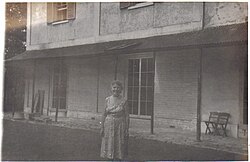
Corporate Transformation and Modern Use
In 1988, the property entered a corporate phase when it was purchased by Conifercourt Holdings Ltd. The company utilized the building as its head office and undertook extensive renovation works. These modifications were significant, transforming the structure into the appearance it retains today.
Currently, the building has transitioned once more to serve the local community, functioning as a doctor's surgery.
Key Facts
- 1927: Purchased by S. E. Parkes; estate included 125 acres and five cottages.
- 1930: Acquired by William Batho.
- WWII: Used as a government-requisitioned clothing exchange.
- Post-War: Home to the Surrey College of Music until 1956.
- 1959: Converted into the Fitznells School of Music by Anthony Carter and Vivienne Price.
- 1988: Purchased by Conifercourt Holdings Ltd for use as a head office.
- Current Status: Operates as a doctor's surgery.
| Year/Period | Owner/Occupant | Primary Use |
|---|---|---|
| Until 1927 | Gadesden Family | Farmhouse |
| 1927 | S. E. Parkes | Estate/Farm |
| 1930 | William Batho | Private Residence |
| WWII | Government | Clothing Exchange |
| Post-War – 1956 | Surrey College of Music | Music Training Centre |
| 1959 | Carter & Price | School of Music & Residence |
| 1988 | Conifercourt Holdings Ltd | Corporate Head Office |
| Present | Medical Practice | Doctor's Surgery |
Frequently Asked Questions
How large was the Fitznells estate in 1927?
In 1927, the estate consisted of 125 acres (0.51 km²), which included the main farmhouse, various farm buildings, and five cottages.
What happened to the house during World War II?
During the Second World War, the house was requisitioned by the authorities to be used as a clothing exchange.
Which educational institutions were based at Fitznells?
The house was occupied by the Surrey College of Music (Southern Music Training Centre) until 1956, and later by the Fitznells School of Music starting in 1959.
Who was responsible for the building's current appearance?
Conifercourt Holdings Ltd, who purchased the house in 1988, carried out the renovation works that gave the building its current look.
What is the current use of the Fitznells building?
The building is currently used as a doctor's surgery.