
Fords: The History and Mechanics of River Crossings
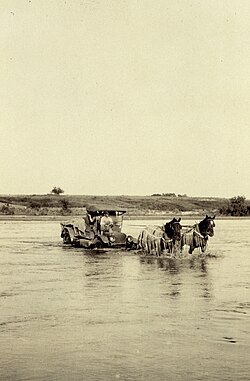
A ford is a shallow section of a river or stream that allows people, animals, or vehicles to cross by wading or driving through the water. While some fords occur naturally due to the geography of the riverbed, others are intentionally constructed to facilitate travel. Unlike bridges, fords are simple, cost-effective crossings, though they are subject to the whims of nature and can become impassable during floods or heavy rainfall.
The term "ford" serves as both a noun, describing the physical location of the crossing, and a verb, describing the act of crossing the water.
Key Facts
- Cost-Effective: Fords are significantly cheaper to establish than bridges.
- Weight Capacity: They can often support heavier loads than small bridges.
- Weather Dependent: High water levels can make fords dangerous or impassable.
- Global Presence: Common in the UK (over 2,000 fords), New Zealand, and historically across Europe and Asia.
- Strategic Value: Historically critical for military movements and the growth of trade towns.
Types of Water Crossings
Natural and Constructed Fords
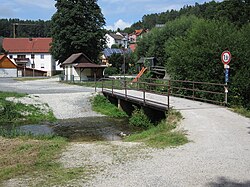
Natural fords exist where the river is inherently shallow. To improve these for vehicles, engineers may install a submerged concrete floor to prevent heavy machinery from sinking into soft riverbed material. To ensure safety, these constructed floors often include a downstream curb to prevent vehicles from slipping on algae-covered surfaces. Many fords also feature depth posts to warn drivers of water levels and adjacent footbridges so pedestrians can cross dryshod.
Low-Water Crossings
A low-water crossing is a hybrid structure—a bridge built so low that it remains above water during dry periods but becomes a ford when the river rises and covers the deck.
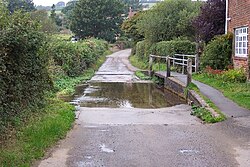
Watersplashes
A watersplash is a road that runs below the water level of a stream or river. While often used interchangeably with "ford," this term is common in certain regions of the UK and is frequently used in rally racing. In the United States, specifically on Tennessee backroads, these are sometimes called "underwater bridges." In historical British mandate areas of Israel, they were known as "Irish bridges."
The Impact of Fords on Geography and Language
Etymology and Placenames
Because fords were vital for trade and travel, many cities grew around them. The word "ford" and its linguistic cognates appear in countless city names globally:
- English: Oxford (oxen crossing), Hertford (deer crossing), Stafford, and Stratford.
- German: Furt (as in Frankfurt, the ford of the Franks, or Schweinfurt).
- Dutch: Voorde (as in Zandvoort or Amersfoort).
- Latin: Traiectum (crossing), which evolved into names like Utrecht and Maastricht.
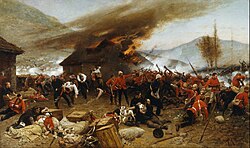
- Afrikaans: Drift, leading to names like Rorke's Drift.
- Slavic: Brod, seen in Slavonski Brod.
Military Significance
Historically, fords were strategic military chokepoints. Controlling a ford allowed an army to defend a river line or launch a surprise attack. This importance is reflected in the numerous famous battles fought at river crossings.
Summary of Ford Characteristics
| Feature | Ford / Watersplash | Bridge |
|---|---|---|
| Construction Cost | Low to None | High |
| Weight Limit | Generally High | Variable/Limited |
| Reliability | Weather Dependent | Consistent |
| Maintenance | Low (Concrete/Asphalt) | High |
Historical and Cultural Examples
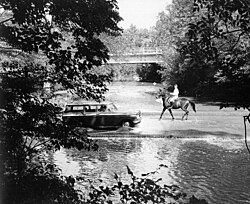
In the United States, the Milkhouse ford at Rock Creek in Washington DC was once a primary crossing before being superseded by bridges; it remained open to adventurous drivers until 1996.
Notable Battles at Fords
- Ancient/Medieval: Battle of Xiaoyao Ford (China), Battle of Fulford (1066), and Battle of Jacob's Ford (1179).
- Early Modern: Battle of the Boyne (1690) and Battle of the Yellow Ford (1598).
- American Civil War: Battles of Blackburn's Ford, Kelly's Ford, and Chancellorsville.
- Modern: Battle of Davydiv Brid (2022) during the Russian invasion of Ukraine.
Frequently Asked Questions
What is the difference between a ford and a fjord?
They are entirely different geographical features. A ford is a shallow river crossing, while a fjord is a long, narrow deep inlet of the sea between high cliffs.
Are fords safe for modern cars?
Many modern fords are shallow enough for cars, but they can be dangerous. In the UK, the AA reports that many flood-related vehicle breakdowns occur at fords when drivers underestimate the water depth.
What is a "watersplash"?
A watersplash is a specific type of ford where the road runs below the water level, creating a splash as vehicles pass through. They are popular features in rally racing.
Why are so many cities named after fords?
Fords were essential for trade and movement before bridges were common. Because they provided the easiest way to cross a river, settlements naturally grew around these strategic points.
How are fords improved for heavy vehicles?
Fords can be reinforced with a submerged concrete or asphalt floor to prevent vehicles from getting stuck in the mud or silt of the riverbed.