
Fort Hays State University: A History of Education and Growth
Fort Hays State University (FHSU) stands as a cornerstone of higher education in Kansas, evolving from a frontier-era initiative into a modern institution serving thousands of students globally. Its origins are deeply intertwined with the military and agricultural history of the American West, beginning as a vital resource for early settlers in a developing region.
The Early Years and Foundations
Founded in 1902, the institution originally began as the Western Branch of the Kansas State Normal School (now Emporia State University). A normal school—an institution created specifically to train teachers—was essential for providing professional educators to the growing population of the region. Over time, it was known as both the Fort Hays Kansas Normal School and the Fort Hays State Normal School.
The university was established on the grounds of Fort Hays, a frontier military outpost that had been closed in 1889. While it was initially founded as an agricultural-based school, it was later designated as a normal school, with the expectation that an agricultural experiment station would provide partial support. This agricultural legacy persisted for years, most notably through the University Dairy Unit, which supplied fresh milk to the school cafeteria.
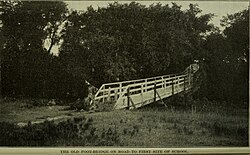
Although it started on the fort grounds, the university moved to its current location in 1904 following the completion of its first building closer to the city of Hays. To this day, the modern campus occupies a portion of the original military reservation.
Key Facts
- Founded: 1902 as the Western Branch of Kansas State Normal School.
- Location: Situated on the former site of Fort Hays, a military outpost closed in 1889.
- Campus Move: Relocated to its present site in 1904.
- Enrollment (2019): Approximately 15,100 total students.
- Academic Evolution: Transitioned from an agricultural focus to a normal school for teacher training.
Challenges and Institutional Evolution
Throughout its history, FHSU has faced significant environmental and administrative challenges. In 1951, the campus experienced the Great Flood, when Big Creek—a tributary of the Kansas River—overflowed, flooding nearly the entire campus and necessitating a midnight evacuation of students and staff.
The Dodge City Merger Proposal
In March 2014, a proposal was introduced to merge Dodge City Community College into Fort Hays State University. This move would have created the first public four-year degree-granting college in southwest Kansas, to be named Fort Hays State University at Dodge City. Under this plan, FHSU faculty would have taught four-year programs in Dodge City, while freshman and sophomore courses would have remained unchanged.
The proposal required a $10 million investment for a technical institute and $5 million in annual state funding, alongside approval from the Kansas Board of Regents, the state Legislature, and the governor. However, the plan collapsed on November 11, 2014, after the community college's Board of Trustees ended the proposal with a 3–3 tie vote, recommending instead that FHSU become an upper-division college and technical institute while Dodge City remained independent.
University Leadership and Growth
The university has been guided by a series of presidents since its inception, reflecting its growth from a regional normal school to a comprehensive university.
| President | Term of Office |
|---|---|
| William S. Picken | 1902–1913 |
| William A. Lewis | 1913–1933 |
| Clarence E. Rarick | 1933–1941 |
| Lyman D. Wooster | 1941–1949 |
| Morton C. Cunningham | 1949–1969 |
| John W. Gustad | 1969–1975 |
| Gerald W. Tomanek | 1975–1987 |
| Edward H. Hammond | 1987–2014 |
| Mirta M. Martin | 2014–2016 |
| Mike Barnett (acting) | 2016 |
| Andy Tompkins (interim) | 2016–2017 |
| Tisa Mason | 2017–present |
By 2019, the university's reach had expanded significantly through diverse delivery methods. Total enrollment reached approximately 15,100 students, consisting of 4,648 on-campus students, 6,882 online learners, and 3,570 students in the Chinese program.
Frequently Asked Questions
Where was Fort Hays State University originally located?
FHSU was originally located on the grounds of Fort Hays, a frontier military outpost that closed in 1889, before moving to its current location in 1904.
What is a normal school?
A normal school is an institution specifically designed to train teachers, which was the primary purpose of FHSU during its early years as a state normal school.
What happened during the Great Flood of 1951?
Big Creek, a tributary of the Kansas River, flooded nearly the entire FHSU campus, which forced the university to conduct a midnight evacuation.
Why did the merger with Dodge City Community College fail?
The merger collapsed on November 11, 2014, after the Dodge City Community College Board of Trustees voted 3–3 on a proposal that would have kept the college independent while making FHSU an upper-division college and technical institute in the city.
How many students were enrolled at FHSU in 2019?
As of 2019, the university had a total enrollment of approximately 15,100 students, including on-campus, online, and Chinese program participants.