
Frontiers Media: Editorial Controversies and Publishing Integrity
In the landscape of open-access academic publishing, Frontiers Media has become a focal point of intense debate. While the publisher aims to democratize scientific knowledge, it has faced a series of high-profile challenges regarding its editorial standards, the rigor of its peer review process, and the integrity of the research it publishes.
Key Facts
- Editorial Turmoil: In 2015, 31 editors were removed from Frontiers in Medicine and Frontiers in Cardiovascular Medicine following complaints of staff interference.
- High Acceptance Rates: Reports from 2017 suggested manuscript acceptance rates in some Frontiers journals were near 90%.
- Institutional Backlash: In 2023, Zhejiang Gongshang University and Inria issued warnings or restrictions regarding the use of Frontiers journals for performance evaluation.
- Paper Mill Concerns: A 2026 study indicated that over 20% of Frontiers cancer research papers were likely produced by fraudulent paper mills.
- Beall's List: The publisher was listed as a potential predatory publisher in 2015, a designation that sparked significant academic conflict.
Editorial Concerns and Systemic Issues
The internal management of Frontiers has been scrutinized by both editors and external watchdogs. In May 2015, a major rift occurred when the entire editorial boards of Frontiers in Medicine and Frontiers in Cardiovascular Medicine were removed. The editors involved alleged that Frontiers Media staff were violating core medical publishing principles by interfering with editorial decisions.
This incident led the Nature Publishing Group to terminate its collaboration with Frontiers, stating an intent to distance itself entirely from the publisher. Furthermore, critics have pointed to the publisher's internal software. Researchers cited in the 2018 book Pseudoscience: The Conspiracy Against Science claimed the system was designed to make rejecting papers nearly impossible by omitting a direct "reject" option for reviewers. While Frontiers maintained as of 2022 that reviewers can recommend rejection, concerns persisted.
By 2017, reports emerged that editors were being removed specifically for maintaining high rejection rates. This coincided with reports in Nautilus magazine suggesting an acceptance rate of nearly 90% across its journals.
Institutional and Academic Responses
The perceived decline in quality has led several institutions to take action. In January 2023, Zhejiang Gongshang University in China announced it would exclude Frontiers, MDPI, and Hindawi journals from researcher performance evaluations. Similarly, Inria released recommendations labeling Frontiers and MDPI as "grey-zone publishers," urging extreme vigilance regarding the quality of articles in Computer Science and Mathematics.
Recent data from 2024 highlighted a massive increase in the publication of special issue articles across Frontiers, MDPI, and Hindawi, which was associated with abnormally rapid acceptance times. Most alarmingly, a 2026 study found that more than 20% of papers in the field of cancer research published by Frontiers were likely the product of paper mills—unethical organizations that produce fraudulent manuscripts for a fee.
The Beall's List Conflict
In October 2015, Frontiers was added to Beall's List, a directory of potential predatory open-access publishers. This inclusion created a divide in the scientific community. Some researchers argued that the listing unfairly stigmatized honest work, while others, including Jeff Beall, argued that the publication of "fringe science" harmed the reputation of legitimate research.
The Committee on Publication Ethics (COPE) noted that while some editors were uncomfortable with Frontiers' processes, the publisher was transparent about its methods and remained a member of COPE. However, the conflict escalated until September 2016, when Frontiers demanded that Beall's university force a retraction of the claims. Beall eventually deleted the blacklist in January 2017, a move widely attributed to pressure from the publisher.
Controversial Research and Retractions
Frontiers has struggled with the publication of papers that challenge scientific consensus or utilize flawed methodologies. Notable examples include:
- Climate Change and HIV: A 2013 paper linking climate change denial to "conspiracist ideation" was retracted, leading to editor resignations. In 2014, a paper supporting HIV denialism was published; it was initially reclassified as an opinion piece before eventually being retracted.
- Vaccines and COVID-19: A 2016 paper linking vaccines to autism was retracted after critics noted it relied on a self-reported online questionnaire of only 415 mothers. In 2021, a paper on ivermectin and COVID-19 was rejected after provisional acceptance due to unsubstantiated claims.
- Lab Leak Theories: A 2022 study in Frontiers in Virology claimed a genetic sequence in SARS-CoV-2 proved the virus was manufactured. The study was derided by experts, including Yale professor Craig Wilen, who called it a "conspiracy theory" based on a misunderstanding of statistical likelihood.
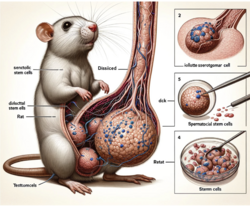
More recently, the rise of generative AI has introduced new failures in peer review. A 2024 paper in Frontiers in Cell and Developmental Biology was retracted after it was discovered that the figures were generated using Midjourney. The images contained garbled text and an anatomically incorrect diagram of a rat penis.
| Category | Key Event/Issue | Impact/Outcome |
|---|---|---|
| Editorial Management | Removal of 31 editors (2015) | Nature Publishing Group ended collaboration |
| Peer Review | Alleged 90% acceptance rate | Concerns over "show" reviews and paper mills |
| Institutional Trust | Zhejiang Gongshang University (2023) | Journals excluded from performance evaluations |
| Scientific Integrity | AI-generated figures (2024) | Retraction and criticism of reviewer naivety |
Frequently Asked Questions
Why was Frontiers Media included in Beall's List?
Frontiers was added to Beall's List in 2015 because it was identified as a potential predatory open-access publisher, with critics citing the publication of fringe science and a questionable review process.
What are "paper mills" and how do they relate to Frontiers?
Paper mills are fraudulent entities that create fake research papers for payment. A 2026 study found that over 20% of Frontiers' cancer research publications were likely produced by these mills.
How did the publisher handle the AI-generated image controversy?
A 2024 paper featuring AI-generated figures from Midjourney—which included garbled text and incorrect biological diagrams—was eventually retracted after being criticized by scientific integrity consultants.
What was the conflict between Frontiers and the Nature Publishing Group?
Nature Publishing Group ended its collaboration with Frontiers in 2015 after editors of Frontiers journals complained that the publisher's staff were interfering with editorial decisions.
Do all academic institutions trust Frontiers journals?
No. Some institutions, such as Zhejiang Gongshang University and Inria, have issued warnings or stopped including Frontiers articles in their researcher performance evaluations due to concerns over editorial quality.