
Gamal Abdel Nasser: The Architect of Pan-Arabism and Modern Egypt
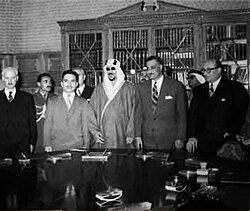
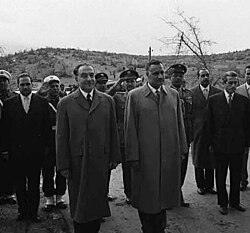
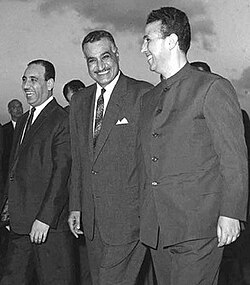
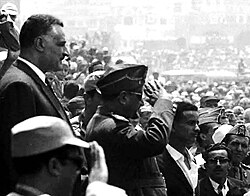
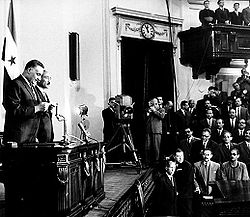
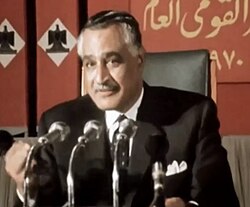
Gamal Abdel Nasser was a transformative figure in 20th-century geopolitics, serving as the second President of Egypt from 1954 until his death in 1970. A military officer turned statesman, Nasser became the face of Pan-Arabism—the ideology seeking to unify the Arabic-speaking peoples of the Middle East and North Africa—and a champion of the Non-Aligned Movement during the Cold War.
His journey from a lieutenant colonel in the Egyptian army to the leader of the Arab world was marked by revolutionary fervor, high-stakes diplomacy, and a relentless drive for national sovereignty.
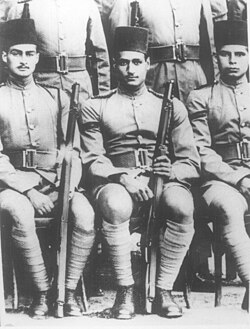
Key Facts
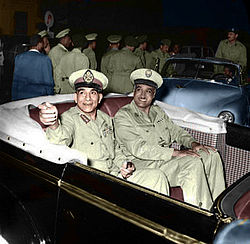
- Presidency: Served as President of Egypt from November 14, 1954, to September 28, 1970.
- Revolution: A key leader of the Free Officers Movement that ousted King Farouk in 1952.
- Major Achievement: Nationalized the Suez Canal Company in 1956, asserting Egyptian control over the vital waterway.
- Global Leadership: Served as the 2nd Secretary-General of the Non-Aligned Movement and Chairman of the Organisation of African Unity.
- Ideology: Promoted Arab Socialism and the unification of Arab states, most notably through the United Arab Republic.
Rise to Power and the 1952 Revolution
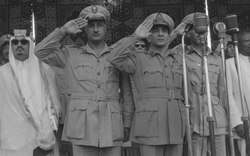
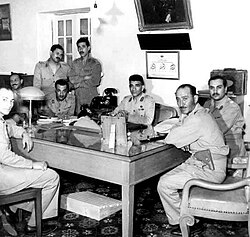
Nasser's political ascent began within the military. Having served in the 1948 Arab-Israeli War, he became disillusioned with the Egyptian monarchy. He co-founded the Free Officers, a secret group of military officers dedicated to ending British influence in Egypt and overthrowing the monarchy.
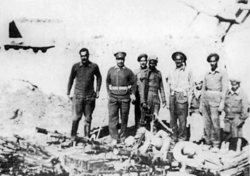
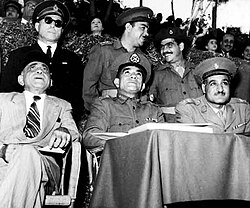
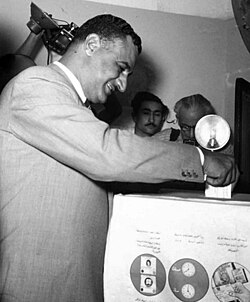
In July 1952, the Free Officers successfully executed a coup, leading to the ouster of King Farouk. While Mohamed Naguib initially served as the public face of the revolution, Nasser operated behind the scenes as the Chairman of the Revolutionary Command Council (RCC). Following a period of internal disputes with Naguib, Nasser consolidated power and officially assumed the presidency in 1954.
The Suez Crisis and National Sovereignty
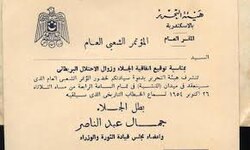
One of the most defining moments of Nasser's career was the 1956 Suez Crisis. In a bold move to fund the Aswan High Dam and challenge colonial remnants, Nasser nationalized the Suez Canal Company. This action triggered a military intervention by Britain, France, and Israel.
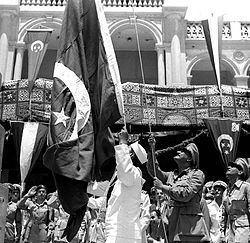
Despite the military pressure, international diplomatic intervention forced the invaders to withdraw. This outcome cemented Nasser's status as a hero of the developing world and a symbol of resistance against imperialism.
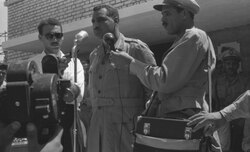
Pan-Arabism and the United Arab Republic

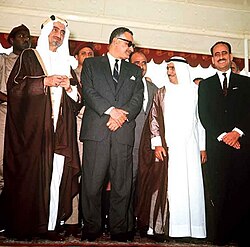
Nasser envisioned a unified Arab front to resist external influence and strengthen the region. This vision culminated in the creation of the United Arab Republic (UAR), a political union between Egypt and Syria. While the union eventually collapsed, Nasser continued to influence regional politics, supporting liberation movements in Algeria and Yemen.
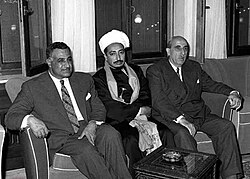
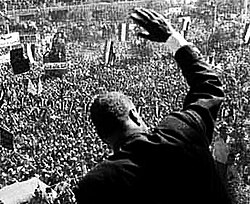
His influence extended beyond the Arab world. As a leader in the Non-Aligned Movement, he advocated for a "third way" for nations that wished to remain neutral during the ideological struggle between the United States and the Soviet Union.
Internal Reforms and Later Years
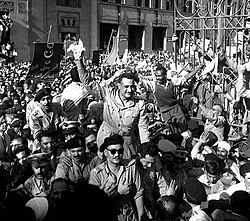
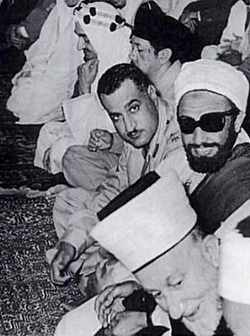
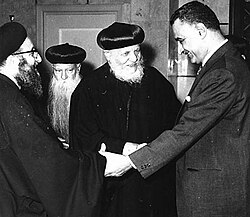
Domestically, Nasser implemented a series of socialist reforms under the Arab Socialist Union. He focused on land redistribution, industrialization, and expanding education and healthcare to the poor. He also maintained a complex relationship with religious institutions, including Al-Azhar Mosque.
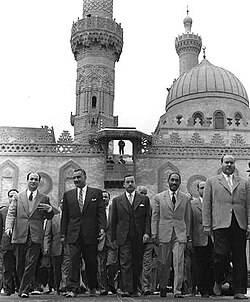
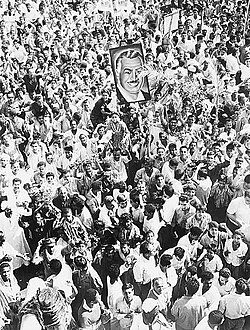
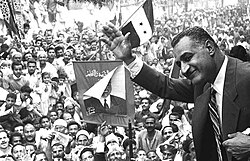
However, his later years were clouded by the devastating defeat of the 1967 Six-Day War. The loss of the Sinai Peninsula led to a wave of public grief and anger. Although Nasser briefly attempted to resign, massive public demonstrations urged him to remain in office.
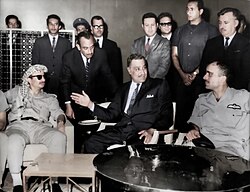
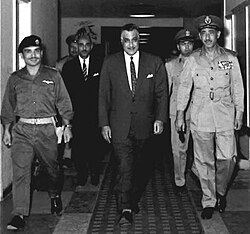
Nasser spent his final years overseeing the War of Attrition and attempting to broker peace between regional rivals, including the PLO and Jordan, before his sudden death on September 28, 1970.
Legacy and Death
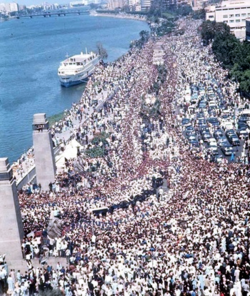
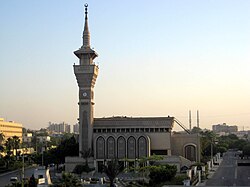
Nasser's death triggered an outpouring of grief unprecedented in the region, with an estimated five million people attending his funeral procession in Cairo. He was buried at the Gamal Abdel Nasser Mosque.
| Role | Period | Key Focus/Outcome |
|---|---|---|
| Chairman of the RCC | 1954–1956 | Consolidation of revolutionary power |
| President of Egypt | 1954–1970 | Nationalization of Suez Canal; Pan-Arabism |
| Secretary-General, Non-Aligned Movement | 1964–1970 | Cold War neutrality and global diplomacy |
| Chairman, Organisation of African Unity | 1964–1965 | African liberation and unity |
Frequently Asked Questions
What was the Free Officers Movement?
The Free Officers were a group of Egyptian military officers who organized a coup in 1952 to overthrow King Farouk and end British colonial influence in Egypt.
Why did Nasser nationalize the Suez Canal?
Nasser nationalized the canal in 1956 to assert Egyptian sovereignty and to use the canal's tolls to fund the construction of the Aswan High Dam.
What was the United Arab Republic?
The United Arab Republic was a short-lived political union between Egypt and Syria, established to realize Nasser's goal of Pan-Arab unification.
How did the Six-Day War affect Nasser's presidency?
The 1967 war resulted in significant territorial losses for Egypt. While it led to a temporary resignation attempt, the Egyptian public demanded he stay to lead the country's recovery.
Who succeeded Gamal Abdel Nasser?
Nasser was succeeded by Anwar Sadat, who had served as a member of the National Assembly and later departed significantly from Nasser's socialist and pan-Arabist policies.