
Game Gear: The History of Sega's Color Handheld Challenger
In the early 1990s, the handheld gaming market was dominated by a single monochromatic giant. Seeking to disrupt this status quo, Sega developed Project Mercury, which would eventually launch as the Game Gear. Designed as a portable evolution of the Master System, the Game Gear aimed to provide a premium, full-color experience that pushed the boundaries of what a handheld console could achieve.
The decision to enter the portable market was driven by Sega CEO Hayao Nakayama, with the final name approved by chairman Isao Okawa, cofounder David Rosen, and Sega of America CEO Michael Katz. The system debuted in Japan on October 6, 1990, followed by releases in North America and Europe in 1991, and Australia in 1992.
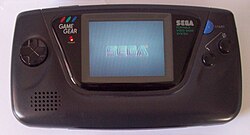
Key Facts
- Launch Price: ¥19,800 (Japan), US$149.99 (North America), and £99.99 (UK).
- Display: Full-color screen with a 4,096 color palette.
- Battery Life: 3 to 5 hours using six AA batteries.
- Compatibility: Able to play Master System games via the Master Gear adaptor.
- Total Sales: 10.62 million units by March 1996.
Design and Technical Specifications
Sega's primary goal was to outperform the Nintendo Game Boy. While the Game Boy utilized a monochromatic screen, Sega's hardware research and development head, Hideki Sato, viewed the competition's lack of color as a challenge to create a superior color handheld. To achieve this, Sega based the Game Gear's hardware on the Master System but significantly expanded the color palette from 64 to 4,096 colors, facilitating the easy conversion of existing Master System titles.
Ergonomics were also a priority. Sega modeled the Game Gear after the Genesis controller, utilizing curved surfaces and a longer frame to improve comfort. The physical mass of the device was carefully balanced to sit between the lightweight Game Boy and the heavier Atari Lynx.
Hardware Trade-offs
The pursuit of high-end graphics came with a significant cost: power consumption. The Game Gear required six AA batteries to operate, yet only lasted between three and five hours. In contrast, the Game Boy could run for over 30 hours on just four AA batteries. Despite this, the initial launch was a commercial success in Japan, selling 40,000 units in two days and generating over 600,000 back orders.
Marketing and Global Reception
Sega positioned the Game Gear as the "cooler," more mature alternative to the Game Boy. In North America, this took the form of aggressive advertising, including the "Sega Scream" and side-by-side comparisons that mocked Game Boy users. One 1994 advertisement famously suggested that only someone with a very low IQ or color blindness would prefer the competition.
These tactics drew criticism from Nintendo, who attempted to organize protests against Sega for insulting disabled people. Tom Kalinske, president of Sega of America, dismissed these efforts, suggesting Nintendo focus on improving its own products. In the UK, the marketing was slightly different, featuring a biker and the slogan "To be this good takes Sega." This approach proved effective, with the Game Gear's UK market share growing from 16% in January 1992 to 40% by December of that year.
| Feature | Sega Game Gear | Nintendo Game Boy |
|---|---|---|
| Display | Full-Color | Monochromatic |
| Battery Life | 3-5 Hours | 30+ Hours |
| Power Source | 6 AA Batteries | 4 AA Batteries |
| Hardware Base | Master System | Custom |
The Decline and Legacy
By the mid-1990s, Sega shifted its focus toward home consoles, specifically the Sega CD, 32X, and the 32-bit Saturn. The Game Gear's momentum was further stalled by the release of the Game Boy Pocket, which offered a smaller form factor and used AAA batteries. While the Game Gear sold 10.62 million units, it remained far behind the Game Boy, which sold ten times as many units.
Sega eventually released the Genesis Nomad in 1995—a portable version of the Genesis—though it was intended to supplement rather than replace the Game Gear. Official support for the Game Gear ended in 1996 in Japan and 1997 worldwide. However, the system saw a brief resurgence in 2000 when third-party publisher Majesco released a licensed version for US$30, offering new ports like Super Battletank before being discontinued in 2002.
Frequently Asked Questions
Could the Game Gear play games from other consoles?
Yes, the Game Gear could play games from the Sega Master System using a specific accessory called the Master Gear adaptor.
Why did the Game Gear have such poor battery life?
The Game Gear's powerful hardware and full-color screen required significantly more energy than the monochromatic Game Boy, resulting in a runtime of only three to five hours on six AA batteries.
What was the relationship between the Game Gear and the Genesis Nomad?
The Genesis Nomad was a portable version of the 16-bit Genesis. While it launched in 1995, Sega representatives initially stated that the Nomad and Game Gear were intended to co-exist rather than the Nomad replacing the Game Gear.
How did Sega market the Game Gear in North America?
Sega used aggressive "comparative advertising," positioning the Game Gear as a more mature and superior alternative to the Game Boy, often using the "Sega Scream" in their commercials.
Did the Game Gear ever return after its 1997 discontinuation?
Yes, Majesco released a licensed version of the system in 2000 for US$30, which remained available through 2001.