
Georgi Kinkladze: The Journey of a Georgian Football Maestro
Georgi Kinkladze remains one of the most enigmatic and technically gifted players to grace the English game. Known for his improvisation and flair, the Georgian playmaker's career spanned several countries and leagues, leaving a lasting impression on fans and teammates alike. From his early days in the newly independent Georgia to the bright lights of the Premier League, Kinkladze's journey was a blend of breathtaking brilliance and challenging setbacks.
Early Career and Rise in Georgia
Kinkladze's professional journey began in 1989 when he joined Mretebi Tbilisi, the first openly professional club in the Soviet Union. Making his debut at just 16, he quickly became a mainstay in the first team, helping the club win the Pirveli Liga in 1991 and earn promotion to the top flight.
His talent soon led him to Dinamo Tbilisi, where he won a league and cup double in his first season. However, the Georgian Civil War created an unstable environment, prompting the club to loan him to Germany's 1. FC Saarbrücken in 1994. While he struggled to settle in Germany, Kinkladze's domestic form remained stellar, and he was named the Georgian Player of the Year for 1993.
During this period, Kinkladze attracted international attention. After unsuccessful trials with Atlético Madrid and Real Madrid, and a brief loan at Boca Juniors—where he met his idol Diego Maradona—he returned to Dinamo Tbilisi. His performances against Wales, including a stunning 20-yard chip over goalkeeper Neville Southall, alerted scouts across Europe.
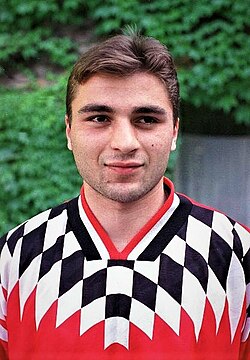
The Manchester City Years
On July 15, 1995, Kinkladze signed for Manchester City for a reported fee of £2 million. Despite the team's poor form during the 1995–96 season, Kinkladze quickly became a fan favorite. He initially struggled with homesickness and a language barrier, which was mitigated when his mother moved to Manchester to support him.
Kinkladze's time at City was defined by moments of individual genius. One of his most iconic goals came against Southampton on March 16, 1996, where he beat five defenders before chipping the ball over goalkeeper Dave Beasant. This effort won the BBC's "Goal of the Month" and finished second for "Goal of the Season." By December 1995, he was widely regarded as the star of the squad, even earning the "Best Opposing Player of the Season" vote from Middlesbrough supporters.
Struggles at Ajax and Return to England
In 1998, Kinkladze moved to the Dutch giants Ajax for £5 million. Intended as a replacement for Jari Litmanen, Kinkladze found himself out of place when Litmanen remained at the club. Forced into an unfamiliar left-wing role and clashing with manager Jan Wouters, Kinkladze struggled for playing time and suffered a series of injuries, making only 12 appearances in his first season.
Seeking a return to form, he joined Derby County on loan in November 1999, a move that later became permanent for a club-record fee of £3 million. While he provided flashes of brilliance—such as a solo goal against Leeds United—his tenure was marred by hernia and groin injuries. He also faced tactical friction under manager Colin Todd, who preferred a more rigid style over Kinkladze's flair.
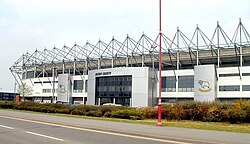
Despite the challenges and Derby's eventual relegation, Kinkladze's popularity remained high, and he was named the supporters' Player of the Year in 2003 before leaving the club.
Final Chapters: Cyprus and Russia
After a period without a club and a failed trial at Bolton Wanderers, Kinkladze joined Anorthosis Famagusta in Cyprus in 2004. Under player-manager Temuri Ketsbaia, he helped the club win the Cypriot championship and competed in the UEFA Champions League qualifying rounds.
His final professional stop was with Rubin Kazan in Russia. Initially successful, providing seven assists in nine appearances during 2005, his career was eventually cut short by recurring injuries. His final professional match took place on August 20, 2006, against Rostov. He officially retired shortly after, later working as a sports agent and sports director for Anorthosis.
Key Facts
- Professional Debut: Aged 16 with Mretebi Tbilisi.
- Manchester City Fee: Approximately £2 million in 1995.
- Ajax Transfer: Moved for £5 million in 1998.
- Derby County Record: Signed for a then-club record £3 million.
- International Success: Scored key goals for Georgia against Wales, Bulgaria, Moldova, and Lithuania.
- Honors: Georgian Player of the Year (1993) and Cypriot Champion with Anorthosis.
| Club/Team | Key Period | Notable Achievement/Event |
|---|---|---|
| Mretebi Tbilisi | 1989–1991 | Won Pirveli Liga and earned promotion. |
| Dinamo Tbilisi | 1992–1995 | Won league and cup doubles. |
| Manchester City | 1995–1998 | Became a cult hero; scored "Goal of the Month" vs Southampton. |
| Ajax | 1998–1999 | Struggled with position and injuries. |
| Derby County | 1999–2003 | Supporters' Player of the Year (2003). |
| Anorthosis | 2004–2005 | Won the Cypriot championship. |
| Rubin Kazan | 2005–2006 | Final professional club before retirement. |
| Georgia NT | 1992–2006 | Represented nation in World Cup and Euro qualifiers. |
Frequently Asked Questions
Why did Kinkladze leave Manchester City for Ajax?
Following ongoing transfer negotiations at the end of the season, Kinkladze moved to Ajax for a fee of £5 million, which also allowed him to reunite with his former teammate Shota Arveladze.
What caused Kinkladze's struggles at Ajax?
He was signed to replace Jari Litmanen, but when Litmanen stayed, Kinkladze was played out of position on the left wing. Additionally, a disagreement with manager Jan Wouters and a series of injuries limited his playing time.
Why did Bolton Wanderers decide not to sign him in 2004?
Manager Sam Allardyce felt that Kinkladze's style of play was too similar to Jay-Jay Okocha's, and he believed he could not accommodate both players in the same team.
How did Kinkladze's international career progress?
Kinkladze debuted for Georgia in 1992. He scored notable goals in victories over Wales, Bulgaria, Moldova, and Lithuania, becoming a key figure for the national side throughout the 1990s and early 2000s.
What happened to Kinkladze after his playing career ended?
After retiring in 2006, Kinkladze settled in Moscow and worked as a sports agent. He later returned to Anorthosis Famagusta to serve as the club's sports director from 2011 to 2012.