
Gigi: The Making of a Mid-Century Musical Masterpiece
The creation of Gigi was a complex journey of creative negotiation, financial hurdles, and artistic ambition. Based on a novella by Colette, the film evolved from a proposed musicalization into a lavish MGM production that captured the elegance of Belle Époque Paris—the ornate period of French history spanning from the late 19th century to the start of World War I.
Key Facts
- Producer: Arthur Freed of MGM.
- Writing Team: Alan Jay Lerner (screenplay and lyrics) and Frederick Loewe (music).
- Lead Cast: Leslie Caron as Gigi and Louis Jourdan as Gaston.
- Rights Cost: Over $87,000 paid to purchase rights from Gilbert Miller and Anita Loos.
- Key Location: Maxim's, a famous Art Nouveau restaurant in Paris.
- Musical Contribution: Maurice Chevalier's personal experiences inspired the song "I'm Glad I'm Not Young Anymore."
Development and Creative Hurdles
The project began in 1956 when producer Arthur Freed approached Alan Jay Lerner. The path to production was not easy; Freed had to navigate the Hays Code—the set of industry moral guidelines that governed motion picture content at the time—because the story focused on a courtesan-in-training.
Beyond censorship, there were legal obstacles. Colette's widower had sold the rights to Gilbert Miller, who intended to use a 1954 stage adaptation by Anita Loos. To secure the project, Freed spent more than $87,000 to acquire the rights from Miller and Loos.
The musical collaboration between Lerner and Frederick Loewe was initially hesitant. Loewe had little interest in working in Hollywood, but he eventually agreed after Lerner suggested they compose the score in Paris. This move proved fruitful, as the atmosphere of the city influenced the music.
Casting the Leads
Casting was a fragmented process. While Lerner initially favored Audrey Hepburn, she declined the role. Arthur Freed instead pushed for MGM contract star Leslie Caron. Although Caron had previously appeared in a stage version of Gigi, she accepted the film role after learning that Lerner's screenplay differed significantly from the play.
While Caron performed the role, her singing voice was dubbed by Betty Wand. For the role of Gaston, Louis Jourdan was cast after Dirk Bogarde was unable to break his contract with J. Arthur Rank. Maurice Chevalier was a natural fit for the role of Honoré Lachaille, a boulevardier—a sophisticated man of the city.
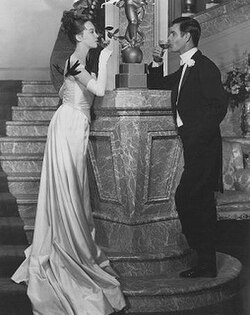
Filming in Paris and California
Production began in Paris in April, where director Vincente Minnelli faced challenging weather and a script that was still being refined. Lerner made significant changes to the original novella, elevating the character of Honoré to a major role while reducing the presence of Gigi's mother.
One of the most technically demanding sequences was filmed at Maxim's. The restaurant's mirrored walls created a logistical nightmare, reflecting cameras and lighting equipment. To solve this, cinematographer Joseph Ruttenberg used a low-light scheme and attached lights to the walls using suction cups to minimize the need for bulky stands.
The title song, "Gigi," was born from a moment of spontaneity. While Lerner was in the bathroom, Loewe began playing a melody on the piano. Lerner, hearing the tune, rushed into the room—trousers still at his ankles—to insist that Loewe play it again, cementing the film's signature theme.
Final interior scenes were shot in California. Due to Lerner's dissatisfaction with the original footage of Maxim's shot by Minnelli, the restaurant was recreated on a soundstage and reshot by director Charles Walters.
Musical Composition and Score
The film's music was a blend of new compositions and recycled ideas. "Say a Prayer for Me Tonight" was originally written for My Fair Lady but was cut before that show hit Broadway. "I Remember It Well" was adapted from lyrics Lerner had written for a 1948 collaboration with Kurt Weill called Love Life.
| Role | Person/Group |
|---|---|
| Music & Lyrics | Frederick Loewe & Alan Jay Lerner |
| General Music Supervisor/Conductor | André Previn |
| Principal Orchestrator | Conrad Salinger |
| Vocal Arrangements | Robert Tucker |
| Orchestra | MGM Studio Orchestra |
Frequently Asked Questions
Who provided the singing voice for Leslie Caron?
Leslie Caron's singing voice was dubbed by Betty Wand, although some DVD extras feature brief clips of Caron's own voice.
How was the title song "Gigi" created?
The melody was composed by Frederick Loewe on the piano while Alan Jay Lerner was in another room; Lerner recognized the quality of the tune immediately and insisted it be used as the title song.
Why was the Maxim's scene reshot in California?
Alan Jay Lerner was unhappy with the look of the scenes filmed on location by Vincente Minnelli, leading the production to recreate the restaurant on a soundstage for reshoots directed by Charles Walters.
What challenges did the production face regarding the Hays Code?
Producer Arthur Freed had to battle the Hays Code because the plot involved a young woman being trained as a courtesan, which was a sensitive subject for the era's censorship guidelines.
Which actress was originally considered for the role of Gigi?
Alan Jay Lerner originally favored Audrey Hepburn for the role, but she declined the part.