
Glasgow Mortality Gap and Public Health Challenges
For decades, the city of Glasgow has faced a persistent and troubling public health crisis known as the mortality gap. While health disparities exist in many urban centers, the scale of excess deaths in Glasgow is uniquely severe. This phenomenon, which became apparent around 1950 and has widened since the 1970s, has led observers to describe the city's health crisis as a pervasive and damaging force affecting the lungs and lives of its residents.
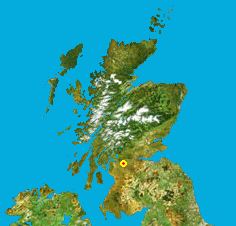
The geographical context of these challenges is critical to understanding the scale of the issue within the broader Scottish and European landscape.
Key Facts
- Life Expectancy: In greater Glasgow, male life expectancy (71.6 years) is nearly seven years below the national average.
- Regional Comparison: Premature deaths in Glasgow are over 30% higher than in cities with similar deprivation profiles, such as Liverpool and Manchester.
- Health Status: Approximately 43% of adults in the city are classified as chronically ill or disabled.
- Mortality Drivers: Key causes of death include cardiovascular disease, stroke, respiratory disease, cancer, violence, suicide, and substance abuse.
- Drug Crisis: Drug-related deaths across Scotland more than doubled between 2006 and 2016.
Life Expectancy and Regional Disparities
Mortality rates in Glasgow are among the highest in the United Kingdom and Europe. As of 2016, life expectancy for both men and women in Scotland was lower than in any other western European nation, with a slower rate of improvement compared to its neighbors.
In the greater Glasgow area, which has a population of 1.2 million, the gap between local and national averages is stark. Men have a life expectancy at birth of 71.6 years, compared to the national average of 78.2. Women in the city have a life expectancy of 78 years, which is over four years below the national average of 82.3.
The Case of Calton and Bridgeton
Specific neighborhoods illustrate the extreme end of these disparities. A 2008 World Health Organization report noted that between 1998 and 2002, male life expectancy in the Calton area was just 54 years. While local medical professionals attributed this to a violent gang culture and substance abuse, researchers from the Glasgow Centre for Population Health suggested the figure was influenced by a small sample size of 2,500 people and the presence of hostels for adults with mental health and addiction issues.
Later estimates from 2008–2012 for the combined Calton and Bridgeton areas showed an increase, with male life expectancy rising to 67.8 years and female life expectancy at 76.6 years, coinciding with increased ethnic diversity and a reduction in the number of hostels.
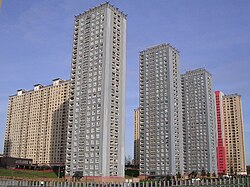
Comparative Analysis of Urban Deprivation
Research led by David Walsh in 2010 compared Glasgow to other major UK cities. The study found that while the deprivation profiles—the socio-economic characteristics of poverty and lack of resources—of Glasgow, Liverpool, and Manchester were almost identical, the health outcomes differed significantly. Premature deaths in Glasgow were over 30% higher, and all-cause mortality was roughly 15% higher across nearly the entire population.
This excess mortality is driven by a combination of chronic diseases and external causes. Respiratory and cardiovascular diseases, strokes, and cancer are primary contributors, alongside a high prevalence of suicide, violence, and deaths related to drugs and alcohol.
| Demographic | Greater Glasgow Life Expectancy | National Average Life Expectancy | Difference |
|---|---|---|---|
| Males | 71.6 years | 78.2 years | -6.6 years |
| Females | 78.0 years | 82.3 years | -4.3 years |
Morbidity and Mortality Trends
Beyond life expectancy, the general health of the population, or morbidity (the condition of being diseased), is a major concern. A 2016 study revealed that 43% of adults in the city are either disabled or chronically ill. Furthermore, the all-cause mortality rate for the 15–44 age group stands at 142.4 deaths per 100,000 people.
The crisis is further compounded by rising suicide rates compared to 1968 levels and a dramatic surge in drug-related fatalities, which more than doubled across Scotland between 2006 and 2016.
Frequently Asked Questions
What is the Glasgow mortality gap?
The mortality gap refers to the significantly higher death rates and lower life expectancy in Glasgow compared to other UK cities with similar levels of deprivation, as well as the gap between Glasgow's life expectancy and the national average.
How does Glasgow's life expectancy compare to the UK average?
In greater Glasgow, men live to an average of 71.6 years (6.6 years below the national average) and women live to 78 years (4.3 years below the national average).
Why was the life expectancy in Calton reported as low as 54 years?
A 2008 WHO report cited this figure for males between 1998–2002. While attributed to gang violence and substance abuse, researchers noted the figure may have been skewed by the presence of hostels for people with mental health and addiction problems in a small population sample.
Which health conditions contribute most to Glasgow's excess deaths?
The higher mortality rates are primarily fueled by cardiovascular disease, stroke, respiratory disease, and cancer, as well as deaths resulting from suicide, violence, drugs, and alcohol.
How does Glasgow compare to cities like Liverpool and Manchester?
Despite having nearly identical deprivation profiles, Glasgow experiences premature deaths that are over 30% higher and overall deaths that are approximately 15% higher than those in Liverpool and Manchester.