
Gojko Mitić: The Iconic Star of DEFA Native American Films
Gojko Mitić rose from a humble farming background in Southern Serbia to become one of the most recognizable faces of European cinema, particularly within the German Democratic Republic (GDR). Known for his athletic prowess and commanding screen presence, Mitić specialized in portraying Native American chiefs, bringing a unique level of authenticity to the "Indian films" of the mid-20th century.
Early Life and Education
Mitić was born into a farming family in Strojkovce, a village near Leskovac on the Veternica river in what was then the Kingdom of Yugoslavia (modern-day Serbia). His childhood was shaped by the events of World War II; because his father, Živojin, participated in the liberation struggle with the Yugoslav partisans, Gojko and his brother Dragan were raised by their grandparents.
After completing his schooling, which included four years of German language studies, Mitić enrolled in the Sports University in Belgrade at age 20. It was during his sports studies that he first encountered the film industry. At the time, Yugoslavia was a popular hub for international productions, and students from the Belgrade Sports University were frequently hired as extras.
Rise to Cinematic Fame
Mitić's professional journey began in 1961 as a stuntman for British and Italian productions. His breakthrough came in 1963 with a small role in Old Shatterhand, produced by Artur Brauner. His athletic build caught the attention of producers, leading to a more significant role as Wokadeh, the chief's son, in the film Unter Geiern. In these early German productions, he was credited as "Georg Mitic."
The DEFA Era and Global Popularity
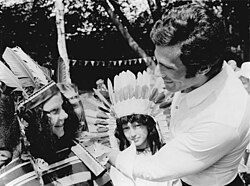
The turning point in his career occurred in 1966 when the DEFA (the state-owned film studio of the GDR) cast him in his first leading role as the Lakota chief Tokei-ihto in The Sons of the Big Bear. The film was a massive success, drawing nine million viewers in the GDR alone.
This success launched a prolific era where Mitić became the face of the "DEFA Indian" genre. Between 1967 and 1983, he portrayed a diverse array of leaders, including:
- Chingachgook (Mohican, 1967)
- Far-sighted Falcon (Dakota chief, 1968–1969)
- Shave Head (Shoshone, 1970)
- Osceola (Seminole, 1971)
- Tecumseh (1972)
- Ulzana (Apache chief, 1973–1974)
- Harter Felsen (Cheyenne, 1975)
- Severino (Manzanero, 1978)
- White Feather (Nez Percé, 1983)
Mitić's appeal extended beyond Eastern Europe, gaining him fame in Asia and Africa. To maintain the illusion of the characters, Mitić was dubbed in his films to mask his accent, despite being fluent in German. His credibility as a heroic figure was bolstered by the fact that he performed all his own stunts, including complex horse-running sequences.
Diversification of Career
While primarily known for his Native American roles, Mitić explored various other artistic mediums. From 1976 to 1984, he performed adventure plays at the Harz Mountain Theater Thale, including the role of Spartacus, many of which were broadcast on East German television.
His filmography also branched into science fiction with Signals - A Space Adventure and television dramas such as Archive of Death and Front without Mercy. Beyond acting, Mitić ventured into music, releasing songs like "Löscht das Feuer" (1977) and "A Man Can Tell a Lot" (1978), and worked as a moderator for programs like Ein Kessel Buntes and gong.
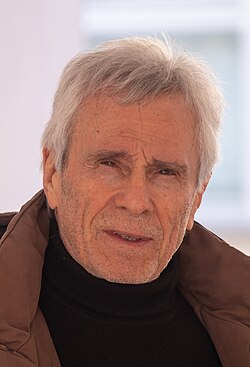
Mitić also displayed a talent for directing and writing. Between 1981 and 1989, he wrote the screenplays for and directed five films in the children's series Jan and Tini. He concluded his tenure as a cinematic Native American lead in 1988 with the two-part DEFA television film Prairie Hunters in Mexico, based on the novels of Karl May.
Key Facts
- Origin: Born in Strojkovce, Southern Serbia (Kingdom of Yugoslavia).
- Education: Studied sports at the Sports University in Belgrade.
- Breakthrough: First leading role in The Sons of the Big Bear (1966).
- Specialty: Portrayed various Native American chiefs across multiple tribes.
- Authenticity: Performed all his own stunts in his films.
- Versatility: Worked as an actor, director, screenwriter, singer, and moderator.
| Category | Details |
|---|---|
| Primary Genre | DEFA Native American (Indian) Films |
| Notable Roles | Tokei-ihto, Chingachgook, Tecumseh, Ulzana |
| Directorial Work | Jan and Tini children's series (1981–1989) |
| Theater Experience | Harz Mountain Theater Thale (1976–1984) |
| Key Skill | Professional stunt work and horse riding |
Frequently Asked Questions
Why was Gojko Mitić dubbed in his films?
Although Mitić spoke fluent German, he was dubbed to avoid his audible accent, ensuring the characters sounded more natural to the target audience.
Did Gojko Mitić use stunt doubles?
No, Mitić performed all of his own stunts, including the horse-running scenes, which added a high degree of credibility to his heroic portrayals.
What was Mitić's connection to the GDR?
Mitić achieved extraordinary popularity in the German Democratic Republic (GDR) through his leading roles in DEFA studio films, which were widely viewed by millions of citizens.
Did he do anything other than act in Native American films?
Yes, he acted in science fiction and television dramas, performed in adventure plays at the Harz Mountain Theater, sang, moderated TV shows, and directed/wrote for the children's series Jan and Tini.
When did he play his final Native American role?
His last role in this genre was in 1988 for the DEFA television film Prairie Hunters in Mexico.