
Greenock Royal Infirmary: A History of Healthcare and Community
The evolution of healthcare in Greenock reflects a journey from modest charitable dispensaries to a comprehensive royal infirmary. What began as a simple effort to provide medicine to the sick poor eventually grew into a cornerstone of the local community, adapting over nearly two centuries to meet the challenges of epidemics and urban growth.
The Early Days: From Dispensary to Fever-House
The roots of the facility date back to 1801 with the establishment of a dispensary for the sick poor. Located in the town centre near the harbour, the service first operated in Manse Lane before moving to Cathcart Street. This early system focused on providing essential medicines and facilitating daily home visits by a surgeon to treat those unable to travel.
A turning point occurred in 1806 when a contagious fever, introduced by the crew of a Russian prize ship in the harbour, led to significant loss of life. In response to this crisis, surgeons advocated for a dedicated hospital or "fever-house." The goal was to remove the impoverished from uncomfortable living conditions to improve their recovery and, crucially, to check the spread of infection within the town.
The Growth of the Infirmary
By 1807, funds were raised to construct a formal Hospital or Infirmary. The chosen site was on the south edge of town, situated on the east side of Inverkip Street. This location sat between the 1789 cemetery and the Anti-Burgher Secession Church of 1803, which was colloquially known as the "Canister Kirk" due to its unique shape.
Designed by local harbour engineer John Aird, the foundation stone was laid in 1808. The facility opened its doors to its first patient in June 1809. The construction cost was £1,815, and the land was generously donated by Sir John Shaw Stewart.
Expansion and Modernization
As the needs of the population grew and further fever epidemics struck, the facility expanded. Wings were added in 1830, and a further extension in 1847 incorporated parts of the Canister Kirk site, extending the hospital's footprint into East Shaw Street.
A significant architectural upgrade occurred in 1869 when a new Hospital and Infirmary building, designed by the firm Salmon and Son, was added to the adjacent site at 2 Duncan Street.
Transition to the National Health Service and Closure
In 1922, the institution was renamed the Greenock Royal Infirmary. It continued to serve the region until 1948, when it became part of the National Health Service (NHS), the UK's publicly funded healthcare system.
The era of the Greenock Royal Infirmary came to an end in 1979. Following the transfer of medical services to the Inverclyde Royal Hospital, the infirmary closed and was subsequently demolished.
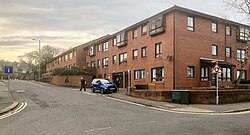
Today, the site serves a different but equally vital community purpose. In 1988, a sheltered housing complex for seniors was constructed on the grounds. Named John Galt House, the complex consists of 34 flats and associated facilities. It commemorates John Galt, the novelist and entrepreneur who was buried in the adjacent Inverkip Street Cemetery in 1839.
Key Facts
- Founded: Origins began as a dispensary in 1801; first hospital patient admitted in June 1809.
- Original Cost: The initial building cost £1,815.
- Key Architects: John Aird (original building) and Salmon and Son (1869 addition).
- Major Milestones: Renamed Greenock Royal Infirmary in 1922; joined the NHS in 1948.
- Closure: Closed in 1979 after services moved to Inverclyde Royal Hospital.
- Current Use: The site is now John Galt House, a 34-flat sheltered housing complex built in 1988.
| Year | Event | Detail |
|---|---|---|
| 1801 | Dispensary Established | Provided medicine to the sick poor in town centre. |
| 1809 | Hospital Opens | First patient admitted to the Inverkip Street site. |
| 1830 & 1847 | Extensions | Added wings and expanded into East Shaw Street. |
| 1869 | New Building | Salmon and Son design added at 2 Duncan Street. |
| 1922 | Renaming | Became the Greenock Royal Infirmary. |
| 1979 | Closure | Services transferred to Inverclyde Royal Hospital. |
| 1988 | Redevelopment | John Galt House sheltered housing completed. |
Frequently Asked Questions
Why was the original hospital built in Greenock?
The hospital was proposed following a deadly contagious fever outbreak in 1806 brought by a Russian prize ship. Surgeons believed a dedicated facility was necessary to isolate the sick and prevent further infection in the community.
Who was John Galt, and why is the current housing named after him?
John Galt was a novelist and entrepreneur. The sheltered housing complex on the former hospital site is named John Galt House because he is buried in the adjacent Inverkip Street Cemetery.
When did the facility become part of the NHS?
The Greenock Royal Infirmary joined the National Health Service in 1948.
What happened to the building after the hospital closed?
After closing in 1979, the building was demolished. The site was later used to build John Galt House in 1988, which provides 34 flats for seniors.
Who designed the various stages of the infirmary?
The original 1808 building was designed by local harbour engineer John Aird, while the 1869 expansion was designed by Salmon and Son.