
Greyhound Racing History: From Coursing to the GRA Era
Greyhound racing as we know it today evolved from the ancient practice of coursing—the act of pursuing game with hounds. While the sport has deep roots in 18th-century Britain, its transition from a rural pursuit to a structured urban spectacle was driven by innovation in the United States and commercial ambition in the United Kingdom.
The Origins of Modern Racing
The foundations of the sport were laid in 18th-century Britain, with the Swaffham Coursing Society in Norfolk, England, establishing the first official coursing club in 1776. However, the shift toward modern track racing occurred in the early 20th century through the efforts of Owen Patrick Smith, the chamber of commerce director in Hot Springs, South Dakota.
Driven by a belief that traditional coursing was inhumane, Smith sought a way to remove the blood from the sport. After years of trial and error, he perfected an artificial lure system in 1912. Unlike the straight paths of coursing, Smith's tracks were circular and could accommodate six greyhounds at once. By the 1920s, this concept had spread across the USA, drawing thousands of spectators.
The Formation of the Greyhound Racing Association (GRA)
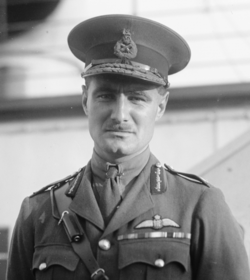
The transition of this American innovation to England was spearheaded by businessman Charles A. Munn, who secured the rights to Smith's lure system in the early 1920s. In August 1925, Munn partnered with Brigadier-General Alfred Critchley, Major L Lyne Dixson, and Sir William Gentle to form the Greyhound Racing Association Trust Ltd.
While Sir William Gentle served as the first chairman, Alfred Critchley, a World War I flying veteran, became the managing director and the primary driving force behind the company's vision.
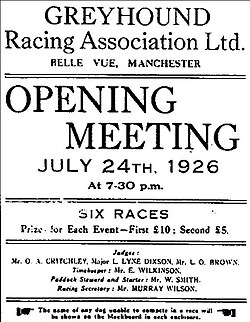
The GRA chose the North West of England for its debut, leveraging the region's existing coursing traditions. On October 14, 1925, the association leased land from the Belle Vue Zoological Gardens in Manchester for an annual rent of £276. With a capital investment of £22,000 (including £8,000 in loans), Belle Vue Stadium was constructed and opened on July 27. Despite a slow start, the first season saw an average attendance of 11,000 people across 37 meetings.
UK Expansion and Commercial Growth
The GRA expanded rapidly, moving its headquarters to London in 1927 following the acquisition of the White City Stadium. To fund its growth, the GRA implemented a sophisticated automatic totalisator (an automated betting system) developed by George Alfred Julius.
The company operated through a complex web of subsidiaries and joint holdings. For example, the Belle Vue track was owned by a subsidiary called Greyhound Racing Trust (Manchester) Ltd. By the end of 1927, the GRA had interests in 18 tracks. In November of that year, the company reported that 4.5 million people had visited their venues, generating gross receipts of £500,000.
Diversification and Legal Challenges
The GRA diversified early, adapting its venues for speedway racing and building the Harringay Arena in north London in 1936. However, the Betting and Lotteries Act 1934 introduced strict regulations, limiting tracks to 104 meetings per year and requiring programs to be planned a year in advance.
Post-War Boom and Decline
Following World War II, the sport experienced a massive surge in popularity. By 1946, nationwide attendance reached 25 million people annually, with White City Stadium alone recording a turnover of £17,576,190.
This golden era ended with the Betting and Gaming Act 1960. This legislation introduced bingo halls, casinos, and high street betting shops, allowing people to gamble without visiting the tracks. Additionally, the Act imposed higher tax rates on track operators and the Greyhound Tote compared to betting shops. By the end of the 1960s, annual attendance had dropped to 10 million.
The Shift to Property Management
To protect its share price amidst falling attendance, the GRA shifted its focus from racing to its property portfolio. In 1969, the company rebranded as the Greyhound Racing Property Trust. The strategy involved buying tracks to increase stock value and selling them during property booms.
Between 1970 and 1974, the company sold six tracks, including Reading and Liverpool, and eventually its flagship White City venue. In March 1972, it acquired Wimbledon Stadium, which became its new flagship. However, a property market slump in 1975 led to the company being suspended from the Stock Exchange due to debts estimated at £20 million.
Final Transitions
The company survived the 1980s by selling several leading venues, including Slough and Powderhall. In 1987, the GRA was acquired in a £68.5 million reverse takeover by Wembley Stadium, and the group was renamed Wembley plc in 1988. After further acquisitions and closures, Wembley plc sold the GRA to Risk Capital Partners in 2005, where it traded as GRA Acquisition Ltd.
Key Facts
- Founder of Modern Racing: Owen Patrick Smith developed the artificial lure system in 1912.
- First UK Stadium: Belle Vue Stadium in Manchester opened on July 27, 1926.
- Peak Popularity: 25 million annual visitors nationwide in the post-war era.
- Turning Point: The Betting and Gaming Act 1960 shifted betting from tracks to high streets.
- Final Corporate Shift: The GRA was absorbed by Wembley plc in 1987 before being sold to Risk Capital Partners in 2005.
| Era/Event | Key Development | Impact |
|---|---|---|
| 1912 | Artificial Lure perfected | Shift from coursing to circular track racing |
| 1925 | Formation of GRA | Introduction of organized racing to the UK |
| 1946 | Post-War Peak | Massive attendance and record turnovers |
| 1960 | Betting and Gaming Act | Decline in track attendance due to betting shops |
| 1969 | Property Trust Pivot | Focus shifted from sport to real estate value |
| 1987 | Wembley Takeover | GRA became part of Wembley plc |
Frequently Asked Questions
Who invented modern greyhound racing?
Modern greyhound racing was developed by Owen Patrick Smith in Hot Springs, South Dakota, who created the artificial lure system in 1912 to make the sport more humane than traditional coursing.
Where was the first GRA stadium located?
The first GRA stadium was Belle Vue Stadium, located at the northern end of Kirkmanshulme Lane in Manchester, England.
Why did greyhound racing popularity decline in the 1960s?
The decline was primarily caused by the Betting and Gaming Act 1960, which allowed the rise of high street betting shops, casinos, and bingo halls, meaning fans no longer had to visit the tracks to place bets.
What was the "Greyhound Racing Property Trust"?
It was the rebranded identity of the GRA starting in 1969, reflecting a strategic shift to focus on the value of the company's land and property portfolio rather than the operation of the races.
What happened to the GRA in the late 20th century?
The GRA was subject to a £68.5 million reverse takeover by Wembley Stadium in 1987, becoming part of Wembley plc before eventually being sold to Risk Capital Partners in 2005.