
Guyana's Pre-Independence Political Struggle: Jagan, Burnham, and Cold War Influence
The journey toward Guyana's independence was marked by a volatile mix of ethnic tension, ideological warfare, and foreign intervention. In the wake of World War II, a surge of political awareness transformed the colony of British Guiana, leading to the birth of political parties that would define the nation's trajectory for decades. Central to this era was the acrimonious rivalry between two dominant figures: Cheddi Jagan and Linden Forbes Burnham.
Key Facts
- PPP Foundation: The People's Progressive Party (PPP) was founded on January 1, 1950, initially drawing support from both Afro-Guyanese and Indo-Guyanese communities.
- PNC Split: The People's National Congress (PNC) emerged in 1957 as a split-off from the PPP, led by Forbes Burnham.
- Foreign Intervention: The U.S. and UK governments actively worked to remove Cheddi Jagan from power to prevent Soviet and Cuban influence in South America.
- Constitutional Suspension: In 1953, the British government suspended the colony's constitution and removed Jagan after only 133 days in office.
- Ethnic Polarization: Political divisions eventually mirrored ethnic lines, with the PPP becoming the voice of Indo-Guyanese and the PNC representing Afro-Guyanese interests.
The Rise of Cheddi Jagan
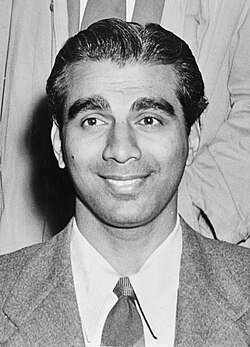
Born in 1918 to Indian immigrants, Cheddi Jagan's early life was shaped by the rural poverty he witnessed in Guyana. After attending Queen's College in Georgetown, he moved to the United States to study dentistry, graduating from Northwestern University in 1942. Upon returning to British Guiana in 1943, Jagan transitioned from clinical practice to political activism.
Jagan first gained experience as the treasurer of the Manpower Citizens' Association (MPCA), a union representing sugar workers. Although he clashed with the union's moderate leadership, the role connected him with labor leaders across the English-speaking Caribbean. He later founded the Political Affairs Committee (PAC) in 1946, a discussion group that used its bulletin to promote Marxist ideology—a socio-economic theory advocating for a classless society—and decolonization.
The Emergence of Forbes Burnham
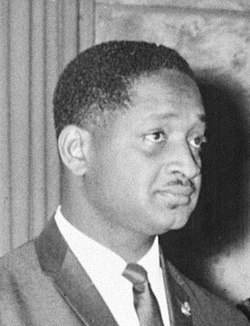
While Jagan built his base among the rural Indo-Guyanese, Linden Forbes Burnham emerged from the urban Afro-Guyanese community. During the 1930s and 40s, this community faced high unemployment and systemic discrimination. Many Afro-Guyanese joined the military during World War II to escape poverty, only to return to a scarce job market.
Burnham recognized that to achieve political power, he needed to bridge the gap between the radical Afro-Guyanese working class and the moderate, capitalist middle class. This strategic shift eventually led him to move toward the political right, utilizing racial identity as a unifying force for his supporters.
The PPP and the First Taste of Power
In January 1950, Jagan founded the People's Progressive Party (PPP), incorporating Burnham to ensure broad ethnic support. The party saw immediate success, but its socialist and anticapitalist rhetoric alarmed the British colonial government. Tensions peaked in 1953 when the PPP attempted to rapidly implement reforms and expand the state's role in the economy.
The introduction of the Labour Relations Act, which favored the Guiana Industrial Workers' Union (GIWU), provided the British with a pretext for intervention. Claiming the act challenged the governor's authority, London suspended the constitution on October 9, 1953. British troops were deployed, and Jagan was forced to resign after just 133 days. This intervention began a seven-year period of military occupation and restricted civil liberties.
Cold War Geopolitics and the Second PPP Government
By the 1961 elections, a new constitution restored a degree of self-government. The PPP won a substantial victory, and Jagan became Prime Minister. However, this victory coincided with the height of the Cold War. Jagan's refusal to observe the U.S. embargo on Cuba and his trade agreements with East Germany and Hungary drew the ire of the United States.
President John F. Kennedy viewed Jagan as a potential "Castro-type" figure in the Western Hemisphere. Consequently, the U.S. government, through the CIA and front organizations like the American Institute for Free Labour Development (AIFLD), spent millions of dollars to destabilize Jagan's administration. This included funding opposition groups and inciting racially charged strikes and riots that caused millions of dollars in damage to Georgetown.
Summary of Political Transitions
| Period | Dominant Party/Force | Key Leader | Outcome |
|---|---|---|---|
| 1950-1953 | PPP (Unified) | Jagan & Burnham | Brief government; Constitution suspended by UK |
| 1957 | PNC (Split) | Forbes Burnham | Formal racial/political divide begins |
| 1961-1964 | PPP (Re-elected) | Cheddi Jagan | U.S. covert operations and civil unrest |
| 1964-1985 | PNC-UF Coalition | Forbes Burnham | Burnham takes power; long repressive era |
The Ouster of Jagan and Burnham's Victory
The early 1960s were characterized by "prolonged labour and racial unrest." In 1964, a series of strikes and riots led the governor to declare a state of emergency. To resolve the deadlock, the British unilaterally imposed a proportional representation electoral format—a system where seats are allocated based on the total percentage of votes received—which disadvantaged the PPP's concentrated support.
In the October 1964 elections, the PPP remained the largest party but lacked a majority. The PNC and the conservative United Force (UF) formed a coalition to keep Jagan out of office. On December 14, 1964, Forbes Burnham became Prime Minister. This victory marked the start of a long era of PNC dominance characterized by tight media control and systemic discrimination against those of Indian descent, viewed by the U.S. and UK as a "lesser evil" than Jagan's Marxism.
Frequently Asked Questions
Why did the British suspend the 1953 constitution?
The British government suspended the constitution because they viewed the PPP's radical socialist agenda and its close ties with labor unions as a direct challenge to colonial authority and the governor's power.
What role did the United States play in Guyana's politics?
The U.S. government, fearing the establishment of a communist regime in South America, conducted covert operations to destabilize Cheddi Jagan's government, providing financial and strategic support to Forbes Burnham.
How did the political split between Jagan and Burnham affect the population?
The split transformed political competition into an ethnic divide, with the PPP primarily representing Indo-Guyanese and the PNC representing Afro-Guyanese, a polarization that continued to impact Guyanese politics for decades.
What is proportional representation and why was it used in 1964?
Proportional representation is an electoral system where parties gain seats in proportion to the number of votes they receive. It was imposed by the British in 1964 to prevent the PPP from winning an outright majority, enabling a coalition between the PNC and UF.
Who was the United Force (UF)?
The United Force was a conservative party representing big business, the Roman Catholic Church, and ethnic minority voters including Amerindians, Chinese, and Portuguese citizens.