
Hadera: A History of Resilience and Industrial Growth in Israel
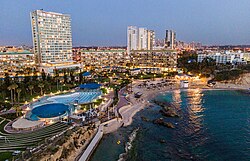
Located in the northern Sharon region of the Haifa District, Hadera is a city defined by its strategic position on the Israeli coastal plain. Situated approximately 45 kilometers from both Tel Aviv and Haifa, the city stretches along 7 kilometers of Mediterranean coastline. With a population of 107,974 as of 2024, Hadera has evolved from a small farming colony into a vital industrial and residential hub, welcoming diverse communities including significant numbers of post-Soviet and Ethiopian aliyah (immigrants) arrivals.
Key Facts
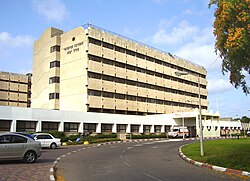
- Founded: 1891 by members of Hovevei Zion from Lithuania and Latvia.
- Geography: Covers 53,000 dunams (53 km²) in the Haifa District.
- Economy: Home to Israel's largest power station and a world-leading desalination plant.
- Demographics: A population of 107,974 (2024), predominantly Jewish (99%).
- Infrastructure: Served by both the Coastal and Eastern Israel Railways lines.
The Early Years: From Swamps to Settlement
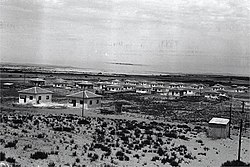
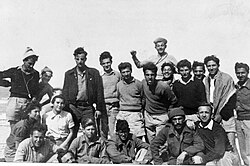
The origins of Hadera date back to the late 19th century. The region was initially a sparsely populated coastal plain. In 1890, Yehoshua Hankin purchased the land from Selim al-Khoury, a Christian merchant from Haifa. The first Jewish settlers, consisting of ten families and four guards, resided in a building known as the Khan.
The early settlers faced grueling conditions. To make the land arable, Baron Rothschild funded the drainage of swamps using laborers from Egypt. The struggle against malaria was devastating; records indicate that 210 out of a population of 540 died from the disease. This hardship is immortalized in the city's logo, which features a verse from Psalms 126:5: "Those who sow in tears, will reap with songs of joy."
Growth Under the British Mandate
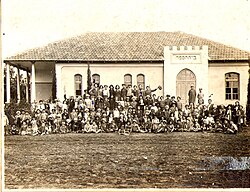
By the early 20th century, Hadera had established itself as a regional economic center. The 1922 British Mandate census recorded 540 inhabitants, including 450 Jews, 89 Muslims, and one Christian. By 1931, the population grew to 2,002, and the city began implementing free schooling in 1937.
Development in the State of Israel
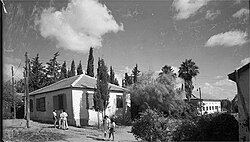
Following the establishment of the State of Israel in 1948, Hadera experienced a population surge due to immigrants from Europe and Yemen. The city's industrial profile shifted significantly in 1953 with the opening of Israel's first paper mill, financed by international investors to ensure national paper self-sufficiency.
Urban expansion led to the creation of new neighborhoods, such as the coastal area of Givat Olga and Beit Eliezer to the east. Hadera was officially declared a city in 1964. The 1990s brought another wave of growth with the arrival of large numbers of immigrants from the former Soviet Union and Ethiopia.
Security and Challenges
Despite its reputation as a safe haven, Hadera was impacted by terrorism during the second intifada. Notable attacks include a 2001 shooting at a bus stop, a 2002 massacre at a Bat Mitzvah, and a 2005 suicide bombing at a falafel stand. Additionally, during the 2006 Second Lebanon War, Hezbollah rockets hit the city, marking the southernmost point in Israel reached by those missiles.
Geography and Environmental Phenomena
Hadera's jurisdiction spans 53,000 dunams, making it one of the larger cities by area in the country. The outskirts are home to the Hasharon Park and Nahal Hadera Park, a 1,300-dunam eucalyptus forest.
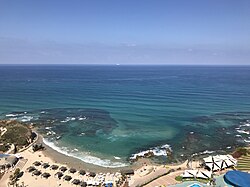
A unique biological phenomenon occurs near the Orot Rabin power plant. The plant releases hot water into the sea, creating a temperature increase of about ten degrees. This attracts hundreds of sandbar and dusky sharks every winter from November to May. While this is a subject of scientific study by the University of Haifa, it has led to rare dangers; in April 2025, a swimmer was killed in a rare collective predation attack by dusky sharks, the first fatal shark attack in Israel since 1948.
Economy and Infrastructure
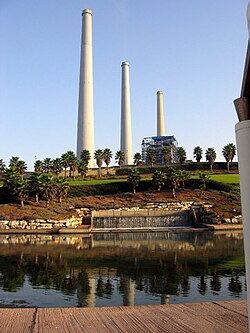
Hadera is a cornerstone of Israel's energy and water infrastructure. It hosts the Orot Rabin Power Plant, the nation's largest power station, and inaugurated one of the world's largest desalination plants in 2009.
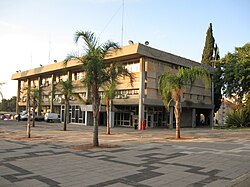
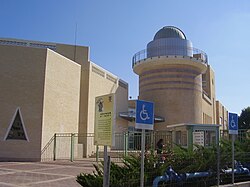
The city is highly accessible via Highway 2 and Highway 4. Rail transport is provided by the Hadera West station (Coastal Line) and the Hadera East station (Eastern Line), ensuring strong connectivity to Tel Aviv and other northern regions.
Demographics and Society
The city's population has grown steadily from 11,800 in 1948 to over 107,000 today. The demographic makeup is overwhelmingly Jewish, with a small Arab minority. The city is known for its diverse immigrant populations and a median age of 32.8.
| Year | Population | Growth (%) |
|---|---|---|
| 1972 | 32,600 | — |
| 1983 | 38,800 | +19.0% |
| 1995 | 60,400 | +55.7% |
| 2008 | 79,400 | +31.5% |
| 2022 | 103,847 | +30.8% |
| 2024 | 107,974 | +4.0% |
Notable Residents
Hadera has been home to many influential figures across various fields:
- Arts & Music: Singer Sarit Hadad, songwriter Shlomo Gronich, and cellist Ofra Harnoy.
- Politics & Diplomacy: Former politician Moshe Kahlon and diplomat Isaac Bachman.
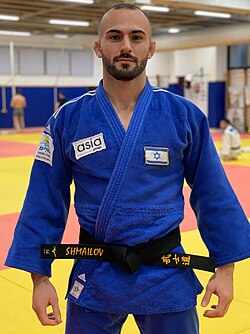
- Sports: Olympic sailors Eldad Amir and Shay Kakon, and judoka Baruch Shmailov.
- Science & Activism: Computer scientist Orna Grumberg and aliyah activist Herut Takele.

Frequently Asked Questions
When was Hadera founded?
Hadera was established in 1891 as a farming colony by members of the Hovevei Zion group from Lithuania and Latvia.
What are the main industrial landmarks in Hadera?
The city is home to the Orot Rabin Power Plant (Israel's largest), a major desalination plant, and the Hadera Paper mill.
Why are sharks attracted to the coast of Hadera?
The Orot Rabin power plant releases water that is approximately ten degrees warmer than the surrounding sea, which attracts sandbar and dusky sharks between November and May.
How is Hadera connected to other cities?
Hadera is located near Highway 2 and Highway 4 and is served by two railway stations: Hadera West and Hadera East.
What is the demographic composition of the city?
As of recent data, the population is approximately 99% Jewish and 1% Arab, with a significant presence of immigrants from Ethiopia and the former Soviet Union.