
Hall's Hill: The History of Arlington's Historic African American Community
The story of Hall's Hill is a profound narrative of resilience, community building, and the struggle against systemic segregation. Located in Arlington, Virginia, this neighborhood evolved from a site of enslaved labor into a vital sanctuary for African Americans during the Jim Crow era, eventually becoming a focal point for Civil Rights activism in the region.
The Origins of Bazil Hall's Farm
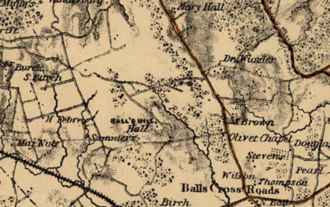
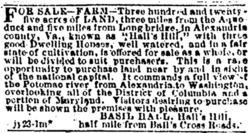
The land was first acquired on December 13, 1850, by Bazil Hall, a former whaler from Washington. Hall purchased a 327-acre farm in what was then Alexandria County from Richard Smith. The property, which Hall named the "Hall Homestead Tract," featured a 400-foot high hill where he built his family home, naming the elevation "Hall's Hill." While much of the land remained forested, Hall used enslaved labor to cultivate produce on approximately 125 acres.
The Hall family was known for their cruelty toward the people they enslaved. Records from the Washington Star indicate that enslaved workers intentionally burned farm buildings in response to this treatment. The tension culminated on December 14, 1857, when an enslaved woman named Jenny Farr murdered Elizabeth Hall.
The Civil War and the Transition to a Community
During the American Civil War, Bazil Hall's political loyalties were contradictory. While he supported the Union and voted against Virginia's secession in 1861, he remained a staunch defender of slavery. In August 1861, the property became a site of conflict during skirmishes between Union and Confederate forces. Confederate troops shelled Hall's Hill and burned his house and barn, forcing the family to flee.
Following the battle, Union forces occupied the hill during the winter of 1861-1862, clearing trees to improve visibility of nearby Upton's Hill. For the remainder of the war, Hall lived at his sister Mary's residence on North Glebe Road and worked as a logger for the Union army.
The Birth of a Black Neighborhood
After the war, Bazil Hall was financially ruined. Although he sought significant compensation from the Southern Claims Commission, he received only $10,729.68 in 1872. To recoup losses, he sold parcels of his farm at a loss to former slaves from Maryland and rural Virginia.
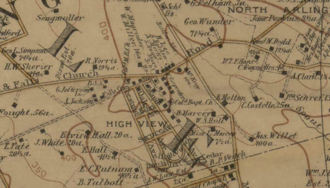
This new community, retaining the name Hall's Hill, became Arlington's second African American neighborhood after Freedman's Village. The proximity of the W&OD Railway stop allowed residents to commute to Washington for work as domestic servants and laborers. Many residents also engaged in animal husbandry and farming on their larger lots to supplement their income.
Growth and the Jim Crow Era
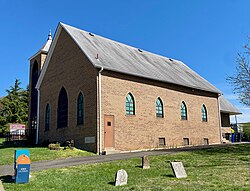
By the late 19th century, Hall's Hill had grown into a semi-rural hub with two churches, two stores, and an Odd Fellows hall. The Calloway Cemetery, established during this time, remains the oldest known church-affiliated African American graveyard in Arlington County.
However, the rise of Jim Crow laws—state and local laws that enforced racial segregation—severely restricted the freedom of the residents. Figures like Crandal Mackey and Frank Lyon promoted a "Southern Progressive" agenda that used poll taxes to disenfranchise Black voters and implemented racially restrictive housing covenants to ensure white-only subdivisions.
Systemic Segregation and Resistance
The 1896 Plessy v. Ferguson decision legalized "separate but equal" facilities, leading to the creation of "segregation districts" in Virginia. In Arlington, the 1930 zoning ordinance further restricted affordable multifamily housing in Black communities. This forced more African Americans into Hall's Hill, driving up land values and leading to the construction of smaller "shotgun shack" homes.
The physical segregation was stark. While white neighborhoods like Fostoria and Waycroft received infrastructure improvements, Hall's Hill lacked paved roads and street lamps. In 1930, a 7-foot tall cinderblock wall was constructed to physically separate the white neighborhoods from Hall's Hill.
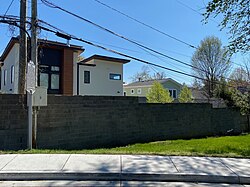
Despite these hardships, the community built its own infrastructure, including a black-owned bus line and Arlington's first dedicated fire station. The John M. Langston Citizens Association was formed in 1924 to protect residents from predatory zoning policies.
The Civil Rights Movement and Integration
The mid-20th century brought new pressures. Real estate speculators targeted Black subdivisions like Pelham Town, forcing many displaced residents into an already overcrowded Hall's Hill. However, this era also saw a shift in politics as liberal New Deal Democrats replaced the old Southern establishment.
Following the 1954 Brown v. Board of Education ruling, which declared segregated schools unconstitutional, Hall's Hill residents fought for integration. A 1956 lawsuit led to the integration of Stratford Junior High School on February 2, 1959, when four Black students from Hall's Hill were admitted.
By 1960, the Cherrydale sit-ins helped desegregate local businesses, and the Civil Rights Act of 1968 finally outlawed de jure (legal) racial housing discrimination.
Modern Era and Preservation
In 1965, Hall's Hill was included in Arlington's first Neighborhood Conservation Plan, which finally brought essential public services to the area. During this process, county planners renamed the area High View Park, though many residents still use the original name.
In recent decades, the neighborhood has faced the challenges of gentrification. High-end single-family homes have replaced many historic buildings. Consequently, the Black population of the neighborhood declined from 90% in 1990 to 22% in 2021 as rising property taxes and living costs pushed long-term residents out.
Key Facts
- Founded: Established after the Civil War when Bazil Hall sold land to former slaves.
- Significance: Arlington's second African American neighborhood.
- Historic Site: Home to Calloway Cemetery, the oldest church-affiliated Black graveyard in the county.
- Segregation: Physically isolated by a 7-foot cinderblock wall built in 1930.
- Civil Rights Milestone: Residents led the legal fight to integrate Stratford Junior High School in 1959.
- Demographic Shift: Black population decreased from 90% (1990) to 22% (2021).
| Era | Primary Characteristic | Key Event/Feature |
|---|---|---|
| Pre-Civil War | Private Farm | Bazil Hall's 327-acre estate |
| Post-Civil War | Community Foundation | Sale of land to former slaves |
| Jim Crow Era | Systemic Segregation | Construction of the 1930 dividing wall |
| Civil Rights Era | Activism & Integration | Integration of Stratford Junior High (1959) |
| Modern Era | Urbanization | Renamed High View Park; gentrification |
Frequently Asked Questions
Who was Bazil Hall?
Bazil Hall was a former whaler who purchased a 327-acre farm in Alexandria County in 1850. He is known for his cruelty toward the people he enslaved and for later selling parcels of his land to former slaves after the Civil War.
Why was a wall built around Hall's Hill?
A 7-foot tall cinderblock wall was built in 1930 by residents of the adjacent white neighborhoods, Fostoria and Waycroft, to physically segregate themselves from the Black community of Hall's Hill.
What is the significance of Calloway Cemetery?
Calloway Cemetery is the oldest known church-affiliated African American graveyard in Arlington County and was designated as a local historic district in 2012.
How did Hall's Hill contribute to the Civil Rights Movement?
Residents of Hall's Hill, in partnership with the NAACP, filed a 1956 lawsuit that eventually ended school segregation in Arlington, leading to the integration of Stratford Junior High School in 1959.
Is Hall's Hill still called that today?
While county planners officially renamed the neighborhood High View Park in 1965 as part of a Neighborhood Conservation Plan, many residents continue to refer to it as Hall's Hill.