
Hasekura Tsunenaga and the Keichō Embassy: Japan's First Diplomatic Mission to Europe
In the early 17th century, a daring diplomatic venture bridged the vast distance between the Japanese archipelago and the courts of Europe. Led by Hasekura Tsunenaga, the Keichō Embassy (1613–1620) represented one of the most ambitious attempts at international diplomacy in the pre-modern era. Commissioned by the powerful daimyo Date Masamune, the mission sought to establish trade relations and religious ties with the West.
The journey began aboard the San Juan Bautista, a ship specifically constructed for this voyage. Hasekura first crossed the Pacific to New Spain (modern-day Mexico), arriving in Acapulco and departing from Veracruz. This voyage marked the first time a Japanese ambassador visited the Americas and Spain, setting a precedent for future transpacific relations.
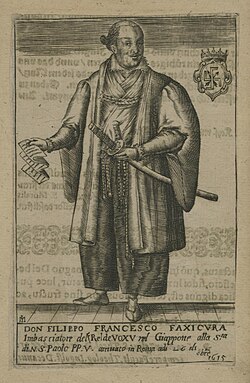
The Spanish Reception and Royal Audience
The embassy reached Sanlúcar de Barrameda on October 5, 1614. The arrival was met with significant ceremony; the Duke of Medina Sidonia provided carriages to honor the delegation. By October 23, Hasekura entered Seville accompanied by a guard of 30 Japanese warriors, including 12 bowmen and halberdiers carrying ceremonial blades.
On January 30, 1615, Hasekura met with King Philip III in Madrid. He presented a letter from Date Masamune and proposed a formal trade treaty. While the King expressed a willingness to accommodate these requests, the diplomatic landscape was complex. To further solidify ties, Hasekura was baptized on February 17, 1615, at the Convent of Las Descalzas Reales. He took the name Felipe Francisco Hasekura, with the Duke of Lerma—the de facto ruler of Spain—serving as his godfather.
A Sensation in France
While traveling toward Italy aboard Spanish frigates, the embassy was forced to stop in the French harbor of Saint-Tropez due to inclement weather. This brief visit constitutes the first recorded instance of relations between France and Japan. The local population and nobility were fascinated by the Japanese delegation's customs.
Contemporary chronicles noted several cultural curiosities that amazed the French, including the use of chopsticks, the practice of using disposable silk tissues for blowing noses, and the extraordinary sharpness of Japanese swords, which were said to cut paper simply by blowing on the edge.
Diplomacy in Rome and the Vatican
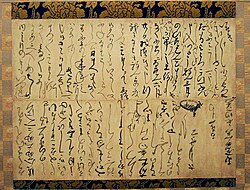
The embassy arrived in Rome on September 20, 1615, eventually meeting Pope Paul V on November 3. Hasekura presented two gilded letters—one in Japanese and one in Latin—requesting a trade treaty between Japan and Mexico and the dispatch of Franciscan missionaries to Japan.
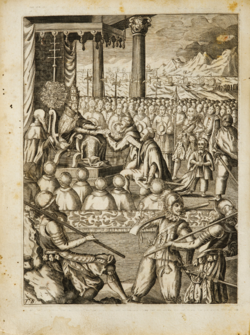
The Pope agreed to send missionaries but deferred the trade decisions to the King of Spain. In recognition of his status, the Roman Senate granted Hasekura the honorary titles of Roman Noble and Roman Citizen. However, the mission was not without suspicion. Some Venetian and Roman reports suggested political intrigue, hinting that Date Masamune sought a Catholic alliance to potentially become the supreme ruler of Japan.
The Decline of the Mission and Return Journey
When Hasekura returned to Spain in April 1616 for a second meeting with King Philip III, the political climate had shifted. The King declined the trade agreement, noting that Hasekura did not represent the official ruler of Japan, Tokugawa Ieyasu. By this time, Ieyasu had issued an edict in 1614 ordering the expulsion of missionaries and initiating the persecution of Christians in Japan.
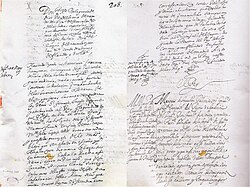
The return journey was long and arduous. The embassy left Seville in June 1616 and spent five months in Mexico. The San Juan Bautista, captained by Yokozawa Shōgen, had transported Kyoto lacquerware and pepper to Mexico to fund the trip. Due to Spanish restrictions on silver exports, Hasekura was only permitted to bring back a limited amount of silver (12,000 pesos for himself and 8,000 for Yokozawa).
In April 1618, the embassy reached the Philippines. The Spanish government purchased the San Juan Bautista to bolster their defenses against Protestant powers. Hasekura spent time in Manila purchasing goods for Date Masamune and building a new vessel before finally returning to Nagasaki in August 1620.
Key Facts
- Mission Name: Keichō Embassy (1613–1620).
- Primary Goal: Establish trade with New Spain and secure Franciscan missionaries.
- Key Figures: Hasekura Tsunenaga (Ambassador), Date Masamune (Sponsor), and Luis Sotelo (Franciscan friar).
- Firsts: First Japanese ambassador to the Americas, Spain, and France.
- Outcome: Trade treaty denied; missionaries agreed upon by the Pope but blocked by the Shogunate's anti-Christian edicts.
| Year | Location | Key Event |
|---|---|---|
| 1613 | Japan to Mexico | Departure aboard the San Juan Bautista |
| 1614 | Spain | Arrival in Sanlúcar de Barrameda and Seville |
| 1615 | Spain & Italy | Audience with King Philip III and Pope Paul V |
| 1616 | Spain | Trade agreement declined by King Philip III |
| 1618-1619 | Philippines | Sale of the San Juan Bautista to Spain |
| 1620 | Japan | Return to Nagasaki |
Frequently Asked Questions
Why did Date Masamune send the Keichō Embassy?
Date Masamune aimed to establish direct trade relations with New Spain (Mexico) and the Spanish Empire, while also requesting the dispatch of Franciscan missionaries to Japan to encourage the spread of Christianity in his domain.
Why was the trade treaty with Spain ultimately rejected?
King Philip III declined the treaty because the embassy was not officially sanctioned by the Shogun, Tokugawa Ieyasu. Furthermore, the Shogunate had already begun persecuting Christians and ordering the expulsion of missionaries.
What was the significance of the visit to Saint-Tropez?
The stop in Saint-Tropez is historically significant as the first recorded instance of diplomatic relations between France and Japan.
What happened to the ship San Juan Bautista?
After serving as the primary vessel for the mission, the ship was sold to the Spanish government in the Philippines to be used for military defense against Protestant powers.
Did any members of the embassy remain in Europe?
While not officially documented as a mass stay, registration records suggest some Japanese members may have remained in villages near Seville, such as Espartinas and Coria del Río, where the surname "Japón" still exists today.