
Hazle Township History: From Native Trails to Industrial Evolution
The story of Hazle Township in southern Luzerne County is one of dramatic transformation. Once a quiet valley defined by its natural flora and ancient trade routes, the region evolved into a powerhouse of the American Industrial Revolution before reinventing itself for the modern era. From the early days of the "Hazle Swamp" to the rise of massive industrial parks, the township's journey reflects the broader economic shifts of Pennsylvania.
Early Settlement and the Warriors Path
Long before European colonization, the Delaware and Seneca tribes utilized the region as a vital corridor for trade. They traveled through southern Luzerne County to connect with other Native American settlements in the Chesapeake Bay area and New York. The primary route, known as the Warriors Path, served as a critical artery for movement. Today, the location of this historic trail is roughly traced by Broad Street (PA 93).
The first Europeans to enter the region were Moravian missionaries, who arrived with the goal of converting Native Americans to Christianity. During this era, the area was characterized as a shallow valley densely populated with hazel trees, leading Native Americans to refer to the region as "Hazle Swamp."
The Rise of the Coal Industry
By the early 19th century, Native American populations had abandoned their eastern territories, making way for an influx of European settlers. In 1804, a private company expanded the Warriors Path into the Berwick Turnpike, which initially sparked a boom in the logging industry.
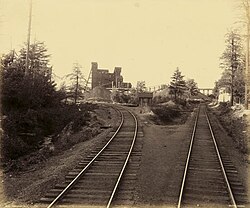
The economic landscape shifted permanently in the 1830s with the discovery of anthracite coal—a hard, high-carbon coal—beneath the cleared land. This discovery led to the establishment of the first mines and settlements in present-day Hazle Township by 1836. The township was officially formed from a section of Sugarloaf Township in 1839, with additional land from Butler Township added in 1856.
The coal boom transformed the wilderness into an industrial hub. The need to transport coal to the lucrative Philadelphia market spurred the construction of extensive railroads, roads, and housing. Thousands of European immigrants arrived to work in the mines, facing dangerous conditions to fuel the region's growth.
The Lattimer Massacre
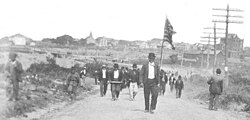
The tension between mining corporations and laborers culminated in one of the darkest chapters of the region's history. On September 10, 1897, between 300 and 400 unarmed strikers—primarily of German and Slovak descent—marched toward a coal mine owned by Calvin Pardee in Lattimer to support the United Mine Workers (UMW) union.
Despite multiple orders to disperse, the marchers continued. Reports indicate that the deputies accompanying Sheriff Martin had spent the morning joking about the violence they intended to inflict. When the crowd reached Lattimer at 3:45 pm, they were met by the sheriff and a force of armed deputies (estimated between 86 and 150 men).
A scuffle broke out when Sheriff Martin attempted to seize an American flag from the lead marcher. The deputies opened fire on the unarmed crowd, killing 19 miners and wounding between 17 and 49 others. Evidence later showed that all victims were shot in the back, with several sustaining multiple wounds, indicating they had been targeted.
20th Century Decline and Economic Recovery
Hazle Township's population peaked at nearly 15,000 in the early 20th century, but the decline of the coal industry in the 1940s and 1950s led to a dwindling population as mines closed and residents left to find work elsewhere.
To combat the resulting economic recession, local leaders formed the Community Area New Development Organization (CAN-DO) in 1956, led by founder Dr. Edgar L. Dessen. The organization launched the innovative "Dime a Week" campaign, encouraging residents to leave a dime on their sidewalks for collection.
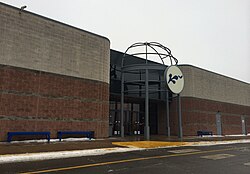
This grassroots effort raised over $250,000, allowing CAN-DO to purchase more than 500 acres of land for an industrial park. This initiative led to the creation of the Valmont, Humboldt, and McAdoo industrial parks, as well as the CAN-DO Corporate Center in Drums during the late 1990s. Today, the township continues to grow through increased housing construction and retail development.
Key Facts
- Original Name: Referred to as "Hazle Swamp" due to the abundance of hazel trees.
- Primary Industry: Transitioned from logging to anthracite coal mining in the 1830s.
- Lattimer Massacre: 19 unarmed miners were killed by deputies on September 10, 1897.
- Economic Pivot: CAN-DO was established in 1956 to diversify the economy after the coal collapse.
- Funding Innovation: The "Dime a Week" campaign raised $250,000 for industrial development.
| Era/Year | Key Event | Impact |
|---|---|---|
| Pre-19th Century | Warriors Path Usage | Trade route for Delaware and Seneca tribes. |
| 1804 | Berwick Turnpike | Shift toward logging as the major industry. |
| 1836-1839 | Coal Discovery | Establishment of mines and official township formation. |
| 1897 | Lattimer Massacre | Violent suppression of UMW union strikers. |
| 1956 | Formation of CAN-DO | Transition to industrial parks and economic diversification. |
Frequently Asked Questions
What was the Warriors Path?
The Warriors Path was a common trade route used by the Delaware and Seneca tribes to travel between New York and the Chesapeake Bay area. It is roughly located where Broad Street (PA 93) is today.
Why was the area called Hazle Swamp?
The region was a shallow valley with an abundance of hazel trees, leading Native Americans to refer to it as "Hazle Swamp."
What happened during the Lattimer Massacre?
On September 10, 1897, armed deputies opened fire on a group of 300 to 400 unarmed Slovak and German strikers marching in support of the UMW union, resulting in 19 deaths.
How did CAN-DO help the local economy?
CAN-DO (Community Area New Development Organization) raised funds through a "Dime a Week" campaign to purchase land and establish several industrial parks, including Valmont, Humboldt, and McAdoo, bringing new industry to the region after the coal decline.
When did the coal industry begin to decline in Hazle Township?
The population began to dwindle in the 1940s as the coal industry declined, with many mines closing throughout the 1940s and 1950s.