
Henry B. González: A Legacy of Liberalism and Legislative Defiance
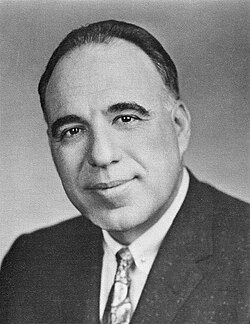
The political landscape of San Antonio was fundamentally shaped by the tenure of Henry B. González, a man whose career in the U.S. House of Representatives was defined by staunch liberal convictions and a willingness to challenge the highest offices in the land. Entering Congress during a period of immense social upheaval, González became a pillar of the Democratic Party in Texas, representing a district that mirrored his own unwavering political leanings.
Rise to Power in the 20th District
González's journey to Congress began in November 1961. Following President John F. Kennedy's appointment of Representative Paul J. Kilday to the Court of Military Appeals, a special election was held for Texas's 20th congressional district. The race was fiercely contested; González faced attorney John W. Goode, a Republican candidate who received a personal endorsement from former President Dwight D. Eisenhower during a visit to San Antonio.
To counter this, González garnered high-profile support from Vice President Lyndon B. Johnson and the famous Mexican film star Cantinflas, who campaigned alongside him at local supermarkets and shopping centers. González emerged victorious, marking the start of a dominant political era. He was unopposed in 1962 and subsequently reelected seventeen times. Due to the heavily Democratic nature of the 20th district, he faced Republican opposition only five times throughout his career, winning each challenge handily.
A Champion of Civil Rights and Liberalism
Throughout his tenure, González was recognized for his staunchly liberal views, often putting him at odds with conservative colleagues. His commitment to equality was evident in his vocal support for landmark legislation. He voted in favor of the Civil Rights Acts of 1964 and 1968, as well as the Voting Rights Act of 1965, distinguishing himself from many other Southern politicians of the era.
His political convictions occasionally led to volatile confrontations. In 1963, he confronted Republican Representative Ed Foreman after being labeled a "communist" and a "pinko." Decades later, in 1986, the 70-year-old representative responded to similar accusations from a patron at Earl Abel's, a popular San Antonio restaurant, by punching the man in the face. González was eventually acquitted of assault after the charges were dropped.
Witness to History and the HSCA
González had a direct and harrowing connection to one of the 20th century's most significant tragedies. He was present in President Kennedy's motorcade in Dallas on November 22, 1963. He recalled hearing three distinct shots as his vehicle neared the Texas School Book Depository. Upon arriving at Parkland Memorial Hospital, González witnessed the aftermath, including the sight of a blood-soaked bouquet of roses in the presidential limousine, which led him to initially believe Jackie Kennedy had been shot. He later assisted in placing the President's casket into the hearse for transport to Air Force One.
Deeply unsettled by the assassinations of John F. Kennedy, Robert F. Kennedy, and Martin Luther King Jr., González advocated for a formal House study in 1975. This led to the 1976 creation of the United States House Select Committee on Assassinations (HSCA), tasked with investigating the deaths of President Kennedy and Dr. King. González served as the committee's chairman starting in January 1977, succeeding Thomas N. Downing. However, he resigned later that year following a power struggle with the committee's counsel.
His leadership of the HSCA was not without controversy. Robert P. Gemberling, who led the FBI's Kennedy investigation for thirteen years, claimed that González and Downing held "preconceived conspiracy theories." Furthermore, a 1992 report noted that González did not rule out the possibility that additional shots, potentially from a silencer, had been fired beyond the three he personally heard.
Challenges to Executive Power
González was never hesitant to challenge the presidency, regardless of the administration. Following the 1983 invasion of Grenada, he suggested the impeachment of President Ronald Reagan. In 1987, he introduced articles of impeachment related to the Iran–Contra scandal (a secret operation to sell arms to Iran to fund Contra rebels in Nicaragua), though the House Judiciary Committee took no further action.
His critical stance extended to President George H. W. Bush, whom González called for impeachment for initiating the 1991 Gulf War without prior Congressional approval. Conversely, during the early years of Bill Clinton's presidency, González blocked hearings into the Whitewater controversy until 1994. Beyond the presidency, he was a fierce critic of the Federal Reserve System, proposing audits and introducing bills to impeach Paul Volcker and other Federal Reserve Governors.
Key Facts
- District: Represented Texas's 20th congressional district (San Antonio-based).
- Election Record: Reelected 17 times after his initial 1961 victory; unopposed in six different elections.
- Civil Rights: Supported the Civil Rights Acts of 1964 and 1968 and the Voting Rights Act of 1965.
- HSCA: Served as Chairman of the House Select Committee on Assassinations in 1977.
- Executive Oversight: Proposed impeachment articles for Presidents Ronald Reagan and George H. W. Bush.
| Category | Details |
|---|---|
| First Elected | November 1961 (Special Election) |
| Political Affiliation | Democratic Party |
| Key Legislative Support | Civil Rights and Voting Rights Acts |
| Major Committee Role | Chairman, House Select Committee on Assassinations (1977) |
| Notable Opponents | John W. Goode (1961) |
Frequently Asked Questions
How did Henry B. González first enter Congress?
He won a special election in November 1961 for Texas's 20th congressional district after Representative Paul J. Kilday was appointed to the Court of Military Appeals.
What was González's role in the investigation of the JFK assassination?
He pushed for a House study in 1975 and later served as the chairman of the United States House Select Committee on Assassinations (HSCA) in 1977.
Which presidents did Henry B. González suggest impeaching?
He suggested the impeachment of President Ronald Reagan following the invasion of Grenada and the Iran-Contra scandal, and President George H. W. Bush for the 1991 Gulf War.
How did González view the Federal Reserve?
He was an outspoken critic of the Federal Reserve System, proposing that it be audited and introducing legislation to impeach Paul Volcker and other Governors of the Federal Reserve.
What was González's experience during the JFK motorcade?
He was in the motorcade and heard three distinct shots. He later witnessed the scene at Parkland Memorial Hospital and helped place President Kennedy's casket in the hearse.