
Highgate Cemetery: A Journey Through London's Most Famous Resting Place
Highgate Cemetery stands as one of the most evocative landscapes in London, blending haunting Victorian architecture with the serene beauty of nature. Divided into two distinct sections—the West and East sides—the cemetery is not merely a place of rest but a sprawling open-air museum of art, history, and social evolution. From the opulent vaults of the Victorian elite to the modest markers of revolutionary thinkers, Highgate offers a profound glimpse into the lives of those who shaped the modern world.
The West Side: Grandeur and Gothic Elegance
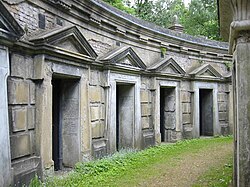
The West Side of the cemetery is renowned for its dramatic topography and elaborate funerary architecture. It is characterized by winding paths carved into hillsides, deep vaults, and feature tombs that exemplify the Victorian obsession with mourning and monumentality.
Among its most striking landmarks are the Egyptian Avenue and the Circle of Lebanon, both of which are Grade I listed buildings. The Circle of Lebanon is particularly notable for its history; a massive 280-year-old Cedar of Lebanon once crowned the site but had to be replaced in August 2019. At the cemetery's highest elevations, visitors can find the Grade II* listed Terrace Catacombs and the Julius Beer Mausoleum.
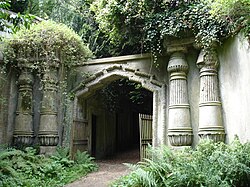
The landscape has evolved over time. In 1967, the Dissenter's Catacombs were demolished after being declared unsafe. This site later became the location for three houses, including the Grey House, built in 2008 and visible from Faraday Path.
Notable Interments of the West Side
The West Side is the final resting place for a diverse array of figures, including scientists, artists, and political figures. Notable residents include:
- Michael Faraday: The legendary chemist and physicist.
- Lucian Freud: The acclaimed painter and grandson of Sigmund Freud.
- Christina Rossetti: The celebrated poet.
- George Cruft: The founder of the Crufts dog show.
- Alexander Litvinenko: The Russian dissident.
- Beryl Bainbridge: The renowned author.
The East Side: A Sanctuary of Intellectuals
While the West Side is defined by its architectural drama, the East Side is perhaps more famous for the intellectual giants it houses. The atmosphere here is one of quiet reflection, where the greenery often intertwines with the weathered stone of the monuments.
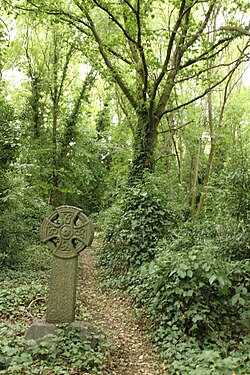
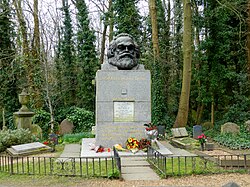
The most visited site in this section is the memorial to Karl Marx, the philosopher, sociologist, and economist, who rests here with other members of his family.
The East Side also hosts a wide variety of creative and political figures, ranging from the whimsical to the revolutionary. Recent additions and well-known residents include the author Douglas Adams (ashes) and the punk impresario Malcolm McLaren.
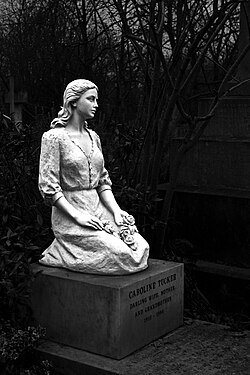
Over the years, the East Side has maintained its character as a place of historical significance, continuing to attract visitors from around the globe who come to pay their respects to the thinkers and artists of the past.
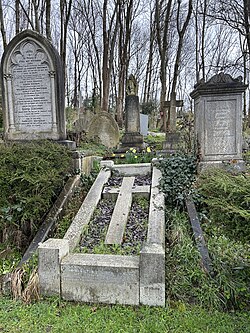
Key Facts
- Grade I Listed: The Egyptian Avenue and Circle of Lebanon are among the highest-protected architectural sites.
- War Graves: The cemetery maintains 318 Commonwealth service personnel graves (259 from WWI and 59 from WWII).
- Diverse Residents: Interments range from the founder of the Crufts dog show to the author of The Hitchhiker's Guide to the Galaxy.
- Architectural Variety: Features include catacombs, mausoleums, and a Screen Wall memorial for unidentified war graves.
Summary of Cemetery Sections
| Feature | West Side | East Side |
|---|---|---|
| Atmosphere | Elaborate, Gothic, hilly terrain | Serene, intellectual, nature-integrated |
| Key Landmarks | Egyptian Avenue, Circle of Lebanon | Karl Marx Memorial |
| Listing Status | Grade I and Grade II* listed structures | Various historical monuments |
| Notable Figures | Michael Faraday, Christina Rossetti | Karl Marx, Douglas Adams |
Commonwealth War Graves
Highgate Cemetery serves as a place of remembrance for those who served in the World Wars. The Commonwealth War Graves Commission maintains 318 graves across both sides of the cemetery. For those whose graves could not be individually marked with headstones, a Screen Wall memorial has been erected near the Cross of Sacrifice on the West Side to ensure their service is never forgotten.
Frequently Asked Questions
Who is the most famous person buried in Highgate Cemetery?
While the cemetery houses hundreds of notable figures, Karl Marx is widely considered the most famous, with his memorial in the East Cemetery attracting visitors from all over the world.
What is the Egyptian Avenue?
The Egyptian Avenue is a Grade I listed architectural feature on the West Side, characterized by its distinct Egyptian-style design and elaborate vaults.
How many war graves are located at Highgate?
There are 318 Commonwealth service personnel graves, consisting of 259 from the First World War and 59 from the Second World War.
What happened to the Cedar of Lebanon tree?
The original 280-year-old Cedar of Lebanon, which surmounted the Circle of Lebanon, had to be cut down and was replaced in August 2019.
Is the West Side different from the East Side?
Yes. The West Side is known for its elaborate feature tombs, winding hillside paths, and Grade I listed structures. The East Side is more noted for its high concentration of intellectual and creative figures, such as Karl Marx and Douglas Adams.