
Highland Airways: The Pioneer of Scottish Island Aviation
In the early 1930s, traveling from the Scottish mainland to the Northern Isles of Orkney and Shetland was a grueling journey by ship, often plagued by the volatile conditions of the North Sea. This changed on April 3, 1933, with the founding of Highland Airways. Established by Captain Ted Fresson in Inverness, the airline was designed to revolutionize connectivity for businessmen, military personnel, tourists, and local residents, including crofters and "fisher lassies."
Operating from the newly constructed Longman Airfield in Inverness, Highland Airways sought to provide a reliable alternative to sea travel, focusing on the transport of passengers, freight, mail, and newspapers.
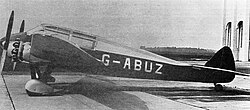
Key Facts
- Founded: April 3, 1933, by Captain Ted Fresson.
- Primary Hubs: Inverness (Longman Airfield), Kirkwall, and Aberdeen.
- First Airmail: Launched the UK's first internal airmail service on May 29, 1934.
- Reliability: Achieved a 98% reliability rate within its first four years of operation.
- Fate: Absorbed into Scottish Airways in 1937, and eventually British European Airways (BEA) in 1947.
The Vision and Formation of Highland Airways
Captain Ernest Edmund "Ted" Fresson was no stranger to the Scottish landscape. Having spent years conducting pleasure flights from makeshift fields, he recognized a critical gap in the region's infrastructure. With an initial share capital of £2,675 provided by seventeen shareholders—including local business leaders and the owner of The Scotsman newspaper—Fresson became the managing director of the new venture.
The airline's headquarters were set at 36 Academy Street, Inverness, with operations centered at Longman Airfield, a facility built by the local council with significant support from the business community.
Operational Challenges and Innovations
Operations officially commenced on May 8, 1933. The airline's first aircraft, a three-passenger General Aircraft Monospar ST-4 Mk.II (G-ACEW), flew from Longman to Kirkwall via Wick. To maximize revenue, Fresson added a pannier under the fuselage specifically for delivering The Scotsman newspapers.
Flying in the Northern Isles presented unique challenges, particularly high winds and unpredictable mist. Fresson famously managed these conditions by organizing teams of up to twelve local islanders to physically hold down the wings of landing aircraft until they could be secured to heavy vehicles.
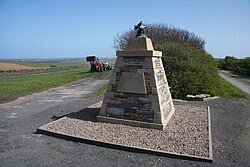
Expanding the Network
By May 1934, Highland Airways expanded to Aberdeen, initially using the short-lived Seaton Aerodrome. This move was prompted by a rivalry with Eric Gandar Dower of Aberdeen Airways, who denied Fresson access to Dyce Airport. Fresson eventually moved his Aberdeen operations to a new hangar at Kintore in 1935.
The airline also pioneered essential social services, securing a contract from the Orkney County Council to transport patients between the Northern Isles and hospitals in Kirkwall and Aberdeen.
Technical Advancements
Fresson was instrumental in aircraft development. After testing the DH.89 Dragon Rapide, he noted that the short island airfields required better low-speed control. He requested that De Havilland add wing flaps, leading to the creation of the DH.89A version, a modification that was subsequently adopted by many other aircraft.
Corporate Evolution and Demise
Despite its operational success, Highland Airways struggled with profitability. In June 1935, the company became part of United Airways Limited, backed by the Whitehall Securities Corporation. While Fresson remained managing director, his authority was reduced.
In August 1937, Whitehall consolidated several entities into Scottish Airways. Highland Airways initially maintained its identity as a division, but by August 1938, it was fully integrated as the Northern Division of Scottish Airways. The company was eventually liquidated in the summer of 1940.
The legacy of the airline concluded in 1947 when British European Airways (BEA) took full control of Scottish Airways. Captain Fresson left the organization in 1948, receiving his old Gipsy Moth (G-AAWO) as his only recompense for the takeover.
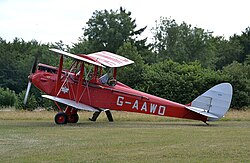
Fleet and Route Summary
| Aircraft Type | Key Role / Note | Primary Routes |
|---|---|---|
| Monospar ST-4 | First airliner; used for newspaper delivery | Inverness → Wick → Kirkwall |
| DH.84 Dragon | Workhorse for passengers and mail | Inverness → Kirkwall → Lerwick |
| DH.89A Rapide | High-capacity; featured custom flaps | Aberdeen → Sumburgh (Shetland) |
| DH.60G Gipsy Moth | Personal transport and charters | Thurso → Lerwick |
Frequently Asked Questions
Who founded Highland Airways?
Highland Airways was founded by Captain Ted Fresson on April 3, 1933, in Inverness, Scotland.
What was the first internal airmail service in the UK?
Highland Airways started the UK's first internal airmail service on May 29, 1934, operating on the route between Inverness and Orkney.
How did the airline handle high winds during landings?
Captain Fresson organized teams of up to twelve local men to grab the wings of landing aircraft and hold them down until the planes could be tied to a heavy vehicle.
What aircraft modification did Ted Fresson suggest to De Havilland?
Fresson requested the addition of wing flaps to the DH.89 Dragon Rapide to improve its performance on the short airfields common in the Northern Isles, resulting in the DH.89A version.
What happened to Highland Airways in the end?
The airline was absorbed into Scottish Airways in 1937, became the Northern Division of that company in 1938, and was liquidated in 1940. The parent company, Scottish Airways, was eventually taken over by British European Airways (BEA) in 1947.