
History Painting: The Evolution of Art's Highest Genre
For centuries, the world of art was governed by a strict hierarchy, and at the very top sat history painting. Far more than a simple record of past events, this genre was considered the ultimate test of an artist's skill, requiring the ability to compose complex scenes, convey deep emotion, and communicate moral or political truths. From the grand frescoes of the Italian Renaissance to the provocative works of the 19th century, history painting has shaped how we visualize the human experience.
The Rise of the Genre in the Italian Renaissance
While the Western tradition of large-scale storytelling existed in medieval altarpieces and illuminated manuscripts, the formal concept of history painting flourished during the Italian Renaissance. In Florence, artists began producing increasingly ambitious works that moved beyond purely religious themes to include contemporary historical events.
Notable examples include Paolo Uccello's The Battle of San Romano and the ambitious, though unfinished, projects of the High Renaissance: Michelangelo's Battle of Cascina and Leonardo da Vinci's Battle of Anghiari. During this era, influential writers like Alberti and Giorgio Vasari argued that a painter's reputation depended primarily on their ability to execute these large-scale historical works.
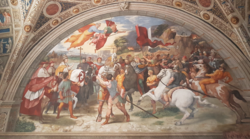
Defining the Scope: Istoria vs. Fabula
As the genre evolved, scholars sought to categorize its subjects. Some preferred the term poesia (poetic painting), while others distinguished between istoria—which covered "true" history, including biblical and religious narratives—and fabula, which encompassed pagan myths, fictions, and allegories.
The works of Raphael and Michelangelo became the gold standard for the genre. In the Vatican Palace, Raphael blended allegory with historical scenes in what became known as the Grand Manner, a style characterized by nobility, idealization, and large-scale composition.
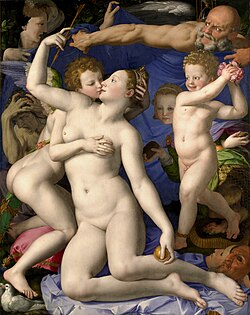
The Hierarchy of Genres and the French Influence
By the Baroque period, some history paintings devolved into formulaic panoramic battle scenes featuring victorious monarchs. However, masters like Velázquez elevated the form, as seen in The Surrender of Breda.
In 1667, André Félibien, a theorist of French classicism, codified the hierarchy of genres. He argued that because the human figure is God's most perfect creation, the artist who depicts humans is superior to those who paint animals or landscapes. According to Félibien, the pinnacle of art was the use of allegory to veil the virtues of great men and reveal profound mysteries.
| Rank | Subject Matter | Reasoning |
|---|---|---|
| Highest | Allegory & History | Represents great actions, virtues, and complex mysteries. |
| High | Human Figures/Portraits | Imitates the most perfect work of God (man). |
| Medium | Living Animals | Superior to inanimate objects due to movement. |
| Lowest | Still Life (Fruit, Flowers) | Represents dead things without movement. |
Transition to Modernity and Contemporary History
The late 18th century saw a shift away from religious and mythological themes toward contemporary history. This change was driven by a new audience; artists began seeking fame in public exhibitions rather than solely within royal palaces. In Great Britain, the Society of Artists encouraged this trend by awarding prizes for paintings of British history.
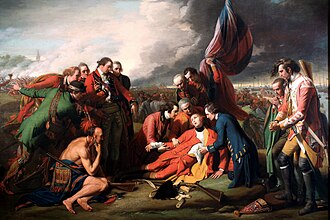
One of the greatest challenges of this era was the depiction of modern clothing, which was often viewed as "unheroic" compared to classical robes. In 1770, Benjamin West defied convention by painting The Death of General Wolfe in contemporary dress, paving the way for a more historically accurate approach to art.
Propaganda and the 19th Century Shift
The Napoleonic era utilized history painting as a powerful tool for propaganda. While French artists glorified Napoleon's exploits, others like Goya and J.M.W. Turner captured both the victories and the tragedies of the conflict. Théodore Géricault's The Raft of the Medusa (1818–1819) further modernized the genre by focusing on anonymous victims of a contemporary disaster rather than celebrated heroes.
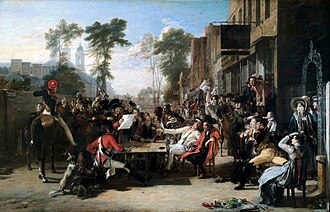
By the mid-19th century, historicism emerged—a style that formally imitated past artistic periods. Simultaneously, the boundaries between history painting and genre painting (scenes of everyday life) began to blur. Artists started depicting personal anecdotes or the lives of unnamed figures involved in great events, often referred to as the Troubadour style.
The Decline and Rejection of the Genre
As the 19th century closed, the rigid structures of history painting were explicitly rejected by avant-garde movements. Impressionists (with the notable exception of Édouard Manet) and Symbolists moved away from these grand narratives. Modernism was largely built upon the rejection of history painting, excluding it from the "pantheon" of modern art in favor of more personal or abstract expressions.
Key Facts
- Hierarchy: History painting was traditionally ranked as the highest genre of art due to its complexity and moral weight.
- Grand Manner: A High Renaissance style associated with Raphael and Michelangelo, emphasizing nobility and large-scale composition.
- Félibien's Theory: A 1667 formulation that placed human figures and allegories above landscapes and still lifes.
- Modern Shift: Benjamin West broke tradition in 1770 by depicting historical figures in contemporary rather than classical dress.
- Historicism: A mid-19th-century trend involving the formal imitation of historical styles.
Frequently Asked Questions
What is the difference between istoria and fabula?
Istoria refers to "true" history, which includes biblical, religious, and factual historical scenes. Fabula refers to fictional narratives, including pagan myths and allegories.
Why was history painting considered the highest genre?
It was believed to be the most difficult and prestigious because it required the artist to master human anatomy, complex composition, and the ability to convey significant moral or historical narratives.
Who was André Félibien and why is he important?
Félibien was a French historiographer and theorist who, in 1667, established a formal hierarchy of genres that dominated art theory through the 18th century, placing history and allegory at the top.
How did Benjamin West change history painting?
West challenged the convention that historical scenes must be depicted in classical costume. By painting The Death of General Wolfe in contemporary dress, he introduced a new standard of historical accuracy.
What is the "Grand Manner"?
The Grand Manner is a style of painting that emerged during the High Renaissance, characterized by an idealized, noble approach to subject matter, typically used in large-scale historical or religious works.