
HMAS Albatross: The Diverse Operational History of a Versatile Vessel
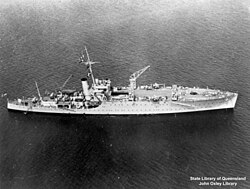
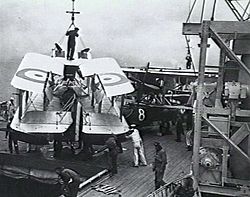
The story of HMAS Albatross is one of remarkable transformation. Beginning its life as a specialized seaplane carrier for the Royal Australian Navy, the vessel evolved through multiple roles—from a wartime repair ship in the English Channel to a post-war passenger liner. Its journey reflects the shifting needs of global naval strategy and the resilience of maritime engineering.
Service with the Royal Australian Navy
Commissioned in the late 1920s, HMAS Albatross quickly entered active service. Just one week after commissioning, it embarked on its first cruise to Victoria and Tasmania. In April 1929, the ship was dispatched from Sydney to Western Australia to search for Sir Charles Kingsford Smith and the Southern Cross, which had vanished while traveling to England. Although the search was underway, Smith was located after making an emergency landing near the Glenelg River.
The ship's early years were not without turmoil. In November 1931 and September 1932, the vessel's engines were damaged by sabotage. While the Royal Australian Navy (RAN) attributed these acts to Communist influence, historians Tom Frame and Kevin Baker suggest the unrest was driven by Depression-era retrenchments and pay cuts affecting the sailors.
Following a refit in December 1931, Albatross served as a gunnery training ship and participated in the ceremonial opening of the Sydney Harbour Bridge on March 19, 1932. By April 1933, the ship was decommissioned into reserve, though seaplane operations continued. In 1938, to assist the Australian government in funding the light cruiser Hobart, the Admiralty accepted Albatross as partial payment, crediting 266,500 pounds toward the purchase. The ship was recommissioned in April 1938 for its voyage to England.
Transition to the Royal Navy and World War II
Upon arriving in Britain, Albatross was initially commissioned as a trials ship at Devonport before being paid off in December 1938. Its catapult was removed, and it served as an Accommodation ship (a vessel used to house personnel). However, the loss of the aircraft carriers Courageous and Glorious early in World War II created an urgent need for its capabilities.
The ship was deployed to Freetown, Western Africa, where it performed anti-submarine warfare, convoy escort, and air-sea rescue in the Atlantic. In May 1942, it moved to the Indian Ocean to support the Eastern Fleet at Kilindini. During the Madagascan campaign in September 1942, Albatross provided critical air support for landings at Mayotte before returning to trade protection duties.
By October 1943, the vessel underwent a major conversion into a Landing Ship – Engineering (LSE), a specialized vessel designed to provide repair and technical support for amphibious operations. This role was pivotal during the Normandy landings in 1944. After a brief period of deception operations in the Thames estuary, Albatross moved to "Gooseberry 5" off Sword Beach on June 8, 1944. Amidst a disruptive "great storm," the ship's repair facilities saved 79 craft from total loss and returned 132 others to service.
Tragedy struck on August 11, 1944, while the ship was off Courseulles-sur-Mer. A torpedo hit inflicted severe structural damage and killed 66 crew members. The vessel was towed to Portsmouth by the Dutch tug Zwart Zee. After repairs and a short stint as a minesweeper depot ship, it was paid off into reserve on August 3, 1945.
Post-War Commercial Life as the Hellenic Prince
In August 1946, Albatross was sold for commercial use. While initial plans to create a luxury liner proved too expensive, a proposal to turn it into a floating cabaret called the Pride of Torquay was also bypassed. Instead, the Yannoulatos Group purchased the ship on November 14, 1948, renaming it Hellenic Prince to honor the birth of Prince Charles and his Greek heritage.
Converted into a passenger liner in Wales, the ship found a humanitarian purpose in 1949. Chartered by the International Refugee Organization, it transported displaced persons from Europe to Australia, arriving in Sydney on December 5, 1949, with 1,000 passengers.
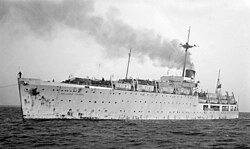
The vessel's final active duty occurred in 1953, when it served as a troopship during the Mau Mau uprising. The long and varied career of the ship finally came to an end when it was scrapped in Hong Kong on August 12, 1954.
Key Facts
- Original Role: Seaplane carrier for the Royal Australian Navy.
- WWII Conversion: Transformed into a Landing Ship – Engineering (LSE) for the Normandy landings.
- Combat Impact: Saved 79 craft and repaired 132 others at Sword Beach.
- Casualties: 66 crew members killed by a torpedo strike in August 1944.
- Post-War Identity: Renamed Hellenic Prince and used as a refugee transport and troopship.
- Final Fate: Scrapped in Hong Kong in 1954.
| Period | Name | Primary Role | Key Location |
|---|---|---|---|
| 1928–1938 | HMAS Albatross | Seaplane Carrier / Training Ship | Australia |
| 1939–1943 | HMS Albatross | Convoy Escort / Air-Sea Rescue | Atlantic / Indian Ocean |
| 1943–1945 | HMS Albatross | Landing Ship – Engineering (LSE) | Normandy, France |
| 1948–1954 | Hellenic Prince | Passenger Liner / Troopship | Global / Hong Kong |
Frequently Asked Questions
Why was HMAS Albatross transferred to the Royal Navy?
The Australian government faced funding difficulties when purchasing the light cruiser Hobart. The Admiralty agreed to accept Albatross as partial payment, crediting 266,500 pounds toward the cruiser's cost.
What was the ship's contribution to the Normandy landings?
As a Landing Ship – Engineering (LSE), Albatross provided essential repair facilities, anti-aircraft support, and bombardment support at Sword Beach, saving 79 craft from total loss and returning 132 others to service.
What caused the sabotage incidents in the early 1930s?
While the RAN attributed the sabotage to Communist influence, some historians argue it was a result of widespread unrest among sailors due to Depression-era pay cuts and retrenchments.
How did the ship serve as a humanitarian vessel?
Renamed the Hellenic Prince, the ship was chartered by the International Refugee Organization in 1949 to transport displaced persons from Europe to Australia, including a voyage that brought 1,000 passengers to Sydney.
When and where was the vessel finally decommissioned?
After serving as a troopship during the Mau Mau uprising, the vessel was scrapped in Hong Kong on August 12, 1954.