
Hong Kong Football History: From Early Clubs to Project Phoenix
Football has a deep-rooted legacy in Hong Kong, serving as a cornerstone of the region's sporting identity for over a century. From the establishment of some of Asia's oldest sporting institutions to periods of regional dominance, the trajectory of the game in Hong Kong reflects a blend of colonial influence and local passion.
The Foundations of the Game
The organized history of the sport began with the Hong Kong Football Club, commonly referred to as "The Club." Founded in 1886, it stands as one of the oldest existing football clubs in Asia. As the sport grew in popularity, the region introduced the Challenge Shield in 1898, the first football competition in Hong Kong. This tournament was modeled after the FA Challenge Cup in England.
By 1908, the Hong Kong football league was established, providing a structured environment for competitive play. Notably, Hong Kong became the first territory in Asia to organize a professional club, setting a precedent for the professionalization of the sport across the continent.
To oversee the growth and regulation of the sport, the Hong Kong Football Association (HKFA)—the governing body for football in the region—was founded in 1914. It remains one of the oldest football associations in Asia.
A Regional Powerhouse
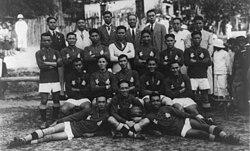
From the 1920s through the 1970s, Hong Kong established itself as a comparative powerhouse within the Asian football context. This era of success was highlighted by the team's participation in China's first national games, where Hong Kong secured championships in both 1935 and 1948.
The Golden Era of the 70s and 80s
The 1970s and 1980s marked a peak in both the quality and popularity of the sport. Local teams became highly competitive, bolstered by the recruitment of renowned overseas managers and players. During this period, matches frequently drew crowds of tens of thousands of spectators.
One of the most iconic moments in this era occurred in 1985. In a historic match played in Beijing, Hong Kong upset China with a 2–1 victory. This win propelled the team toward a potential spot in the 1986 World Cup, although they ultimately fell short of qualification.
Modern Development and Project Phoenix
In recent years, the focus has shifted toward systemic improvement and modernization. The Hong Kong government launched a comprehensive scheme known as Project Phoenix. This initiative is designed to enhance the governance of the HKFA and elevate the overall quality of football within the region.
Key Facts
- Oldest Club: Hong Kong Football Club, founded in 1886.
- First Competition: The Challenge Shield, established in 1898.
- Professionalism: Hong Kong was the first in Asia to organize a professional club.
- Governing Body: The Hong Kong Football Association (HKFA), founded in 1914.
- Major Achievement: National games championships in 1935 and 1948.
- Historic Upset: Defeated China 2–1 in Beijing in 1985.
| Year | Event/Milestone |
|---|---|
| 1886 | Foundation of Hong Kong Football Club |
| 1898 | Inauguration of the Challenge Shield |
| 1908 | Foundation of the Hong Kong football league |
| 1914 | Foundation of the Hong Kong Football Association (HKFA) |
| 1935 & 1948 | National games championships won |
| 1985 | 2–1 victory over China in Beijing |
Frequently Asked Questions
Which was the first football club established in Hong Kong?
The Hong Kong Football Club, often called "The Club," was the first, founded in 1886.
What is the Challenge Shield?
Founded in 1898, the Challenge Shield is Hong Kong's first football competition, featuring a format similar to England's FA Challenge Cup.
When did Hong Kong win the national games championships?
The Hong Kong team won the national games championships in 1935 and 1948.
What happened during the 1985 match against China?
Hong Kong achieved a famous 2–1 upset victory over China in Beijing, which brought them closer to qualifying for the 1986 World Cup.
What is Project Phoenix?
Project Phoenix is a government scheme aimed at improving the governance of the Hong Kong Football Association and increasing the quality of football in the region.