
Hurricane Hazel: The Devastating 1954 Flood of Toronto
Hurricane Hazel began as a powerful storm in the Caribbean Sea, making its initial landfall near the border of the Carolinas in the United States. While meteorologists predicted the storm would weaken as it moved north, Hazel defied expectations. After merging with a cold front around Pennsylvania, the storm lost its tropical characteristics but maintained its destructive strength as it surged toward Canada.
The Perfect Storm in Toronto
By the time Hurricane Hazel reached Toronto on October 15, 1954, a series of environmental and social factors converged to create a catastrophe. The region was already saturated, having received more than six weeks' worth of rain in the preceding 16 days. This meant the water table—the level below which the ground is completely saturated with water—was full. Consequently, up to 90 percent of the storm's 200 mm (7.9 in) of rainfall flowed directly into waterways like the Humber River.
Adding to the danger, neighborhoods such as Raymore Drive were situated within the floodplain, the low-lying area adjacent to a river that is subject to periodic flooding. Furthermore, many residents were unfamiliar with the risks of hurricanes or severe flooding. This lack of experience led to dangerous complacency; in some instances, long-time residents convinced others to stay in their homes despite warnings, believing the water would not rise to life-threatening levels.
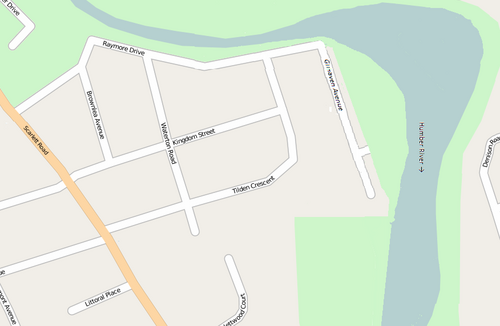
The Destruction of Raymore Drive
As the narrow Humber River overflowed, the flooding at Raymore Drive began slowly, allowing some residents to escape. However, the situation turned violent as the water rose. A footbridge became unstable and was torn from one of its abutments. Because of its size, the bridge acted as a barrier that redirected debris and massive volumes of water directly into the residential neighborhood.
The water level rose by more than 6 m (20 ft) with sudden intensity. The severed bridge eventually became a battering ram, swept along by the current and smashing into properties. This combination of rushing water and structural debris swept away entire homes and destroyed 366 metres (1,201 ft)—approximately 39 percent—of the road.
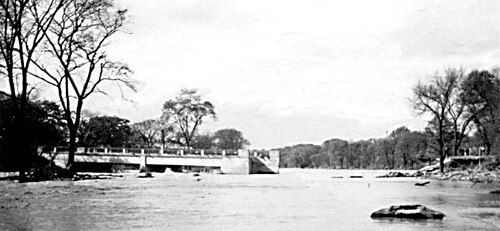
Human Toll and Aftermath
The disaster claimed 14 homes, often with occupants still inside. The most tragic loss occurred at 148 Raymore Drive, where the Edwards and Neil families resided; nine people died there, including six children. The bodies of three-month-old John Edwards and two-year-old Frank Edwards were never recovered. In total, 35 of the 81 Canadian deaths attributed to Hurricane Hazel occurred on Raymore Drive alone.
Following the disaster, the Canadian Army was deployed to assist with cleanup. The devastation was so absolute that the flooded section of Raymore Drive was permanently rezoned from a residential area to a park to prevent future tragedies. In contrast, homes located on slightly higher ground or further from the river's bend suffered only minor basement flooding.
Key Facts
- Date of Impact: October 15, 1954.
- Rainfall: Up to 200 mm (7.9 in) during the storm, following six weeks of rain in 16 days.
- Water Rise: The Humber River rose by over 6 m (20 ft) at Raymore Drive.
- Infrastructure Loss: 39% of the road at Raymore Drive (366 metres) was destroyed.
- Casualties: 81 deaths in Canada, with 35 occurring on Raymore Drive.
- Long-term Change: Flooded residential areas were converted into public parks.
| Category | Detail |
|---|---|
| Maximum Water Rise | Over 6 metres (20 ft) |
| Homes Destroyed | 14 |
| Road Damage | 366 metres (39% of the street) |
| Local Fatalities | 35 deaths |
| Current Land Use | Converted to parkland |
Frequently Asked Questions
Why did Hurricane Hazel remain strong as it moved north?
Although it lost its tropical characteristics after merging with a cold front near Pennsylvania, the storm defied meteorological predictions and maintained its strength as it traveled toward Canada.
What made the flooding in Toronto so severe?
The severity was caused by a saturated water table due to prior heavy rains, the location of homes within the Humber River floodplain, and a general lack of public awareness regarding hurricane risks.
How did the footbridge contribute to the damage?
The bridge first redirected water and debris into the Raymore Drive neighborhood and later acted as a battering ram, causing significant property damage as it was swept away.
What happened to the residential area at Raymore Drive?
Due to the extreme risk of future flooding, the area that was most severely hit ceased to be a residential neighborhood and was converted into a park.
How many people died in Canada due to the storm?
There were 81 deaths in Canada, with a significant concentration of 35 deaths occurring on Raymore Drive alone.