
Iftikhar Ali Khan Pataudi: The Extraordinary Cricket Career of a Dual-Nation Legend
Iftikhar Ali Khan Pataudi remains one of the most unique figures in the history of cricket, distinguished by his rare achievement of playing Test cricket for two different nations. A man of immense talent and strong convictions, Pataudi's journey took him from the playing fields of India to the prestigious halls of Oxford and into the heat of the most controversial series in cricket history.
Early Development and Oxford Dominance
Pataudi's technical foundation was built under the guidance of Oxford cricketer M. G. Slater in India and later refined in England by Frank Woolley. Upon entering Oxford in 1927, he demonstrated his resilience and skill, earning a blue—the highest sporting honor at the university—after scoring 106 and 84 to save a critical match against Cambridge.
The 1931 season marked Pataudi's ascent to brilliance. He topped the Oxford averages with 1,307 runs and a batting average of 93. In a legendary display of competitiveness, Pataudi responded to Alan Ratcliffe's record-breaking 201 for Cambridge by scoring 238* the following day. This monumental score remained the University Match record until 2005.
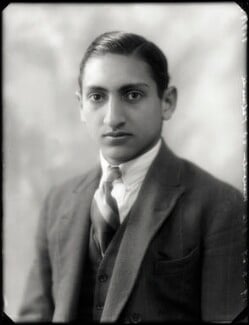
The Ashes and the Bodyline Conflict
After a brief stint with Worcestershire in 1932, Pataudi's exceptional performance for the Gentlemen at Lord's—where he scored 165 and displayed masterful footwork against Tich Freeman—earned him a spot on the Ashes tour. His impact was immediate; he followed the precedent set by Ranjitsinhji by scoring a century (102) on his Test debut in Sydney, contributing to a 10-wicket victory for England.
However, Pataudi's tenure with the England team was marred by a clash of ideologies. He strongly dissented against bodyline—a controversial tactic involving fast, short-pitched bowling aimed at the batsman's body with a packed leg-side field. When Pataudi refused to field in the leg-side position, captain Douglas Jardine mockingly referred to him as a "conscientious objector."
The friction led to Pataudi being dropped after the second Test in Melbourne. The relationship between the two was icy; Jardine allegedly suggested Pataudi would never play for his "adopted country" again, while Pataudi remarked that in three months of knowing Jardine, he had yet to see any of the captain's "good points."
County Success and Health Struggles
Despite the Test turmoil, 1933 was a banner year for Pataudi in county cricket. Playing for Worcestershire, he scored 1,749 runs at an average of 49, including two double-hundreds and another dominant performance against Tich Freeman. While he began 1934 with a batting average of 91.33, his health began to fail, limiting him to just ten games. He played his final Test for England in June 1934 at Trent Bridge, scoring 12 and 10.
Leading the Indian National Team
Pataudi's relationship with the Indian national team was complex. Though considered for the captaincy during India's first Test in 1932 and again for the 1936 tour of England, he withdrew from both opportunities, the latter ostensibly due to health reasons. He eventually captained the Indian tour of England in 1946.
While he averaged 46.71 on the tour, his Test performance was modest, scoring only 55 runs across five innings. Despite criticism of his captaincy, he was named the Indian Cricketer of the Year for 1946/47. Pataudi intended to return to Worcestershire for the 1952 season but passed away in India before he could do so.
Key Facts
- Dual Representation: Played Test cricket for both England and India.
- Record Breaker: Held the University Match record (238*) from 1931 to 2005.
- Debut Success: Scored a century (102) on his Test debut for England in Sydney.
- Honors: Named Wisden Cricketer of the Year (1932) and Indian Cricketer of the Year (1946/47).
- Versatility: Was also an accomplished speaker and a skilled player of billiards and hockey.
| Period/Team | Key Achievement | Notable Statistic |
|---|---|---|
| Oxford University (1931) | University Match Record | 238* runs |
| England (1932-33) | Test Debut Century | 102 runs (Sydney) |
| Worcestershire (1933) | Full County Season | 1,749 runs (Avg 49) |
| India (1946) | Tour Captaincy | Tour Average 46.71 |
Frequently Asked Questions
Why did Pataudi clash with Douglas Jardine?
Pataudi disagreed with the unethical nature of the bodyline tactics employed by Jardine, specifically refusing to take his place in the leg-side field designed to intimidate batsmen.
What was Pataudi's most significant record at Oxford?
He scored 238* in the University Match in 1931, a record that stood for 74 years until it was broken in 2005.
Did Pataudi play for India and England simultaneously?
No. He played for England in the early 1930s and later captained the Indian team during their 1946 tour of England.
How is Pataudi remembered in modern cricket?
In 2007, the Marylebone Cricket Club (MCC) commissioned the Pataudi Trophy to be contested during Test series between India and England to commemorate the 75th anniversary of India's Test debut.
What other sports was Iftikhar Ali Khan Pataudi proficient in?
Beyond cricket, he was a fine player of both hockey and billiards.