
India's Scientific and Technological Evolution: From Independence to the Modern Era
Following its independence in 1947, India embarked on an ambitious journey to transform its economy into that of a modern state. Recognizing that it had not been at the forefront of the Industrial Revolution, the nation prioritized the rapid development of higher education, science, and technology to integrate itself into the nuclear age.
The Foundation of Modernity (1947–1967)
The 1950 Planning Commission played a pivotal role in this transformation by fixing investment levels and balancing resources between agriculture and industry. Between 1947 and 1962, these strategic efforts yielded significant results: food production rose by 34 million metric tons, installed power generating capacity increased by 79 million kilowatts, and industrial production grew by 94 percent. Additionally, the area under irrigation expanded by 45 million acres.
Despite a rapidly growing population that balanced these gains, India successfully built a scientific workforce that was second in size only to the United States and the Soviet Union. Education was made free and compulsory up to age 14, with a strong emphasis on vocational and technical skills. This was driven by the belief that education is the primary catalyst for economic growth through the advancement of science and technology.
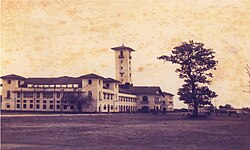
A landmark achievement in this era was the inauguration of the Indian Institute of Technology (IIT) at Kharagpur on August 18, 1951, by Minister of Education Maulana Abul Kalam Azad. These institutions, modeled after the Massachusetts Institute of Technology (MIT), were the result of a committee led by N.R. Sarkar.
Defense and Communication
The 1962 Sino-Indian war highlighted gaps in military preparedness, leading India to pursue military cooperation with the Soviet Union to develop advanced technology. This era also saw the formation of the Defence Research and Development Organisation (DRDO) in 1958. In communications, radio broadcasting transitioned to state responsibility in 1930, eventually becoming All India Radio (1947) and later Akashvani (1957). Television programming began in 1959, reaching full broadcasting by 1965.
To bolster research and corporate efficiency, the Indian government acquired EVS EM computers from the Soviet Union for use in laboratories and large companies.
Nuclear Energy and Space Exploration (1967–1985)
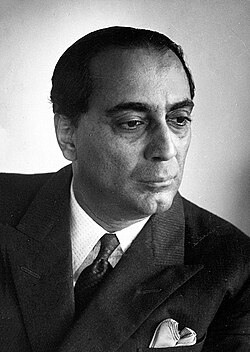
India's nuclear capabilities were established through the acquisition of reactor technology from Western nations, including Canada's CANDU reactors and American support for the Tarapur Atomic Power Station. This program was championed by figures such as Homi Jehangir Bhabha.
The nation's first reactor, Apsara, and subsequent plutonium reprocessing facilities marked the beginning of a sophisticated nuclear infrastructure.
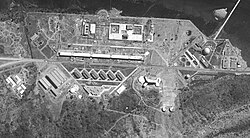
Parallel to nuclear energy, the Indian Space Research Organisation (ISRO) flourished with financial support from the Soviet Union. Key milestones included the establishment of the Thumba Equatorial Rocket Launching Station, the launch of the first satellite, Aryabhatta, and the deployment of remote sensing satellites and astronauts.
Industrialization and Polar Research
The management of the steel industry underwent a major shift in 1973 with the formation of the Steel Authority of India Ltd. (SAIL). Incorporated with an authorized capital of Rs. 2000 crore, SAIL managed integrated steel plants in Bhilai, Bokaro, Durgapur, Rourkela, and Burnpur, as well as the Salem and Alloy Steel Plants. By 1978, SAIL was restructured as an operating company.
India also expanded its scientific horizons to the poles. The Indian Antarctic Programme began in 1981 with an expedition from Goa to the base Dakshin Gangotri.
Biotechnology and Economic Liberalization (1986–2000)
In 1986, the Department of Biotechnology was created under the Ministry of Science and Technology to enhance agricultural and medical applications. This led to the creation of massive biotech parks and government tax deductions for research and development (R&D) within biotechnological firms.
The year 1991 marked a turning point with sweeping economic reforms that ushered in an era of globalization and international integration. This shift resulted in an annual economic growth rate of over 6% between 1993 and 2002. During this period, India also established the permanent Antarctic base, Maitri.
The 21st Century: Global Integration and Innovation
In the modern era, India has strengthened its international scientific ties. In 2002, a bilateral cooperation agreement in science and technology was signed with the European Union. Since 2017, India has held Associate Member State status at the European Organization for Nuclear Research (CERN). Furthermore, a joint India-EU Software Education and Development Centre is planned for Bangalore.
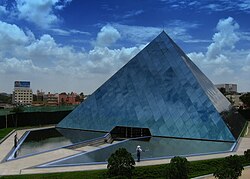
While Bangalore has emerged as the technological capital of India—hosting large-scale R&D in aerospace, IT, nuclear science, and medical research—challenges remain. Some critics, including MIT scientist VA Shiva Ayyadurai, argue that regressive social organizations like the caste system and issues of corruption and inefficiency continue to hinder innovation.
Key Facts
- IIT Kharagpur: Inaugurated in 1951 as a premier technical institution.
- Nuclear Milestones: Development of the Apsara reactor and the "Smiling Buddha" nuclear tests.
- Space Achievements: Launch of the Aryabhatta satellite and establishment of the Thumba Equatorial Rocket Launching Station.
- Industrial Growth: Formation of SAIL in 1973 to manage five major integrated steel plants.
- Economic Shift: 1991 reforms led to over 6% annual growth from 1993 to 2002.
- Global Ties: Associate Member State status at CERN since 2017.
| Period/Year | Key Development | Primary Focus |
|---|---|---|
| 1951 | IIT Kharagpur | Technical Education |
| 1958 | DRDO | Defense Research |
| 1960s | Apsara Reactor | Nuclear Energy |
| 1973 | SAIL | Steel Industry |
| 1981 | Antarctic Programme | Polar Exploration |
| 1986 | Dept. of Biotechnology | Medical & Agricultural Biotech |
| 1991 | Economic Reforms | Globalization & Growth |
Frequently Asked Questions
When was the first Indian Institute of Technology established?
The Indian Institute of Technology at Kharagpur was inaugurated on August 18, 1951, by Maulana Abul Kalam Azad.
What was the significance of the 1991 economic reforms?
The 1991 reforms led to a new era of globalization and international economic integration, resulting in annual economic growth exceeding 6% between 1993 and 2002.
Which city is considered the technological capital of India?
Bangalore is considered the technological capital, serving as a hub for IT, biotechnology, aerospace, and various other engineering and medical sciences.
What is India's relationship with CERN?
Since 2017, India has held the status of Associate Member State at the European Organization for Nuclear Research (CERN).
How did the Soviet Union assist India's space program?
The Soviet Union provided financial support that helped ISRO establish the Thumba Equatorial Rocket Launching Station, launch remote sensing satellites, and develop the first Indian satellite, Aryabhatta.