
Indigenous Peoples of the American Southwest and Great Basin
The landscape of the American West, spanning from the arid deserts of Utah to the rugged mountains of Wyoming and Colorado, has been home to diverse indigenous cultures for millennia. These groups developed sophisticated survival strategies, unique social structures, and deep spiritual connections to their ancestral lands. From the nomadic movements of the Paiute to the expansive reach of the Navajo, these nations represent a rich tapestry of human resilience and adaptation.
Key Facts
- The Navajo are the second-largest federally recognized tribe in the United States, with 300,000 enrolled members.
- The Shoshone are known as the "Grass House People," named after a high-growing grass in their language.
- The Paiute originally managed a vast territory covering 30 million acres.
- The Ute speak a Shoshonean language and are ancestors of the Uto-Aztecs.
- The Goshute remained largely undisturbed by European settlers until the mid-19th century due to their desert location.
The Ute People
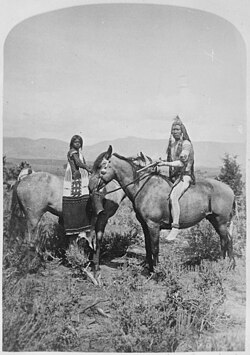
The Ute people are native to a broad region encompassing Arizona, Utah, Colorado, Nevada, New Mexico, and Wyoming. They speak a Shoshonean language and are the ancestors of the Uto-Aztecs. Rather than a single monolithic entity, the Ute are organized into various groups known as bands. These include the Mouache, the Caputa, the Weenuchiu, the White River Ute, and the Pahvant.
To sustain their families, the Ute employed diverse food-acquisition strategies. While they gathered wild plants, labor was often divided by gender: men typically hunted larger game, while women trapped smaller animals. Over time, some bands transitioned into farming, and others developed specialized knowledge in using plants for medicinal purposes.
The Goshute and Shoshone of the Great Basin
The Goshute
Native to the Great Salt Lake Desert in Utah, the Goshute people were highly effective hunters and gatherers within their arid environment. According to their tradition, they have always inhabited this desert region. This isolated geography provided a strategic advantage, shielding them from white settlers until the arrival of Mormon settlers in the mid-1800s, which eventually led to the Goshute being pushed out of their territory.
The Shoshone
The Shoshone people are native to the Great Basin area, specifically within Wyoming, Idaho, and Utah. Their name is derived from their own language, serving as the plural term for a specific type of high-growing grass, which has led to their designation as the "Grass House People." Primarily hunter-gatherers, the Shoshone relied heavily on bison meat as their most critical resource.
The Paiute Experience
The Paiute of Utah were a nomadic people, frequently traveling across an original territory of 30 million acres. Their movements were dictated by the changing seasons and the migration patterns of animals. The first recorded encounter between the Paiute and Europeans occurred in 1776, when the Domínguez–Escalante expedition met a group of Paiute women gathering seeds.
While they remained relatively unaffected by European settlement for decades, the arrival of Mormon settlers in the 1850s brought significant conflict. The most notable event was the 1857 Mountain Meadows Massacre. In the aftermath, the Paiute have consistently denied involvement in the event, despite the Mormons of that era placing the blame on them.
The Navajo Nation
The Navajo are native to the southwestern states of New Mexico, Arizona, Utah, and Colorado. Today, they stand as the second-largest federally recognized tribe in the U.S., with an enrollment of 300,000 people. While they began as hunters and gatherers, they eventually adopted farming techniques to supplement their diet.
The Navajo did not always reside in the Southwest; they originally lived in regions that are now part of modern-day Mexico. However, the arrival of Spanish explorers forced them to migrate north into Southern Utah and other neighboring southwestern states.
Regional Summary
| Tribe | Primary Regions | Key Characteristics | Subsistence Method |
|---|---|---|---|
| Ute | AZ, UT, CO, NV, NM, WY | Divided into bands (e.g., Mouache, Pahvant) | Gathering, Hunting, Farming |
| Goshute | Great Salt Lake Desert, UT | Desert specialists | Hunting and Gathering |
| Paiute | Utah | Nomadic; 30 million acre territory | Seasonal Hunting and Gathering |
| Shoshone | WY, ID, UT | "Grass House People" | Hunting (Bison) and Gathering |
| Navajo | NM, AZ, UT, CO | 2nd largest federally recognized tribe | Hunting, Gathering, Farming |
Frequently Asked Questions
Which language do the Ute people speak?
The Ute people speak a Shoshonean language and are considered ancestors of the Uto-Aztecs.
Why are the Shoshone called the "Grass House People"?
The name Shoshone comes from a word in their own language that is the plural term for a type of high-growing grass.
What was the significance of the Domínguez–Escalante expedition?
This expedition marked the first recorded contact between Europeans and the Paiute people in 1776, specifically encountering women gathering seeds.
How did the Navajo end up in the Southwestern United States?
The Navajo originally lived in areas that are now part of Mexico, but they were pushed into Southern Utah and other southwest states by Spanish explorers.
What is the controversy surrounding the Mountain Meadows Massacre?
Following the 1857 massacre, the Mormons of the time blamed the Paiute people for the event, while the Paiute have been very vocal in stating they were not involved.