
Islands of the World: A Comprehensive Global Classification
From the vast archipelagos of the Pacific to the secluded lake islands of Europe, islands represent a diverse array of geological formations and political territories. An island is a landmass entirely surrounded by water, and these formations are categorized globally by their political affiliation, geographic location, and the bodies of water they inhabit.
Understanding the distribution of islands helps us grasp the complexity of global geography, ranging from sovereign island nations to overseas territories and ancient landmasses that have since submerged.
Key Facts
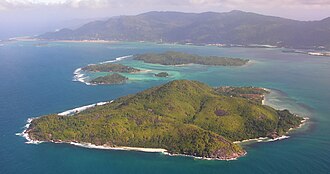
- Islands are classified by country, continent, body of water, and other specific characteristics.
- Some islands are sovereign nations, while others are territories of larger countries (e.g., the British Indian Ocean Territory).
- Islands can exist in oceans, seas, lakes, and rivers.
- Ancient islands include landmasses like Doggerland and Zealandia that are no longer above sea level.
- Specialized categories include artificial islands, phantom islands, and recursive islands (islands within lakes on other islands).
Islands by Political and Continental Location
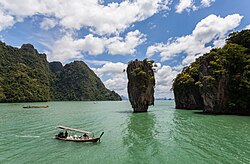
The distribution of islands is often mapped by the countries that claim them or the continents they are associated with. This classification includes both mainland-affiliated islands and independent island states.
Africa and the Middle East
African island territories range from the large island of Madagascar to the Seychelles and Cape Verde. Other notable locations include the Comoros, São Tomé and Príncipe, and various United Kingdom territories such as Saint Helena, Ascension Island, and Tristan da Cunha.
Asia and Oceania
Asia contains some of the world's most populous island regions, including Japan, the Philippines, Indonesia, and Sri Lanka. In Oceania, the landscape is dominated by Australia, New Zealand, and numerous Pacific island groups like Fiji, Kiribati, and the Marshall Islands.
Europe
European islands are found across the Mediterranean, Atlantic, and Baltic regions. Key examples include Iceland, Malta, Cyprus, and the United Kingdom (comprising England, Scotland, Wales, and Northern Ireland), as well as the Faroe Islands and the Isle of Man.
The Americas
North America features a vast array of islands, from the large landmass of Greenland (Denmark) to the Caribbean islands such as Cuba, Jamaica, and the Bahamas. South America includes the Falkland Islands, Trinidad and Tobago, and French Guiana.
Geographic Classifications by Water Body
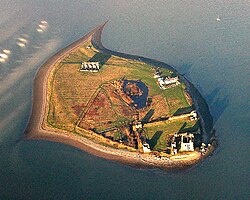
Islands are frequently categorized by the specific body of water they occupy, which often dictates their climate and ecology.
- Oceans: The Arctic, Atlantic, Indian, Pacific, and Southern Oceans.
- Seas: The Mediterranean (including the Adriatic, Aegean, and Ionian seas), the Caribbean, the Baltic, the Black Sea, and the South and East China Seas.
- Inland Waters: This includes lake islands (such as those in the North American Great Lakes) and river islands (such as those found along the Danube River in Europe).
Ancient and Lost Islands
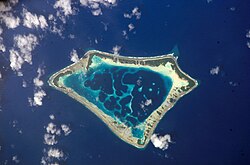
Not all islands currently exist above sea level. Ancient islands are landmasses that were once islands but have since submerged or merged with other landmasses.
Notable examples include Doggerland and Zealandia. In the Seychelles region, many granitic islands are remnants of the split between India and Africa. Other submerged features include the Saya de Malha and various banks such as the Nazareth and Owen Banks.
Summary of Island Classifications
| Classification Type | Examples / Categories | Scope |
|---|---|---|
| Political | Sovereign states, Overseas territories | Global |
| Continental | Africa, Asia, Europe, Americas, Oceania | Regional |
| Hydrological | Oceanic, Sea, Lake, River | Environmental |
| Temporal | Ancient, Former, Artificial | Historical/Man-made |
| Metric | By area, population, or highest point | Statistical |
Frequently Asked Questions
What is an archipelago?
An archipelago is a group or chain of islands clustered together in a sea or ocean.
What are phantom islands?
Phantom islands are islands that appeared on maps for a period of time but were later discovered to not exist.
What are recursive islands?
Recursive islands occur when an island contains a lake, and that lake contains another island.
Which islands are considered ancient or lost?
Ancient islands are former landmasses that have submerged, such as Doggerland or the submerged atolls of the Chagos Archipelago.
How are islands ranked in geographic lists?
Islands are typically ranked by specific metrics, including total land area, total population, population density, or the elevation of their highest point.