
Javakheti: A Comprehensive History of a Strategic Borderland
Javakheti is a region defined by its strategic location and a complex tapestry of ethnic and cultural shifts. From its earliest days as a home to the ancient Meskhetians to its role as a contested borderland between empires, the area has served as a crossroads for various civilizations, religions, and languages.
Key Facts
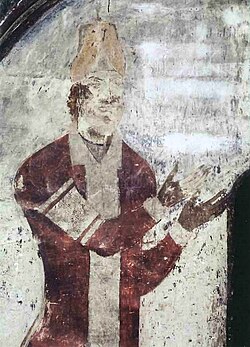
- Ancient Roots: First inhabited by the Meskhetians and recorded as Zabakha in 785 BC.
- Religious Significance: Served as the entry point for Saint Nino, who brought Christianity to Iberia.
- Imperial Shifts: Transitioned from the Georgian monarchy to the Ottoman Empire, then to the Russian Empire, and finally the Soviet Union.
- Demographic Evolution: Shifted from a predominantly Georgian population in the 16th century to an Armenian majority by the 19th century.
- Strategic Value: Historically prized for its geography, commanding the heart of Georgia and bordering Turkey and Iran.
Antiquity and the Early Christian Era
The earliest known inhabitants of the region were the Meskhetians. Historical records from 785 BC mention the area as Zabakha under King Argishti I of Urartu. By the 4th or 3rd century BC, Javakheti and Erusheti were integrated into the Iberian duchy of Tsunda. However, the region's borders were fluid; in the 2nd century BC, the upper Javakheti was annexed by the Armenian kingdom under Artaxias I as part of the province of Gugark.
Javakheti played a pivotal role in the spiritual transformation of the region. Saint Nino, the evangelist of Iberia, entered the kingdom through this southern province. Following the River Kura from Lake Paravani, she eventually reached Mtskheta, the capital, where she began the process of the Christianization of Iberia.
By the 5th century, under the rule of Vakhtang I, Javakheti was firmly a province of Iberia. Early historical accounts, such as those by Faustus of Byzantium, highlight the region's volatility, describing invasions by various nomadic tribes crossing the River Kura.
The Middle Ages: Cultural Flourishing and Conquest
From the 6th century onward, Javakheti became a vital center for Georgian written culture, evidenced by numerous lapidary (stone) inscriptions. During the struggle against Arab occupation, the Bagrationi dynasty established the Kingdom of the Iberians in Tao-Klarjeti, gradually incorporating Samtskhe and Javakheti into their domain.
The 10th century saw further shifts. Part of the region was incorporated into the Kingdom of Abkhazia, with Leon III extending his influence in 964 and overseeing the construction of the Kumurdo Cathedral. Under the unified Georgian monarchy, the region experienced a golden age of architecture, seeing the rise of monasteries, bridges, and royal residences such as Vardzia and Lgivi.
This prosperity was interrupted by external invasions. The Seljuks attacked in 1064 and again in 1118, though King David the Builder eventually defeated them. By 1268, the region was annexed by the House of Jaqeli under the principality of Samtskhe-Saatabago. The late 16th century marked a turning point when the Ottoman Empire occupied the region, transforming it into the Childir Eyalet.
During the Ottoman era, the population faced devastation from Turco-Mongol incursions. A late 16th-century Ottoman survey indicates that Georgians constituted 90–95% of the population at that time. However, as the Georgian Church's influence waned, many locals converted to Islam, a process known as the Turkification of Meskhetians.
The Russian Empire and Demographic Transformation
Following the Russo-Persian Wars of the early 19th century, Russia annexed the Southern Caucasus. This period triggered a massive demographic shift. Many Muslim families emigrated to the Ottoman Empire, while the Tsarist government resettled the frontier with Armenians from the Ottoman Empire and Qajar Iran to ensure loyalty along the borders.
In 1829 alone, approximately 58,000 Armenians resettled in Meskheti, Javakheti, and Trialeti. They were joined by Urums (Turkish-speaking Greeks) and Doukhobors, a Russian spiritual Christian sect. By the late 19th century, Armenians had become the clear majority.
| Ethnic Group | Population | Percentage |
|---|---|---|
| Armenians | 52,539 | 72.3% |
| Turks | 6,868 | 9.4% |
| Georgians | 6,448 | 8.9% |
| Russians | 5,155 | 7.1% |
By 1916, the population of the Akhalkalaki Uyezd had grown to 107,173, with Armenians making up 77.2% of the total.
Independence, Soviet Rule, and Modernity
After the Russian Revolution, Javakheti became part of the Democratic Republic of Georgia, though the Democratic Republic of Armenia disputed this claim. The region suffered immensely during the Ottoman occupation of 1918, with thousands of Armenians perishing or fleeing.
In 1921, the region was incorporated into the Georgian SSR. A significant event occurred in 1944 under Joseph Stalin, when the remaining Muslim minority, known as the Meskhetian Turks, were deported to Uzbekistan.
The linguistic landscape of Javakheti evolved through these waves of conquest. While Georgian is the titular language, the influence of Russian and Armenian remains strong in education and administration in majority-Armenian areas. Today, Armenians remain the ethnic majority, while many Doukhobors have returned to Russia, and ecological migrants from Adjara have settled in the region.
Frequently Asked Questions
Who were the first inhabitants of Javakheti?
The ancient tribe of Meskhetians are the first known inhabitants of the area.
What role did Saint Nino play in the region?
Saint Nino entered Iberia through Javakheti, traveling from Lake Paravani to Mtskheta, where she began preaching the Christianity that eventually led to the Christianization of Iberia.
How did the demographics change under the Russian Empire?
The Russian Empire encouraged the resettlement of Armenians from the Ottoman Empire and Qajar Iran into the region, while many Muslim Georgians emigrated to the Ottoman Empire, shifting the majority population from Georgian to Armenian.
What happened to the Meskhetian Turks in 1944?
During the regime of Stalin, the Muslim minority known as the Meskhetian Turks were deported from Javakheti to Uzbekistan.
What is the current linguistic situation in Javakheti?
The region exhibits a complex bilingualism or trilingualism. While Georgian is used in everyday oral communication, Armenian and Russian often dominate administration, media, and education in areas where Armenians are the majority.