
John Batchelor: A Career in Geopolitical Broadcasting
John Batchelor has established himself as a prominent voice in international affairs, blending deep intellectual curiosity with a fast-paced broadcasting style. From his early collaborations in New York to his expansive syndicated programs, Batchelor has focused on the intersection of geopolitics—the study of how geography and economics influence politics and foreign policy—and the hard sciences.
The Batchelor and Alexander Era
Before launching his solo venture, John Batchelor co-hosted Batchelor and Alexander on WABC in New York for over two years. Partnering with writer Paul Alexander, the duo specialized in international issues, with a particular emphasis on Middle East-based terrorism. Batchelor likened their production model to the BBC World Service, utilizing live interviews and music, while Alexander noted their departure from the taped setups common in NPR programming.
The duo's commitment to timely reporting was evident just three days before the September 11 attacks, when they produced a four-hour special on the USS Cole bombing. This partnership concluded in December 2003 when Alexander left to pursue work as a biographer and playwright.
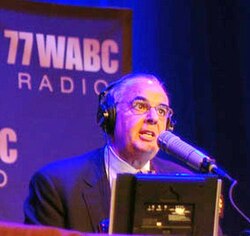
The Evolution of The John Batchelor Show
In April 2003, The John Batchelor Show entered national syndication, eventually airing 20 hours a week across approximately 200 stations. The program is known for its eclectic range of topics, spanning economics, war, history, literature, and private space exploration.
Expert Contributors and Intelligence
The show became a hub for high-level analysis, featuring regular segments such as the "Loftus Report" with intelligence commentator John Loftus, who focused on open-source intelligence (OSINT)—information gathered from publicly available sources. Other frequent contributors included Aaron Klein, Malcolm Hoenlein, and Larry Kudlow, alongside journalists from the Wall Street Journal, Financial Times, The Economist, and The New York Times.
Global Reporting and Fieldwork
To maintain a lead on the news cycle, Batchelor and his executive producer traveled to various global hotspots. Their reporting took them to Azerbaijan, Qatar, Israel, Jordan, Kazakhstan, Uzbekistan, France, Poland, and Taiwan. Notably, while broadcasting from Taipei during the 2004 elections, they reported on the shooting of the president and vice-president on the final day of electioneering.
Program Transitions and Format Changes
The show's trajectory included a brief cancellation in 2006, but Batchelor returned to WABC in October 2007. During this period, he expanded his reach by guest hosting on KFI in Los Angeles, filling the slot left by Matt Drudge. His return was marked by a significant scoop regarding "Obelisk," an al Qaeda extranet.
By 2009, the program expanded to weekends, with Saturdays dedicated to history authors and Sundays focusing on breaking news. The weekday schedule eventually evolved to include specialized thematic hours, such as Gordon Chang on East Asia and Dr. David Livingston on private space exploration.
| Period/Date | Program/Event | Key Focus/Detail |
|---|---|---|
| Early 2000s | Batchelor and Alexander | Middle East terrorism and international issues on WABC |
| April 2003 | The John Batchelor Show | National syndication across ~200 stations |
| 2004 | Taipei Broadcast | On-site reporting during the Taiwanese elections |
| 2006 & 2007 | Cancellation & Return | Brief hiatus followed by a return to WABC and KFI |
| March 2021 | CBS Transition | Shift from Westwood One to CBS Audio Network |
| May 2021 | CBS Eye on the World | Official rebranding of the program |
Transition to CBS Eye on the World
On March 5, 2021, Batchelor concluded his tenure with WABC and Westwood One. Following a brief transitional period as "The New John Batchelor Show," the program was rebranded in May 2021 as CBS Eye on the World, represented by the CBS Audio Network. The show debuted on WOR in New York on November 1, 2021, airing weeknights from 9 p.m. to midnight. However, CBS has since announced that its news radio operations will end on May 22, 2026.
Key Facts
- Syndication: The John Batchelor Show reached roughly 200 stations at its peak.
- Global Reach: Batchelor has reported from over 10 countries, including Kazakhstan and Taiwan.
- Diverse Topics: Coverage includes nuclear proliferation, African civil wars, and Mars exploration.
- Current Branding: The program is currently known as CBS Eye on the World.
- Network Shift: Moved from WABC/Westwood One to the CBS Audio Network in 2021.
Frequently Asked Questions
What is the primary focus of The John Batchelor Show?
The show focuses on a wide array of complex topics, including geopolitics, economics, war, history, hard sciences, and private space exploration.
Who was John Batchelor's early broadcasting partner?
He co-hosted a program with writer Paul Alexander on WABC, where they focused heavily on international issues and Middle East terrorism.
Where has John Batchelor traveled for breaking news?
He has traveled to various international locations, including Israel, Jordan, Qatar, Azerbaijan, Uzbekistan, Kazakhstan, France, Poland, and Taiwan.
What happened to the show in 2021?
The show ended its affiliation with Westwood One and WABC to be represented by the CBS Audio Network, eventually rebranding as CBS Eye on the World.
When will CBS end its news radio operations?
CBS has announced that its news radio operations will conclude effective May 22, 2026.