
John F. Hartranft: From Civil War Hero to Pennsylvania Governor
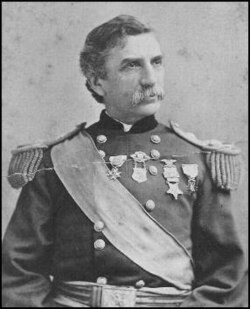
Following his distinguished service in the American Civil War, John F. Hartranft transitioned from the battlefield to the political arena, becoming one of Pennsylvania's most influential leaders of the late 19th century. After switching his party allegiance to the Republican Party, Hartranft began his ascent in state government, serving as the Auditor General from 1867 to 1873 under the administration of former general John W. Geary.
The Gubernatorial Years and Political Reform
Elected as Governor of Pennsylvania in 1872, Hartranft championed a broad agenda of modernization and social progress. He was a vocal advocate for municipal reform—the effort to improve the efficiency and honesty of city governments—and pushed for the regulation of banking and the improvement of industry and commerce. His commitment to social equity was evident in his support for African American suffrage and his efforts to protect the rights of workingmen while fighting the corrupt political machine led by Simon Cameron.
One of the most enduring legacies of his administration was the ratification of the Constitution of 1873. This revised Commonwealth constitution introduced critical structural changes, including the prohibition of special and local legislation. It also extended the terms of state legislators, increasing House terms to two years and Senate terms to four years.
Leadership and National Recognition
Beyond the governor's mansion, Hartranft held prestigious roles in veteran and intellectual circles. From 1875 to 1877, he served as the 5th commander-in-chief of the Grand Army of the Republic, a powerful organization for Union veterans. He was also a member of the Military Order of the Loyal Legion of the United States and was elected to the American Philosophical Society in 1876.
In 1876, Hartranft played a pivotal role in ensuring Pennsylvania led the United States' centennial celebrations, which were centered in Philadelphia's Fairmount Park. That same year, he was a contender for the presidential nomination at the Republican National Convention, though the nomination ultimately went to his former army corps colleague, Rutherford B. Hayes.
Labor Unrest and the Great Railroad Strike of 1877
Hartranft's second term was marked by severe economic depression and widespread unemployment following the industrial boom of the early 1870s. This volatility culminated in the Great Railroad Strike of 1877, leading to violent riots in industrial hubs such as Philadelphia, Pittsburgh, Reading, and Scranton, as well as conflicts involving the Molly Maguires in the anthracite coal regions.
To restore order, Hartranft deployed the state militia and Regular Army troops. The conflict was particularly brutal in Pittsburgh, where railroad facilities were burned and eleven people died along the Schuylkill River. In the aftermath of the violence, Hartranft shifted his approach, proposing the recognition of labor unions and the arbitration of claims to resolve disputes peacefully.
The Hartranft Decision
The use of military force against civilians led to a legal battle when the District Attorney of Allegheny County attempted to force Hartranft to testify before a grand jury regarding his rationale for the deployment. The courts ruled in favor of the governor, upholding his refusal to appear. This landmark ruling became known as the Hartranft Decision.
Later Life and Military Honors
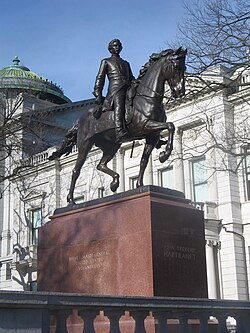
After leaving the governorship in 1879, Hartranft returned to Montgomery County. He served as the US Postmaster and later as the Port Collector for Philadelphia from 1881 to 1885. He also returned to lead the Pennsylvania National Guard, an organization he had spent years helping to develop.
In recognition of his bravery during the First Battle of Bull Run in 1861, Hartranft was awarded the Medal of Honor on August 26, 1886. He eventually passed away in Norristown and was interred in Montgomery Cemetery in West Norriton Township, where the Pennsylvania National Guard erected an obelisk in his honor. He was succeeded in the command of the Pennsylvania National Guard Division by George R. Snowden.
Key Facts
- Political Office: Served as Pennsylvania Auditor General (1867–1873) and Governor (elected 1872).
- Constitutional Impact: Oversaw the ratification of the Constitution of 1873, which extended legislative terms.
- Veteran Leadership: 5th commander-in-chief of the Grand Army of the Republic (1875–1877).
- Crisis Management: Deployed troops to quell the Great Railroad Strike of 1877.
- Legal Precedent: The "Hartranft Decision" protected the governor from being forced to testify before a grand jury.
- Highest Honor: Awarded the Medal of Honor in 1886 for actions at the First Battle of Bull Run.
| Period/Year | Role or Event | Key Outcome/Detail |
|---|---|---|
| 1867–1873 | Auditor General | Served in the Geary administration |
| 1872–1878 | Governor of Pennsylvania | Ratified 1873 Constitution; managed 1877 strikes |
| 1875–1877 | Commander-in-Chief, GAR | Led the Union veterans' organization |
| 1876 | Presidential Contender | Competed at the Republican National Convention |
| 1881–1885 | Port Collector | Served in Philadelphia |
| 1886 | Medal of Honor Recipient | Awarded for valor at First Bull Run |
Frequently Asked Questions
What was the Hartranft Decision?
The Hartranft Decision was a court ruling that supported Governor Hartranft's refusal to appear before a grand jury to explain his decision to use the militia against civilians during the 1877 riots in Pittsburgh.
How did the Constitution of 1873 change Pennsylvania's government?
The Constitution of 1873 prohibited special and local legislation and increased the terms for state legislators, moving House terms to two years and Senate terms to four years.
What role did Hartranft play during the Great Railroad Strike of 1877?
Hartranft called out the state militia and Regular Army troops to maintain order during violent strikes in cities like Philadelphia and Pittsburgh. Later, he proposed the use of arbitration and the recognition of labor unions.
Which military honor did John F. Hartranft receive?
He was awarded the Medal of Honor on August 26, 1886, for his valor during the First Battle of Bull Run in 1861.
What was Hartranft's involvement with the Grand Army of the Republic?
He served as the 5th commander-in-chief of the Grand Army of the Republic, a prominent Union veterans' organization, from 1875 to 1877.