
John Pendleton Kennedy and the Fight Against Slavery in Maryland
The journey toward abolition in the United States was not a uniform path; it was often a slow, painful evolution of conscience. For John Pendleton Kennedy, a respected author and politician, the opposition to slavery was a lifelong progression. His transition from a cautious critic to a vocal advocate for immediate emancipation mirrors the broader tensions of a nation sliding toward civil war.
The Evolution of a Moral Stance
Kennedy's opposition to slavery first appeared in his early writings, though it was initially understated. In the 1830s, he authored the novel Swallow Barn (1832). While the published version of the book contained idyllic stereotypes of plantation life, it also contained a stark prediction: that slavery would eventually lead the Southern states to ruin. This foresight occurred nearly three decades before the outbreak of the Civil War.
Interestingly, original manuscripts of Swallow Barn reveal that Kennedy had written much harsher criticisms of slavery, which he later crossed out before publication. Historians suggest this self-censorship was likely due to the risks of being openly critical while residing in Maryland, a slave state.
Kennedy later credited a speech by Frederick Douglass—the famed abolitionist and former slave—with opening his eyes more fully to what he termed the "curse" of slavery by 1863.
Navigating the Brink of Civil War
As the United States approached the 1860s, Kennedy's primary concern was the prevention of bloodshed. Just before the war began, he argued against immediate abolition, fearing it would trigger a full-scale conflict. He advocated for a negotiated, phased approach, noting that civil wars are historically the most devastating forms of warfare.
However, once the Civil War erupted, Kennedy's position shifted dramatically. He abandoned the idea of gradualism in favor of immediate emancipation. As the conflict intensified, so did his resolve, leading him to sign key political pamphlets calling for the total end of slavery.
The Struggle for Emancipation in Maryland
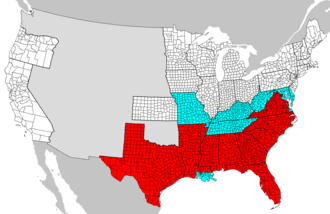
A critical nuance of the American Civil War was the limitation of the Emancipation Proclamation. Because Maryland was not part of the Confederacy and there was no active insurrection within its borders, President Abraham Lincoln did not feel constitutionally authorized to extend the proclamation to the state. Consequently, slavery remained legal in Maryland, and the responsibility for abolition fell solely on the state's own political processes.
Given Maryland's strong Confederate sympathies, ending slavery was far from guaranteed. Kennedy, leveraging his reputation as a former speaker of the Maryland General Assembly and a renowned author, stepped into a leadership role. On December 16, 1863, at a meeting of the Central Committee of the Union Party of Maryland, politician Thomas Swann proposed a motion for the "Immediate emancipation (of all slaves) in Maryland." Kennedy seconded the motion, providing it with significant political weight.
The following year was marked by intense lobbying and campaigning. Kennedy helped circulate a party pamphlet demanding immediate emancipation to a divided public. This effort culminated in a state referendum on November 1, 1864.
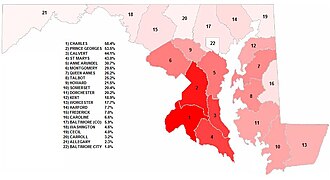
The citizens of Maryland ultimately voted to abolish slavery, though the victory was narrow. The referendum passed by only 1,000 votes, reflecting the deep dependence of the state's southern regions on the slave economy.
Key Facts
- Early Prediction: In his 1832 novel Swallow Barn, Kennedy predicted slavery would ruin the South 29 years before the Civil War.
- Shift in Strategy: Kennedy moved from advocating for a phased end to slavery (to avoid war) to demanding immediate emancipation once the war began.
- Legal Gap: Maryland was excluded from the Emancipation Proclamation because it was not a Confederate state.
- Political Influence: As a former speaker of the Maryland General Assembly, Kennedy's support was pivotal in the Union Party of Maryland's push for abolition.
- Narrow Victory: Slavery was abolished in Maryland via a state referendum on November 1, 1864, winning by a margin of only 1,000 votes.
| Year/Period | Action/Event | Stance on Slavery |
|---|---|---|
| 1832 | Publication of Swallow Barn | Critical, but muted; predicted Southern ruin. |
| Pre-Civil War | Political writings | Favored phased abolition to prevent war. |
| Early Civil War | Public speeches/pamphlets | Shifted to "immediate emancipation." |
| Dec 16, 1863 | Union Party Meeting | Seconded motion for immediate state emancipation. |
| Nov 1, 1864 | Maryland State Referendum | Successful abolition of slavery in Maryland. |
Frequently Asked Questions
Why didn't the Emancipation Proclamation end slavery in Maryland?
The Emancipation Proclamation applied only to states in rebellion against the Union. Since Maryland was not in the Confederacy and was not in active insurrection, President Lincoln lacked the constitutional authority to apply the proclamation there.
How did Frederick Douglass influence John Pendleton Kennedy?
Kennedy stated that witnessing a speech by Frederick Douglass opened his eyes more fully to the "curse" of slavery, contributing to the strengthening of his moral opposition.
What was the significance of the novel Swallow Barn?
Published in 1832, the novel is significant for predicting that slavery would lead to the ruin of the Southern states long before the prospect of armed conflict between the North and South was widely recognized.
How close was the vote to abolish slavery in Maryland?
The vote was very close, passing by a margin of only 1,000 votes, largely because the southern part of the state remained heavily dependent on the slave economy.
What other minority groups did Kennedy support?
Beyond his work against slavery, Kennedy was known in his charity leadership and political life for helping other minority groups, specifically Irish Catholics and Jews.