
Joshua in Religious Tradition: Perspectives from Judaism, Christianity, and Islam
Joshua, the successor to Moses, occupies a significant place in the theological landscapes of the three major Abrahamic faiths. While he is primarily known as the leader who guided the Israelites into the Promised Land, the nuances of his character, his miracles, and his spiritual legacy vary across Jewish, Christian, and Islamic traditions.
Joshua in Judaism
In rabbinic literature, Joshua is portrayed as a model of humility, wisdom, and unwavering faithfulness. He is frequently cited as the embodiment of the principle that those who serve their masters with loyalty shall be honored. His victory over Amalek is viewed as a divine reward for his humble spirit.
A central theme in Jewish tradition is Joshua's absolute devotion to Moses, the Tzaddik (a righteous person). Rabbinic texts emphasize that Joshua never left the tent of meeting, demonstrating a level of faith and steadfastness that transcended physical needs like eating or sleeping.
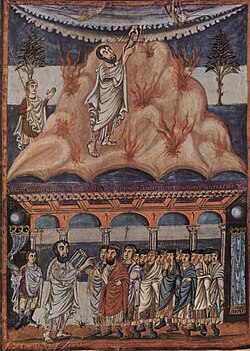
Administrative and Legal Contributions
Beyond his military leadership, Joshua is credited with the practical organization of the Land of Canaan. Tradition holds that he used sea squill (Hebrew: chatzov) to mark the boundaries of tribal properties. He also established ten critical conditions for the tribes to ensure peaceful coexistence, including:
- Common use of forests as cattle pasture.
- Shared fishing rights in the Sea of Tiberias.
- Universal access to natural springs for drinking and laundry, though the local tribe held primary rights.
- The free collection of prickly burnet (Sarcopoterium spinosum) and camelthorn (Alhagi maurorum) for firewood across all territories.
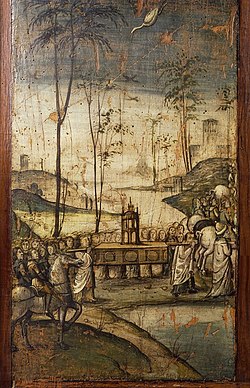
The Aleinu Prayer
Jewish tradition attributes the composition of the Aleinu prayer to Joshua upon crossing the Jordan River. First cited in the Kol Bo in the late 14th century, the prayer serves to distinguish the Jewish people, who accept the sovereignty of God, from other nations. Some commentators note that Joshua's birth name, Hosea, appears as a reverse acrostic in the opening verses. Today, religious Jews recite this prayer three times daily.
Joshua in Christianity
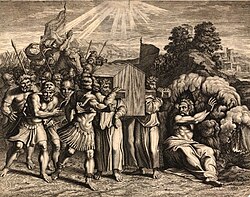
In Christian theology, Joshua is often viewed through the lens of typology, where Old Testament figures serve as "types" or foreshadows of Jesus Christ. Early Church Fathers regarded Joshua as a precursor to Jesus.
Modern biblical interpretations of Hebrews 4:8–10 draw a parallel between the two: while Joshua led the Israelites into the physical rest of Canaan, Jesus is seen as leading the people of God into a spiritual "God's rest." Additionally, the Ethiopian Orthodox Tewahedo Church recognizes accounts of Joshua and the Canaanite kings within the book of 2 Meqabyan.
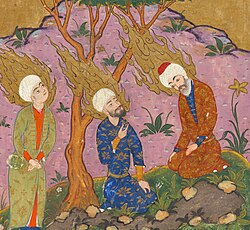
Joshua in Islam
In Islam, Joshua is known as Yūšaʿ ibn Nūn. While he is not mentioned by name in the Quran, he is recognized in Islamic literature and Hadith as a prophet and the successor to Musa (Moses).
Quranic and Hadith References
The Quran refers to two God-fearing men who were blessed by God during the conquest of Canaan; Islamic scholars identify these men as Joshua and Caleb. Joshua is also identified as the "young assistant" who accompanied Musa on his journey to find Khidr, a servant of God endowed with special knowledge, at the junction of the two seas.
Miracles and Legacy
Islamic tradition attributes several miracles to Joshua. Most notably, according to commentaries by Ibn Kathir and al-Jalalayn, Joshua prayed for the sun to be withheld during the siege of Jerusalem to ensure victory. This is cited as a unique miracle, as the sun was reportedly never detained for any other human.
Other traditions record that Joshua was present at the death of Musa and held Musa's garments at the time of his passing. He is believed to have lived for approximately 110 years, and his shrine is located in the city of Hārith in the region of Shām (Greater Syria).
Key Facts
- Jewish View: Seen as a humble, faithful successor to Moses who composed the Aleinu prayer.
- Christian View: Regarded as a "type" of Christ, transitioning from physical rest (Canaan) to spiritual rest.
- Islamic View: Known as Yūšaʿ ibn Nūn, a prophet who performed the miracle of stopping the sun.
- Land Management: In Jewish tradition, Joshua used sea squill for boundaries and established shared resource laws.
- Quranic Role: Identified as one of the two faithful spies and the assistant to Musa during the search for Khidr.
| Feature | Judaism | Christianity | Islam |
|---|---|---|---|
| Primary Role | Faithful Leader & Lawgiver | Typological Precursor to Christ | Prophet & Successor to Musa |
| Key Contribution | Aleinu Prayer / Tribal Boundaries | Leading Israel to physical rest | Conquest of Bait al-Maqdis |
| Notable Miracle | Victory over Amalek | Entry into Canaan | Stopping the sun |
| Relationship to Moses | Devoted attendant/Tzaddik follower | Successor | Assistant and companion |
Frequently Asked Questions
Who is Joshua in the context of the Aleinu prayer?
According to Jewish tradition, Joshua composed the Aleinu prayer after crossing the Jordan River to thank God and establish a clear distinction between the Israelites and other nations regarding the sovereignty of God.
How does Christianity link Joshua to Jesus?
Christianity uses typology to present Joshua as a "type" of Jesus. While Joshua led the people into the physical land of Canaan, Jesus is believed to lead believers into a spiritual, eternal rest with God.
Is Joshua mentioned by name in the Quran?
No, Joshua is not mentioned by name in the Quran. However, he is identified by name in other Islamic literature and Hadith, and is believed to be one of the two blessed men mentioned in Sura 5.
What miracle is attributed to Joshua in Islamic tradition?
Islamic tradition, specifically in the Musnad of Ahmad ibn Hanbal, records that Joshua prayed for the sun to remain in the sky during the conquest of Jerusalem, and God granted this request until the city was captured.
What were the shared resource rules established by Joshua?
Joshua established that forests for cattle pasture, fishing in the Sea of Tiberias, and the collection of prickly burnet and camelthorn for firewood were common rights available to all twelve tribes.