
KCTS and Cascade PBS: A History of Public Broadcasting in Seattle
For decades, the landscape of public media in the Pacific Northwest has been shaped by a commitment to education, community service, and journalistic integrity. From its humble beginnings as a university-led project to its evolution into the multi-platform entity known as Cascade PBS, the journey of KCTS reflects the broader evolution of public broadcasting in the United States.
The Founding and Early Years
KCTS was established by the University of Washington (UW), which served as the station's original licensee. While it was initially intended to be named KUOW-TV—following its sister radio station launched in 1951—the founders chose the callsign KCTS, standing for Community Television Service. This decision was made to ensure that no single member of the sponsoring group was singled out. The initial coalition of sponsors included the University of Washington, Seattle Public Schools, King County Public Schools, Seattle University, Seattle Pacific College, and the Seattle Public Library.
The station's first studio was located on the UW campus at 15th Avenue NE and NE Campus Parkway, utilizing equipment donated by Dorothy Bullitt, the owner of KING-TV.
The path to broadcasting was not without obstacles. After airing its first test pattern on November 18, 1954, a fire struck the studio the very next day, causing extensive equipment damage. However, thanks to expedited shipments from suppliers, replacement gear arrived within a week. KCTS officially began broadcasting at 7 p.m. on December 7, 1954, starting with a preview hosted by program director and UW professor Milo Ryan, followed by a performance of Felix Mendelssohn's Elijah by the Seattle Pacific College Choir. Regular programming officially commenced on January 5, 1955, featuring Governor Arthur B. Langlie.
Evolution of Programming and the PBS Era
Throughout the 1950s and 1960s, KCTS focused heavily on classroom instructional programs for K–12 schools across Washington State, alongside content from National Educational Television (NET). During this era, most broadcasts were in black-and-white, though color capabilities were installed in 1967.
A pivotal shift occurred on October 5, 1970, when NET was absorbed into the newly formed Public Broadcasting Service (PBS). As a PBS member station, KCTS expanded its reach to the general public, introducing a wider variety of content, including popular British programming.

Growth, Expansion, and Digital Transition
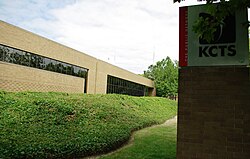
The mid-1980s marked a period of significant growth. Following a major fundraising drive, KCTS moved to the Seattle Center campus in October 1986. In 1987, the University of Washington spun off the station, allowing it to become a community licensee and separating its operations from KUOW-FM.
KCTS also developed a strong international presence, reaching audiences in southwestern British Columbia and across Canada via Bell Satellite TV and Shaw Direct. By 1996, roughly one-third of the station's audience lived in British Columbia. While the station received financial support from Canadian viewers through the Pacific Coast Public Television Association (until its 2017 dissolution), it faced a $1.2 million decline in donations after being removed from basic cable channel 9 in the province.
Technological advancement remained a priority. In March 1999, KCTS became the third station in the Seattle area to switch to a digital transmission signal from its Capitol Hill tower, utilizing the technology to simulcast high-definition programming.
The Transition to Cascade PBS
In January 2016, the licensee KCTS Television rebranded as Cascade Public Media to reflect a strategy of becoming a multi-platform content provider. This umbrella organization included KCTS-TV, Spark Public, and Crosscut, a non-profit daily news site.
Due to the city of Seattle declining to renew a 40-year ground lease at the Seattle Center, Cascade Public Media purchased a former Childhaven facility in First Hill for $23 million in July 2022. The property was renovated with the help of JPC Architects, Abbott Construction, and OAC Services.
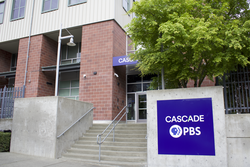
In October 2023, KCTS and Crosscut announced a merger under the unified brand Cascade PBS. This transition included the launch of a new streaming app designed for use by other PBS member stations. The move to the First Hill facility was completed in January 2024, and the Cascade PBS name was officially adopted by both entities on March 1, 2024.
Recent challenges have impacted the organization; following the Rescissions Act of 2025, Cascade PBS lost $3.5 million in annual federal funding, resulting in the layoff of 17 staff members.
Key Facts
- Founded: 1954 by the University of Washington and a coalition of community sponsors.
- Original Purpose: Primarily focused on K–12 instructional programming and NET content.
- PBS Affiliation: Joined the Public Broadcasting Service upon its launch in October 1970.
- Digital Pioneer: One of the first three Seattle stations to transition to digital signals in 1999.
- Current Brand: Cascade PBS, a merger of KCTS and the news site Crosscut.
- Current Location: First Hill, Seattle (relocated from Seattle Center in 2024).
| Year | Event | Significance |
|---|---|---|
| 1954 | First Broadcast | Launched as Community Television Service (KCTS). |
| 1970 | PBS Transition | Shifted from NET to PBS, expanding public programming. |
| 1986 | Seattle Center Move | Relocated to new studios following a major fundraiser. |
| 1999 | Digital Switch | Adopted digital transmission and HD simulcasting. |
| 2016 | Cascade Public Media | Rebranded to encompass multiple media platforms. |
| 2024 | Cascade PBS Merger | Unified KCTS and Crosscut under one brand in First Hill. |
Frequently Asked Questions
What does the callsign KCTS stand for?
KCTS stands for Community Television Service. This name was chosen to avoid favoring any single member of the original sponsoring group, which included the University of Washington and several local schools and libraries.
Why did KCTS move from the Seattle Center?
The organization moved because the city of Seattle declined to renew the 40-year ground lease for the facility at the Seattle Center.
What is the relationship between KCTS and Crosscut?
Both were properties of Cascade Public Media. In October 2023, they announced a merger to operate under the unified brand name Cascade PBS.
How did the Rescissions Act of 2025 affect the station?
The act led to a loss of $3.5 million in annual federal funding for Cascade PBS, which subsequently resulted in the layoff of 17 employees.
Did KCTS have an audience outside of the United States?
Yes, KCTS had a significant audience in British Columbia, Canada, via cable and satellite providers. At one point, approximately one-third of its audience resided in British Columbia.