
Keynes's General Theory: A Comprehensive Analysis of Employment, Interest, and Money
John Maynard Keynes's seminal work, The General Theory of Employment, Interest and Money, fundamentally reshaped modern macroeconomics by challenging the prevailing classical orthodoxy. At its core, the theory seeks to explain why economies can experience prolonged periods of unemployment and how the interaction between consumption, investment, and money supply determines the overall level of national income.
Key Facts
- Repudiation of Say's Law: Keynes rejected the idea that "supply creates its own demand," arguing that a glut of industrial output can lead to job losses.
- Sticky Wages: He proposed that wages often remain fixed in money terms due to legislation, collective bargaining, or human obstinacy.
- The Multiplier: A fundamental concept where an initial increase in spending leads to a larger overall increase in national income.
- Liquidity Preference: The demand for money is driven by transactions, precautionary, and speculative motives.
- Marginal Efficiency of Capital: Investment is determined by the expected annual revenue of new capital relative to its cost.
The Departure from Classical Economics
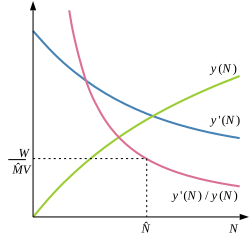
Classical economics relied on the "first postulate": that the wage is equal to the marginal product of labour. While Keynes accepted this, he introduced a "second postulate," suggesting that wages are equal to the marginal disutility of labour. This implies that wages are often sticky—meaning they do not adjust downward easily even during economic downturns.
By choosing specific units of measurement, Keynes demonstrated that the effect of a change in the wage rate is functionally equivalent to an opposite change in the money supply. This shift allowed him to focus on aggregate demand rather than individual wage adjustments.
The Propensity to Consume and the Multiplier
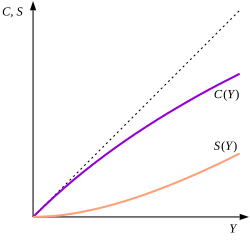
Keynes defined the propensity to consume as the desired level of expenditure on consumption, denoted as C(Y), which depends primarily on income (Y). Consequently, saving S(Y) is the portion of income not consumed (Y–C(Y)).
A central pillar of his theory is the marginal propensity to consume (MPC), which is the gradient of the consumption curve. Keynes's "fundamental psychological law" states that the MPC is positive but less than one. This leads to the multiplier (k), calculated as k = 1/S'(Y). For example, if the MPC is 90%, the multiplier is 10, meaning an initial investment in public works could potentially increase total employment tenfold.
The Inducement to Invest
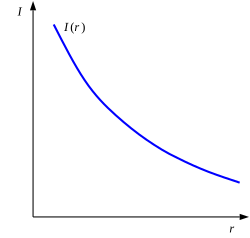
Investment is driven by the marginal efficiency of capital—the expected annual revenue yielded by an extra increment of capital as a proportion of its cost. This creates an investment demand-schedule, where the level of investment is a decreasing function of the interest rate (r).
Keynes emphasized that long-term expectations are volatile and subject to sudden revision. He attributed this to "animal spirits"—the psychological urges and instincts that drive entrepreneurs to take risks, which cannot be replaced by simple historical data.
Liquidity Preference and the Interest Rate
Keynes proposed that the demand for money, or liquidity preference, is influenced by three primary motives:
- Transactions motive: Money held for day-to-day expenses.
- Precautionary motive: Money held for unforeseen contingencies.
- Speculative motive: Money held to take advantage of future changes in interest rates.
While the first two motives depend mainly on income, the speculative motive is sensitive to the interest rate. Thus, liquidity preference is a function of both income and the interest rate: L(Y, r).
The Keynesian Economic Model
The Keynesian system determines national income and the interest rate through the simultaneous interaction of saving, investment, and money supply. Unlike the classical model, where the interest rate is determined by saving and investment alone, Keynes argued that the interest rate is determined by the supply and demand for money.
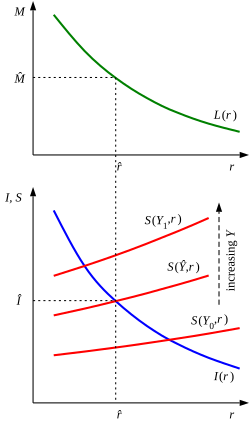
In this model, the state of the economy is governed by four parameters: the money supply, the demand functions for consumption and liquidity, and the schedule of the marginal efficiency of capital. Monetary policy can influence the economy by adjusting the money supply, which shifts the interest rate and subsequently affects investment and total income.
| Feature | Classical Theory | Keynesian Theory |
|---|---|---|
| Core Belief | Supply creates its own demand (Say's Law) | Demand determines output (Effective Demand) |
| Wage Behavior | Flexible; adjusts to clear the market | Sticky; fixed in money terms |
| Interest Rate | Determined by saving and investment | Determined by liquidity preference and money supply |
| Employment | Naturally tends toward full employment | Can be stable at under-employment equilibrium |
| Measurement | Real terms (y, i, s) | Wage units (Y, I, S, M, L) |
The Trade Cycle and Dynamic Aspects
Keynes explained the trade cycle as a result of cyclical changes in the marginal efficiency of capital. This is driven by the "uncontrollable and disobedient psychology of the business world." Optimism triggers a rise in investment and income via the multiplier, eventually leading to an over-bought market and a subsequent catastrophic collapse when disillusion sets in.
Frequently Asked Questions
What is the difference between the first and second postulates of classical economics?
The first postulate states that the wage is equal to the marginal product of labour. The second postulate asserts that the wage is equal to the marginal disutility of labour, which implies that wages may remain fixed even when unemployment exists.
How does the multiplier effect work in Keynesian theory?
The multiplier suggests that an initial injection of spending (such as government public works) creates a chain reaction of spending. Because people spend a proportion of their new income (the marginal propensity to consume), the final increase in national income is a multiple of the original investment.
What are "animal spirits" in the context of investment?
Animal spirits refer to the human emotions and psychological instincts—such as confidence or fear—that drive business investment. Keynes argued that these expectations are often volatile and cannot be predicted solely by calculating expected returns.
What are the three motives for holding money?
The three motives are the transactions motive (for daily spending), the precautionary motive (for emergencies), and the speculative motive (to profit from future interest rate movements).
Why did Keynes reject Say's Law?
Keynes rejected Say's Law because he believed that income is not automatically spent. If people save more than businesses invest, aggregate demand falls below aggregate supply, leading to a "glut" of goods and resulting unemployment.