
La Baule-Escoublac: A Premier French Seaside Destination
Located in the Loire-Atlantique department of the Pays de la Loire region in western France, La Baule-Escoublac (commonly known as La Baule) is a renowned commune celebrated for its stunning coastline. Known in Gallo as Écoubiâ and in Breton as Ar Baol-Skoubleg, this destination is home to one of the longest beaches in Europe, blending natural beauty with a sophisticated history of luxury tourism.
From its humble beginnings as a coastal area to its transformation into a high-society retreat, La Baule-Escoublac offers a unique mix of historical depth, sporting prestige, and maritime charm.
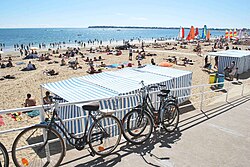
Key Facts
- Location: Loire-Atlantique, Pays de la Loire, France.
- Population: 16,912 (as of 2023).
- Geography: Features one of Europe's longest beaches with elevations ranging from 1 to 55 meters.
- Administration: Part of the CA Presqu'île de Guérande Atlantique intercommunality.
- Key Attractions: MAPICA aeronautical museum and world-class equestrian events.
The Evolution of a Seaside Resort
Early Development
The transformation of La Baule began in 1879 when Parisian industrialist Jules-Joseph Hennecart recognized the tourist potential of the coast during the conception of the Saint-Nazaire-Croisic railroad. Hennecart acquired 40 hectares of dunes for the Société des dunes d'Escoublac and hired architect Georges Lafont to design the town. Lafont's contributions included the Avenue de la Gare (now Avenue du Général-de-Gaulle) and the construction of over 250 villas, laying the foundation for the resort.
The Golden Age of Luxury
In 1918, casino magnate François André redesigned the resort using the Deauville model, integrating luxury hotels, casinos, and sports facilities into a single cohesive site. This was further enhanced in the 1920s by businessman Louis Lajarrige, who developed the Bois d'Amour district at La Baule-les-Pins. To improve beach access, Lajarrige negotiated the relocation of the railroad tracks, leading to the inauguration of new stations for La Baule-les-Pins and La Baule-Escoublac on July 27, 1927.
War and Remembrance
During World War II, La Baule was strategically significant as part of the protective coast for the harbor city of Saint-Nazaire. This harbor housed one of the largest German U-boat stations and the only Atlantic dry dock capable of accommodating the battleship Tirpitz.
The occupation was marked by tragedy; 32 Jewish residents, including children as young as three, were deported from La Baule to Auschwitz, where they perished. In 2011, local residents sought to honor these victims through Stolpersteine (stumbling stones), small memorial plaques placed in the pavement, though the initiative faced administrative challenges regarding French principles of laïcité (secularism).
German forces in La Baule and Saint-Nazaire remained until May 11, 1945, surrendering three days after the general unconditional surrender of Germany.
Culture, Sport, and Tourism
La Baule-Escoublac is not only a place of relaxation but also a hub for international sporting events and specialized museums.
Sporting Traditions
- Equestrianism: The Grand Prix de la Ville de La Baule is a prestigious jumping competition and part of the international Equestrian Nations Cup series.
- Tennis: The town has historically hosted professional tennis championships on red clay courts.
- Motorsports: During the 1930s, the area hosted the Grand Prix de la Baule automobile races.
Aviation Heritage
For aviation enthusiasts, the Musée Aéronautique Presqu'île Côte d'Amour (MAPICA) is a primary attraction. Located at the airport, the museum maintains a collection of restored historical French aircraft that remain in flying condition.
Regional Overview
| Category | Detail |
|---|---|
| Department | Loire-Atlantique |
| Region | Pays de la Loire |
| Area | 22.19 km² |
| Population Density | 762.1/km² |
| Postal Code | 44500 |
| Mayor (2020-2026) | Franck Louvrier |
Frequently Asked Questions
What is La Baule-Escoublac known for?
It is primarily known for having one of the longest beaches in Europe and its history as a fashionable, luxury seaside resort featuring high-end hotels and casinos.
What is MAPICA?
MAPICA is the Musée Aéronautique Presqu'île Côte d'Amour, a museum located at the local airport that preserves and flies restored historical French aircraft.
What happened in La Baule during World War II?
The area was heavily occupied by German forces to protect the U-boat stations in Saint-Nazaire. It was also the site of the deportation of 32 Jewish residents to Auschwitz.
Which major sporting events are held in La Baule?
The town is famous for the Grand Prix de la Ville de La Baule, an international equestrian jumping competition, and has a history of hosting professional tennis and motor racing.
How did the town's layout change in the 1920s?
Louis Lajarrige designed the Bois d'Amour district and successfully moved the railroad tracks away from the coast to provide direct, unobstructed access to the beach.