
Lena Dunham: From Mumblecore Roots to HBO Success
Lena Dunham has carved a unique path in modern entertainment, evolving from a self-taught student filmmaker into a powerhouse writer, director, and producer. Known for her raw, often uncomfortable honesty and her focus on the complexities of millennial womanhood, Dunham's career is a testament to the power of independent spirit and the willingness to embrace vulnerability on screen.
Early Beginnings and the Mumblecore Era
While studying at Oberlin College, Dunham bypassed traditional film school in favor of a self-imposed curriculum. She created a series of "tiny flawed video sketches" and uploaded them to YouTube, experimenting with mumblecore—a filmmaking style characterized by dialogue-heavy scenes and a focus on the naturalistic personal relationships of young adults.
Among her early works was Pressure (2006), which explored the social pressures surrounding sexual enlightenment. Another project, The Fountain (2007), became a viral sensation but also brought Dunham her first taste of public scrutiny, as viewers reacted strongly to her willingness to disrobe on camera. Despite the backlash, she continued to produce content, including the web series Tight Shots for Nerve.com and Delusional Downtown Divas (2009), a satire of the New York City art scene funded by babysitting and art-assistant jobs.
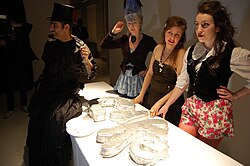
By 2009, Dunham began making waves in the festival circuit. After an initial rejection, she re-edited and successfully submitted Creative Nonfiction to the South by Southwest (SXSW) Festival, signaling her growing persistence and skill as a storyteller.
The Breakthrough: Tiny Furniture
Dunham's career shifted gears in 2010 with the release of Tiny Furniture. This semi-autobiographical feature film won Best Narrative Feature at SXSW and earned Dunham an Independent Spirit Award for Best First Screenplay. The film was a family affair, featuring her real-life mother, Laurie Simmons, and sibling, Cyrus.
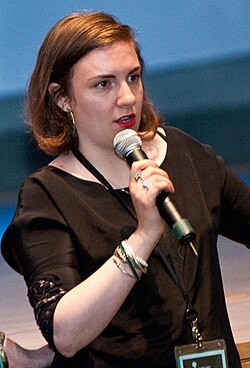
The success of Tiny Furniture caught the attention of HBO, leading to a blind script deal. This connection paired her with veteran showrunner Jennifer Konner and eventually attracted the interest of Judd Apatow, who was impressed by Dunham's ability to write, direct, and star in her own work.
Mainstream Stardom and the Impact of Girls
In 2012, Dunham launched the HBO series Girls, which followed Hannah Horvath, a struggling 20-something writer in New York City. Dunham intended the show to fill a "hole-in-between" space in television, portraying a demographic that wasn't represented by the polished lives in Sex and the City or the teenage drama of Gossip Girl.
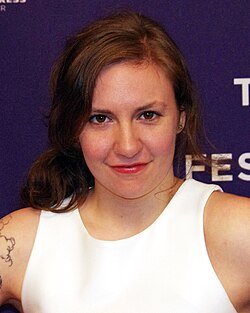
The series was a critical phenomenon, praised for being raw and excruciatingly funny, though it also faced criticism regarding racial representation and nudity. The first season earned Dunham four Emmy nominations and two Golden Globe nominations. In 2013, she made history as the first woman to win a Directors Guild of America Award for Outstanding Directing in a Comedy Series.
Beyond the screen, Dunham expanded into literature. In 2014, she published her first essay collection, Not That Kind of Girl, which reached number two on The New York Times Best Seller list. She also founded A Casual Romance Productions, which developed projects like It's Me Hilary: The Man Who Drew Eloise.
Diversifying Her Portfolio (2015–2017)
As Girls progressed toward its sixth and final season in 2017, Dunham explored various acting roles. She appeared in her mother's film My Art, voiced a character in the animated film My Entire High School Sinking Into the Sea, and portrayed radical feminist Valerie Solanas in American Horror Story: Cult.
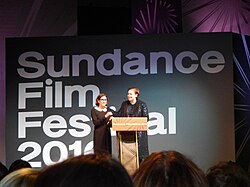
Recent Projects and Continued Evolution
Following the conclusion of Girls, Dunham transitioned into new creative ventures. In 2018, she and Jennifer Konner served as showrunners for the HBO remake of Camping. She also appeared in Quentin Tarantino's Once Upon a Time in Hollywood (2019) as Catherine "Gypsy" Share.
Dunham continued to experiment with different mediums, launching The C-Word Podcast and writing the serialized novel Verified Strangers for Vogue during the 2020 pandemic. She also founded a new production company, Good Thing Going, which maintained a first-look deal with HBO.
Her directorial efforts continued with the 2022 films Sharp Stick and Catherine Called Birdy, the latter an adaptation of Karen Cushman's children's novel. Most recently, she co-created and directed the Netflix romantic comedy series Too Much (2025) and published her second memoir, Famesick, in April 2026.
Key Facts
- First Major Award: Independent Spirit Award for Best First Screenplay for Tiny Furniture.
- Historic Win: First woman to win the DGA Award for Outstanding Directing – Comedy Series (for Girls).
- Literary Success: Not That Kind of Girl reached #2 on The New York Times Best Seller list.
- Production Companies: Founded A Casual Romance Productions and Good Thing Going.
- Notable Films: Tiny Furniture, Sharp Stick, and Catherine Called Birdy.
| Year | Project | Role | Platform/Medium |
|---|---|---|---|
| 2010 | Tiny Furniture | Writer, Director, Lead Actor | Film |
| 2012-2017 | Girls | Creator, Writer, Director, Lead Actor | HBO |
| 2014 | Not That Kind of Girl | Author | Book |
| 2018 | Camping | Showrunner, Writer | HBO |
| 2022 | Catherine Called Birdy | Writer, Director, Producer | Film |
| 2025 | Too Much | Creator, Writer, Director | Netflix |
| 2026 | Famesick | Author | Book |
Frequently Asked Questions
What is mumblecore and how did it influence Lena Dunham?
Mumblecore is a low-budget filmmaking style characterized by naturalistic, dialogue-heavy scenes and a focus on the personal relationships of young adults. Dunham utilized this style in her early independent short films at Oberlin College to explore themes of sexual enlightenment and social anxiety.
How did Tiny Furniture lead to the creation of Girls?
The critical success of Tiny Furniture, including an Independent Spirit Award, earned Dunham a blind script deal with HBO. This led her to partner with Jennifer Konner and eventually Judd Apatow to develop the series Girls.
What was the inspiration behind the series Girls?
Dunham wanted to portray the "hole-in-between" space of women in their 20s who had not yet achieved the professional or romantic stability seen in shows like Sex and the City. The character of Hannah Horvath was inspired by Dunham's own real-life experiences as a struggling writer in New York City.
Has Lena Dunham written any books?
Yes, she has published two memoirs. The first, Not That Kind of Girl, was released in 2014 and became a New York Times Best Seller. Her second memoir, Famesick, was published in April 2026.
What are some of Dunham's most recent projects?
Recently, Dunham directed and wrote the Netflix romantic comedy series Too Much (2025) and the film Catherine Called Birdy (2022). She also served as an executive producer on the HBO Max series Generation.