
Lindy Effect: The Science of Survival and Longevity
In a world obsessed with the "newest" trend or the latest technological breakthrough, there is a counterintuitive principle that suggests the old is often more reliable than the new. This concept, known as the Lindy Effect, proposes that for certain non-perishable things, the longer they have already survived, the longer they are likely to survive in the future.
While it may seem paradoxical, the Lindy Effect serves as a heuristic for judging robustness and durability. Rather than aging like a biological organism, which moves closer to death with every passing year, "Lindy" items age in reverse: every year of survival increases their remaining life expectancy.
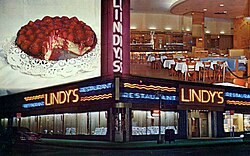
The Evolution of a Concept
The term originated not in a laboratory, but in the social scene of New York City. In a 1964 article for The New Republic, Albert Goldman wrote about "Lindy's Law," named after Lindy's delicatessen where comedians gathered to analyze their careers. Goldman observed a folkloric belief that comedians possessed a finite amount of material. In this original version, the law was inversely proportional: the more a comedian appeared on television, the faster they exhausted their material and the sooner their career would end.
Mandelbrot's Mathematical Shift
In 1982, Benoit Mandelbrot introduced a different interpretation in The Fractal Geometry of Nature. Unlike Goldman's theory of depletion, Mandelbrot argued that for certain human endeavors—such as the work of researchers—future life expectancy is proportional to the past. He suggested that if a person's collected works have existed for a certain duration, they will, on average, continue to exist for an equal additional amount of time.
Taleb and the Theory of Antifragility
The modern understanding of the Lindy Effect was formalized by Nassim Nicholas Taleb in his 2012 book Antifragile: Things That Gain from Disorder. Taleb expanded the concept beyond human producers to include anything without a natural upper bound (non-perishables). He integrated this into his theory of Antifragility—the property of systems that actually benefit from shocks, volatility, and disorder.
Taleb posits that time is equivalent to disorder. Therefore, something that has survived the "ravages of time" has demonstrated a practical robustness. In his view, survival is the only effective judge of quality and durability, answering the meta-question of who should judge the experts: survival itself.
Key Facts
- Origin: Named after Lindy's delicatessen in NYC, where comedians gathered.
- Core Principle: For non-perishable items, life expectancy increases with age.
- Perishable vs. Non-perishable: Biological entities (perishable) have a maximum lifespan; ideas and books (non-perishable) follow a power-law distribution.
- Robustness: The ability of an item to handle disorder and time is proportional to its current age.
- The Rule of Thumb: If a book has been in print for 40 years, it is expected to remain in print for another 40.
Comparing Interpretations of Lindy's Law
| Proponent | Year | Core Logic | Application |
|---|---|---|---|
| Albert Goldman | 1964 | Inversely Proportional | Comedian's career longevity |
| Benoit Mandelbrot | 1982 | Proportional to Past | Academic works and publications |
| Nassim Nicholas Taleb | 2012 | Robustness via Survival | Non-perishables, ideas, and systems |
Contemporary Applications and Skepticism
Today, proponents like Marc Andreessen and Paul Skallas (known as LindyMan) apply the Lindy Effect to various aspects of modern life. Skallas, in particular, advocates for a lifestyle based on durability, drawing inspiration from Mediterranean cultures and thinkers like Plutarch and Thomas Aquinas.
This lifestyle approach emphasizes skepticism toward new products, diets, and ideas that have not yet stood the test of time. However, Skallas notes a critical distinction: cultural longevity does not equal moral value. He points out that certain negative behaviors or systemic abuses can also be "Lindy" if they have persisted across history, regardless of their ethics.
Frequently Asked Questions
What is the main difference between biological aging and the Lindy Effect?
Biological aging is perishable; the older a human gets, the closer they are to death. The Lindy Effect applies to non-perishables (like ideas or books), where the older the item gets, the longer its remaining life expectancy becomes.
How does the Lindy Effect relate to "Antifragility"?
The Lindy Effect is a manifestation of antifragility. Because time represents disorder, an item that survives over long periods proves it can handle disorder, making it robust or antifragile.
If a book has been popular for 50 years, what does the Lindy Effect predict?
It predicts that the book is likely to remain relevant or in print for another 50 years. If it survives another decade, its expected future lifespan increases further.
Does the Lindy Effect mean that old things are always morally good?
No. As noted by contemporary proponents, the Lindy Effect measures durability and robustness, not morality. A harmful tradition can be "Lindy" simply because it has survived for a long time.
Who are the primary thinkers associated with this theory?
The concept evolved through the writings of Albert Goldman (the original observation), Benoit Mandelbrot (the mathematical application), and Nassim Nicholas Taleb (the formalized theory of antifragility).