
Logan City History: From Penal Settlement to Modern Urban Hub
The story of Logan is one of transformation, evolving from the ancestral lands of the Yugembah people into a vital urban center in South East Queensland. Its development was shaped by early colonial exploration, a volatile agricultural history, and strategic local government restructuring.
Indigenous Heritage and Early Exploration
Long before European arrival, the region was home to speakers of Yugembah (also known as Yugumbir, Jugambel, Jugambeir, Jugumbir, Jukam, or Jukamba), an Australian Aboriginal language. The Yugembah language areas spanned a wide territory, including the Gold Coast, Logan, Scenic Rim, Tweed River Valley, Albert River, Beaudesert, Beenleigh, Coolangatta, Coomera, Logan River, Pimpama, and Tamborine.
European exploration of the area intensified in 1826 when Captain Patrick Logan, the Commandant of the Moreton Bay Penal Settlement, discovered the Logan River. Logan recognized the river's potential for large-vessel traffic and its access to high-quality arable land. While he initially named the country Darling in honor of the Governor, the Governor subsequently renamed the river after Logan.
Colonial Settlement and the Rise of Industry
Following the closure of the Brisbane-based penal settlement in 1841, the land was rapidly claimed by squatters. The first land leases in the Logan area were issued starting in 1849, and immigration increased after Queensland separated from New South Wales in 1859. The establishment of the Logan and Eight Mile Plains Agricultural Reserves in 1862 further accelerated settlement, with German immigrants arriving in waves from 1864, drawn by generous land orders that offered the chance of farm ownership.
The early economy relied heavily on the timber industry, utilizing the Logan River as a rafting ground for logs, with demand further boosted by the arrival of railways.
The Agricultural Struggle: Cotton and Sugar
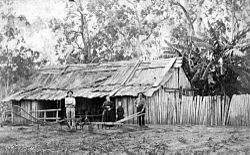
Agriculture in Logan saw a series of trials and transitions. In 1867, a cotton gin was built at Loganholme, which was later converted into a sugar mill. Cotton farming struggled due to poor weather and labor shortages, despite the use of Kanaka labor, leading to the decline of most plantations by the 1870s.
Between 1866 and 1874, sugar emerged as the staple industry. Many farmers established small mills to avoid the costs of larger processing plants, though these were often uneconomic. The industry faced severe setbacks in 1885 from a harsh frost and in 1887 from a catastrophic flood that buried crops under meters of silt. Despite these losses, some persisted, achieving one of the best harvests on record in 1890.
Modern Development and Urbanization
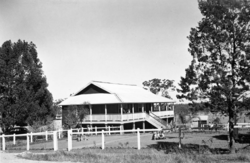
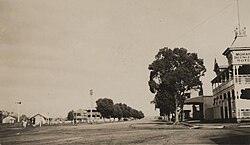
The late 19th century brought critical infrastructure, including the opening of the railway in 1888, which effectively ended the era of Cobb and Co services in Logan. The 20th century brought further growth and challenges, including significant flooding during the 1974 Brisbane flood.
The 1980s marked a period of rapid commercial and civic expansion. The Wild Water Water Slide Park opened in October 1982 on the site that would eventually become the Logan Hyperdome. Construction on the regional shopping center began in October 1988, and it officially opened in July 1989. Simultaneously, work on the Logan Hospital commenced in February 1989.
In more recent years, the region has embraced innovation, such as the Round Mountain water treatment plant, which became Australia's first entirely off-grid powered plant in 2017. However, the area has also faced tragedy, such as the 2011 house fire in Slacks Creek, the worst of its kind in Queensland.
The Establishment of Logan City
The formal creation of the Logan Shire was instigated by the Department of Local Government, combining northern suburbs of the Albert and Beaudesert Shires and a section of the Shire of Tingalpa. On June 8, 1978, the Local Government (Adjustment of Boundaries) Bill was approved, and Logan was officially declared a city on January 1, 1981.
The city was named after Captain Patrick Logan, whose name is preserved across the region in the Logan River, the Logan Motorway, Logan Road, and suburbs such as Loganlea, Logan Village, Loganholme, Logan Reserve, and Logan Central.
Local Government Evolution
Significant boundary changes occurred during the March 2008 local elections. Logan's area more than tripled, adding 78,400 people by annexing parts of the dissolved Shire of Beaudesert and the Beenleigh-Eagleby area from the Gold Coast. Although residents of Beenleigh and Eagleby voted overwhelmingly against the move, the amalgamation proceeded.
The Local Government Reform Commission justified this decision by stating it brought the South East Queensland urban footprint and growth areas up to 2026 under a single administration, reducing compliance costs and improving future planning based on transport corridors and economic factors.
Key Facts
- Indigenous Roots: The region is part of the Yugembah language area.
- Founding Figure: Named after Captain Patrick Logan, who discovered the Logan River in 1826.
- Agricultural Shift: Transitioned from timber to cotton, and eventually to sugar cane.
- City Status: Officially declared a city on January 1, 1981.
- Infrastructure Milestone: The Round Mountain water treatment plant (2017) was Australia's first fully off-grid plant.
- 2008 Expansion: The city more than tripled in size through the annexation of Beaudesert and Beenleigh-Eagleby areas.
| Year/Period | Event/Development | Significance |
|---|---|---|
| 1826 | Discovery of Logan River | Identified as a route to arable land. |
| 1849 | First land leases issued | Beginning of formal colonial settlement. |
| 1867 | Cotton gin built at Loganholme | Early attempt at industrial agriculture. |
| 1888 | Railway opens in Logan | Ended reliance on Cobb and Co services. |
| 1981 | Declared a City | Formal administrative independence. |
| 1989 | Logan Hyperdome opens | Major commercial expansion. |
| 2008 | Local government amalgamation | Tripled the city's land area. |
Frequently Asked Questions
Who was Captain Patrick Logan?
Captain Patrick Logan was the Commandant of the Moreton Bay Penal Settlement and a compulsive explorer who discovered the Logan River in 1826. The city and many of its landmarks are named in his honor.
What were the primary early industries in Logan?
The timber industry was one of the first large employers. This was followed by attempts at cotton farming and a significant period where sugar cane became the staple industry.
Why did the sugar industry struggle in the late 1800s?
The industry was hit by a severe frost in 1885 and a catastrophic flood in 1887, which destroyed crops and covered the land in meters of silt.
How did Logan City's boundaries change in 2008?
Logan more than tripled in size by annexing a large section of the dissolved Shire of Beaudesert and the Beenleigh-Eagleby suburban area, which previously belonged to the Gold Coast.
What is the significance of the Round Mountain water treatment plant?
In 2017, it became the first water treatment plant in Australia to be powered entirely off-grid.