
Macau's International Relations: Lusophone Ties, EU Partnerships, and US Cooperation
Macau occupies a unique position on the global stage, leveraging its historical heritage and administrative status to act as a bridge between diverse economic and cultural blocs. By maintaining strong bilateral relations with Lusophone (Portuguese-speaking) countries, the European Union, and the United States, Macau enhances its international status and fosters sustainable economic growth.
Relations with Lusophone Countries
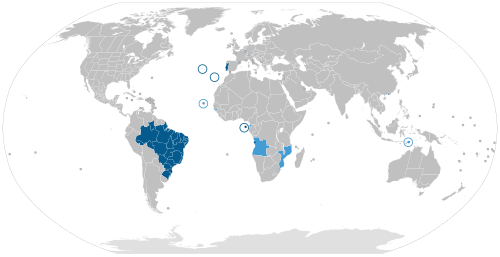
Due to shared language and culture, Macau maintains intimate relationships with Portuguese-speaking nations. These ties are formalized through various channels, including the annual International Commercial Conference for Portuguese-speaking countries. The Macau Trade and Investment Promotion Institute (IPIM) has established numerous cooperation protocols with commercial associations and organizations in Brazil and Mozambique.
Key collaborating organizations include the Portuguese Commercial Association in Macau, the Portuguese Business Centre in Asia, the Forum dos Empresarios de Lingua Portuguesa, the Câmara de Comércio e Industria Luso-Chinesa, the Portuguese Business Association, and the Portuguese Trade Commission.
Forum for Economic & Trade Cooperation
To strengthen economic development between Chinese- and Portuguese-speaking nations, the Central Government of the People's Republic of China established the Economic Co-operation Forum between China and Portuguese-speaking Countries. With the Macau SAR government serving as the event coordinator, this non-political forum is held every three years, with the inaugural event taking place in Macau in October 2003.
The Lusofonia Games
Cultural and athletic cooperation is spearheaded by the Association of the Portuguese Speaking Olympic Committees (ACOLOP), founded in Lisbon on June 8, 2004. As a founding member, Macau hosted the first Lusofonia Games from October 7 to 15, 2006. This event served to reinforce friendship among member nations and bolster Macau's sport tourism industry.
| Full Members | Associate Members |
|---|---|
| Angola, Brazil, Cape Verde, Guinea-Bissau, Macau, Mozambique, Portugal, East Timor, São Tomé and Príncipe | India, Sri Lanka, Equatorial Guinea |
Macau ASEAN International Chamber of Commerce
Macau also extends its reach to Southeast Asia through the Macau ASEAN International Chamber of Commerce. This body aims to protect the rights of its members while utilizing Macau as an international platform to unite entrepreneurs from ASEAN, China, Hong Kong, and Macau. The Chamber promotes cooperation in trade, science, technology, education, sports, and culture.
The Chamber collaborates with consulates from ten ASEAN nations—Brunei, Cambodia, Indonesia, Laos, Malaysia, Myanmar, Philippines, Singapore, Thailand, and Vietnam—to establish themed ASEAN exhibition areas in Hong Kong and Macau.
Relations with the European Union
Macau's relationship with the EU is governed by a Trade and Co-operation Agreement signed on December 14, 1992, which took effect on January 1, 1993. This agreement focuses on industrial, scientific, and technical cooperation, overseen by a Joint Committee that meets annually.
The EU supports Macau's high degree of autonomy and the "one country, two systems" principle, which preserves Macau's distinct cultural and economic identity. To facilitate this, the Macau SAR maintains an Economic and Trade Office (METO) accredited to the EU.
Key EU Milestones and Trade
- Visa-Free Access: Granted to Macau SAR passport-holders on April 10, 2001.
- Legal Cooperation: The EU-Macau Cooperation in the Legal Field Project began on December 3, 2002, providing training for legal practitioners.
- Readmission Agreement: Signed on October 13, 2003, in Luxembourg.
Economically, the EU is a vital partner. In 2002, bilateral trade reached €1 billion, with Macau maintaining a trade surplus of €382 million. By 2003, the EU was Macau's third-largest trading partner, absorbing 23% of its exports.
Relations with the United States
The United States recognizes Macau's autonomy and treats it as a special area distinct from mainland China. Cooperation focuses on bilateral trade, law enforcement, and academic exchanges.
Security and Intellectual Property
Following the events of September 11, Macau aligned with global anti-terrorism efforts, passing an anti-terrorism law in April 2002 consistent with UN Security Council Resolution 1373. Additionally, Macau improved its Intellectual Property Rights (IPR) enforcement, leading to its removal from the USTR's Special 301 list in 2002.
Trade and the Gaming Industry
The U.S. has historically been Macau's second-largest trading partner. In 2002, U.S. exports to Macau were US$79 million, while imports from Macau totaled US$1.2 billion. A significant shift occurred in February 2002 when the government ended the 40-year gaming monopoly of the Sociedade de Turismo e Diversões de Macau (STDM).
The subsequent awarding of gaming concessions to consortia with U.S. interests has transformed Macau into a family-oriented holiday and convention destination. This restructuring is expected to bring medium-term investments of US$1.5-2.5 billion, significantly increasing the U.S. business profile in the region.
Key Facts
- Lusophone Hub: Macau hosts the Economic Co-operation Forum between China and Portuguese-speaking Countries every three years.
- EU Trade: Bilateral trade with the EU reached €1 billion in 2002, with the EU absorbing 23% of Macau's exports in 2003.
- US Trade: The US was Macau's second-largest trading partner in 2002, with imports from Macau reaching US$1.2 billion.
- Gaming Shift: The end of the STDM monopoly in 2002 opened the door for significant US investment in the gaming sector.
- Diplomatic Status: Both the EU and US recognize Macau's high degree of autonomy and treat it as a separate entity for trade purposes.
Frequently Asked Questions
What is the purpose of the Economic Co-operation Forum between China and Portuguese-speaking Countries?
It is a non-political platform established to strengthen economic cooperation and development between China and Portuguese-speaking nations, with Macau serving as the coordinator.
How does the EU view Macau's political status?
The EU supports Macau's high degree of autonomy and the "one country, two systems" framework, which ensures the territory's specific social, economic, and cultural identity.
What led to Macau's removal from the USTR's Special 301 list?
Macau was removed in 2002 after strengthening its intellectual property rights laws, tightening controls on DVD and VCD manufacturing, and increasing street-level enforcement.
What was the impact of ending the STDM gaming monopoly?
Ending the monopoly in 2002 allowed the government to award concessions to new consortia, including those with significant U.S. investment, aiming to turn Macau into a world-class gaming and family holiday destination.
Which countries participated in the first Lusofonia Games?
Participants included Angola, Brazil, Cape Verde, Guinea-Bissau, Macau, Mozambique, Portugal, East Timor, and São Tomé and Príncipe, with India, Sri Lanka, and Equatorial Guinea as associate members.