
Macropodidae: Anatomy, Digestion, and Evolutionary Adaptations
The family Macropodidae, which includes kangaroos and wallabies, represents a remarkable example of evolutionary specialization. Derived from the Greek for "large foot," these marsupials have developed unique physiological and anatomical traits that allow them to thrive in the challenging environments of Australia, where soil fertility is low and rainfall is unpredictable.
Key Facts
- Diet: Primarily herbivorous grazers and browsers.
- Locomotion: Use elastic strain energy in tendons to hop efficiently.
- Digestion: Complex foregut fermentation with lower methane emissions than ruminants.
- Reproduction: Give birth to underdeveloped young weighing less than 1 gram.
- Dental Feature: Molars are replaced in pairs as the animal ages.
Dental Structure and Diet
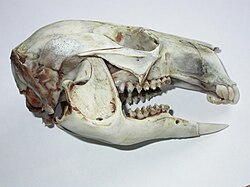
While some ancient kangaroos were omnivorous, modern macropods are generally herbivorous. Most are grazers, meaning they feed on grasses and sedges, while some are browsers. Their mouths are characterized by a broad, straight row of cutting teeth at the front, an absence of canine teeth, and a gap before the molars.
The molars of macropods are particularly unusual. Rather than appearing all at once, they emerge in pairs at the back of the mouth as the animal ages. Because the abrasive nature of grasses wears these teeth down, they eventually fall out. Most species possess four molars; once the final pair is worn away, the animal can no longer process food and will starve to death. The dental formula for macropods is 3.0–1.2.4 1. 0 0 0 .2.4.
Early members of the Macropodiformes possessed plagiaulacoids (specialized blade-like premolars), but these evolved into standard molars in more derived species.
Specialized Digestive Systems
To process fibrous plant material, macropods utilize a complex stomach with a first chamber containing a high concentration of bacteria, protozoans, and fungi. This process is similar to the ruminant systems found in Northern Hemisphere animals like cattle and sheep, though the anatomical organization differs.
One significant advantage of the macropod gut is its ability to degrade lignocellulosic material (tough plant fibers) with relatively low methane emissions. This efficiency is attributed to shorter retention times of particulate digesta in the foregut, which prevents the establishment of high levels of methanogenic archaea. In the tammar wallaby (Notamacropus eugenii) and eastern grey kangaroo (M. giganteus), metagenomic analysis shows a prevalence of bacteria from the phyla Bacillota, Bacteroidota, and Pseudomonadota. Specifically, the Succinivibrionaceae family within Pseudomonadota may contribute to these lower methane levels.
Anatomy and Locomotion
Macropods are defined by their powerful hind legs and long, muscular tails. Their hind feet are long and narrow with a specific toe arrangement: the fourth toe is the largest and strongest, the fifth is moderately strong, the second and third are fused, and the first is typically absent. Their front legs are short with five separate digits, and some species possess seven carpal bones instead of the usual eight.
The "kangaroo hop" is a masterpiece of biological engineering. Macropods store elastic strain energy in their tendons, meaning the spring action of the tendons provides most of the energy for each hop, reducing the need for muscular effort. The primary limit to their leaping ability is the structural strength of the joints and tendons rather than muscle power.
Furthermore, hopping is synchronized with breathing. The act of pushing off the ground helps expel air from the lungs, while landing replenishes them. This synergy makes high-speed travel energy-efficient, requiring only a minimal increase in effort as speed increases. This efficiency is especially vital for females carrying heavy pouch young.
Reproduction and Development
Most macropod species follow a polygynous mating system and produce a mating plug after copulation. Gestation is brief, lasting approximately one month, though it is slightly longer in larger species.
The offspring are born in an extremely underdeveloped state, typically weighing less than 1 gram. After birth, the joey crawls into the forward-opening pouch and attaches to one of four teats. The young remain in the pouch for five to 11 months and are fully weaned two to six months after leaving. Sexual maturity is generally reached between one and three years of age.
| Feature | Description |
|---|---|
| Dietary Class | Herbivorous (Grazers and Browsers) |
| Locomotion | Saltatory (Hopping) via elastic tendons |
| Digestive Type | Foregut fermentation (Low methane) |
| Birth Weight | Less than 1 gram |
| Pouch Duration | 5 to 11 months |
Frequently Asked Questions
Why do kangaroos produce less methane than cows?
Macropods have anatomical differences in their digestive systems that result in shorter retention times for food in the foregut. This prevents methanogenic archaea from establishing large populations, leading to lower methane emissions.
How does the "spring" action in a kangaroo's leg work?
Kangaroos store elastic strain energy in their tendons. When they land, the tendons stretch and then recoil, providing "free" energy for the next hop and reducing the amount of muscular effort required.
What happens when a macropod's teeth wear down?
Because macropods replace their molars in pairs as they age, they eventually run out of teeth. Once the final pair of molars is too worn to function, the animal can no longer eat and will starve to death.
How long does a joey stay in the pouch?
A joey typically stays in the mother's pouch for five to 11 months before venturing out, and it is usually weaned another two to six months after that.
How does hopping assist with breathing?
The physical movement of hopping acts as a pump; pushing off the ground helps expel air from the lungs, while the landing phase helps pull fresh air back in, increasing overall energy efficiency.