
Maine Road: The History of Manchester City's Former Home
For eight decades, Maine Road served as the heart of Manchester City Football Club. From its inception in the 1920s to its final whistle in 2003, the stadium was more than just a pitch; it was a venue of record-breaking crowds, wartime solidarity, and architectural evolution. Located in Moss Side, the ground witnessed the club's highest peaks and deepest challenges before the team transitioned to the City of Manchester Stadium.
The Decision to Move and Early Construction
The journey to Maine Road began in May 1922. Manchester City sought to leave their Hyde Road ground, which lacked expansion space and had suffered a severe fire in its main stand in 1920. While fans initially favored a move to Belle Vue in east Manchester, the 8-acre site and a short fifty-year lease were deemed insufficient. Backed by manager Ernest Mangnall, the club instead chose a 16.25-acre former brickworks in south Manchester.
The site was purchased for £5,500. Interestingly, the road was originally called Dog Kennel Lane but was renamed Maine Road in the 1870s at the request of the Temperance movement. Construction took 300 days at a cost of £100,000, resulting in a ground with one covered stand for 10,000 spectators and uncovered terracing on the remaining three sides.
Local lore suggests the stadium was cursed by a Gypsy after a camp was evicted during construction—a curse allegedly removed on December 28, 1998—though historians view this as a common urban myth found in many Football League grounds.
Record-Breaking Years and Peak Capacity
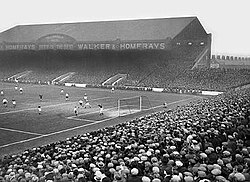
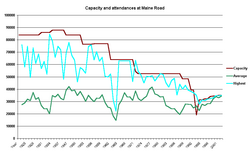
Maine Road opened on August 25, 1923, with a 2–1 victory over Sheffield United in front of 58,159 fans. The stadium's capacity grew through various renovations, most notably in 1931 and 1935. By 1935, the peak capacity was estimated at 88,000.
On March 3, 1934, Maine Road set a historic milestone. A crowd of 84,569 attended an FA Cup sixth-round match against Stoke City, marking the highest attendance for an English club playing at its own stadium for a domestic match. The game, won 1–0 by City, featured legends such as Frank Swift, Matt Busby, and Stanley Matthews.
Wartime Sharing and the Post-War Era
Following the Second World War, Maine Road became a symbol of cooperation between Manchester's rivals. Because Old Trafford had been damaged during the Manchester Blitz, Manchester United shared Maine Road, paying £5,000 per season plus a share of gate receipts. This era saw a national league record attendance of 83,260 for a United vs. Arsenal match on January 17, 1948.
In the 1950s, the ground continued to evolve. Floodlights were installed in 1953, and in 1957, the side facing the Main Stand was redeveloped and named The Kippax after a nearby street. The Kippax eventually became the epicenter of the club's most passionate supporters.
Modernisation and the Taylor Report
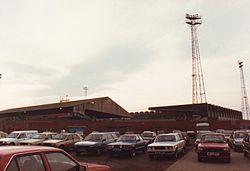
The late 20th century brought a shift toward safety and comfort. Following the Taylor Report—a government inquiry into stadium safety—Maine Road had to transition to an all-seater venue. This led to the demolition of the Platt Lane stand in 1992, replaced by the all-seater Umbro Stand (later renamed the Platt Lane Stand in 1997).
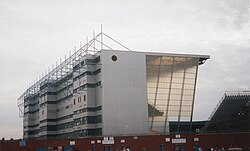
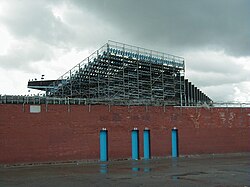
The era of standing ended on April 30, 1994. The Kippax Street Terrace, which held 18,300 people, was replaced by a three-tier stand costing £16 million. Upon completion in October 1995, it was the tallest stand in the country. Despite these upgrades, the ground's haphazard development meant all four sides differed in height and style.
The Final Whistle and Legacy
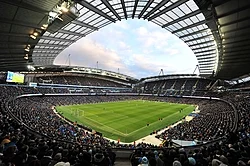
Plans to expand the stadium to 45,000 seats were eventually abandoned in favor of moving to the City of Manchester Stadium, built for the 2002 Commonwealth Games. The final competitive match took place on May 11, 2003, a 1–0 loss to Southampton. The last goal ever scored at the stadium was by Michael Svensson.
A poignant moment in the stadium's final days was the goal scored by Marc-Vivien Foé on April 21, 2003. Tragically, Foé passed away on June 26, 2003, due to an undetected heart condition while playing for Cameroon.
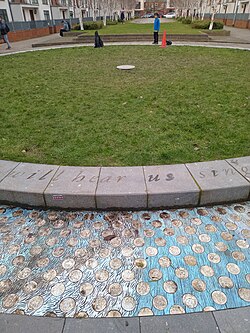
After the club departed, an auction of fixtures raised £100,000 for community projects in Moss Side. The stadium was demolished in late 2003 and replaced by a housing development of 474 homes. Today, a public art display marks the site of the former centre spot.
Key Facts
- Opening Date: August 25, 1923.
- Record Attendance: 84,569 (vs. Stoke City, 1934).
- Peak Capacity: Estimated at 88,000 in 1935.
- Notable Feature: The Kippax Stand, once the tallest stand in England.
- Closure: May 2003, moving to the City of Manchester Stadium.
- Post-Stadium Use: Now a residential area with 474 homes.
| Feature | Detail |
|---|---|
| Location | Moss Side, Manchester |
| Construction Cost | £100,000 |
| Total Land Area | 16.25 acres |
| Final Competitive Match | May 11, 2003 (vs. Southampton) |
| All-Seater Transition | Completed May 1994 |
Frequently Asked Questions
Why did Manchester City leave Hyde Road?
The club left Hyde Road because there was no room for expansion and the main stand had been severely damaged by a fire in 1920.
What was the record attendance at Maine Road?
The record home attendance for a domestic match was 84,569, set during an FA Cup match against Stoke City on March 3, 1934.
Why did Manchester United play at Maine Road?
Manchester United shared the stadium after the Second World War because their own ground, Old Trafford, had been damaged during the Manchester Blitz.
What happened to the stadium after Manchester City moved?
The stadium was demolished in late 2003, and the site was redeveloped into a housing estate consisting of 474 homes.
What was the Taylor Report's impact on Maine Road?
The Taylor Report mandated that stadiums become all-seater for safety, leading to the demolition of the Platt Lane and Kippax terraces and their replacement with seated stands.