
Makauwahi Cave Reserve: A Geological and Biological Time Capsule
Located on the island of Kaua'i, the Makauwahi Cave Reserve is a site of extraordinary geological and biological significance. The reserve features a unique sinkhole paleolake—an ancient lake—formed within a cave of eolianite limestone (limestone created from wind-blown sand). This natural formation has preserved a sedimentary record spanning nearly 10,000 years, offering a rare window into the environmental history of the Hawaiian Islands.
Excavations at the site have yielded a wealth of data, including pollen, seeds, diatoms (single-celled algae), invertebrate shells, and Polynesian artifacts. Most notably, the cave has provided thousands of bird and fish bones, allowing researchers to reconstruct the ecosystem as it existed both before and after human arrival.
Key Facts
- Geological Uniqueness: The site is a sinkhole paleolake formed in eolianite limestone.
- Temporal Record: Contains nearly 10,000 years of sedimentary history.
- Avian Loss: Remains of 40 bird species were found; 50% are now extinct.
- Botanical Insights: Proved that kou and hala trees were native to the islands prior to human settlement.
- Rewilding Effort: Sulcata tortoises are used as ecological substitutes for extinct giant flightless ducks.
Documenting Ecological Transformation
The sedimentary layers of Makauwahi document the drastic ecological shifts that occurred following human colonization. The record tracks the arrival of Polynesians, and later Europeans and Asians, who introduced a variety of invasive species. These include feral pigs, dogs, and cats, as well as Norway rats, Asian tiger mosquitoes, and the Indian mongoose.
This influx of non-native species led to the extinction of numerous native birds. However, the cave has also corrected previous botanical assumptions. Plants such as kou (Cordia subcordata) and hala (Pandanus tectorius), once thought to be Polynesian introductions, have been found in layers predating human arrival, proving they are indigenous to the islands.
The Lost Species of Kaua'i
The reserve is a treasure trove for paleontology, particularly regarding the group Anatidae (ducks and geese). Researchers discovered giant flightless species, including the Kaua'i mole duck (Talpanas lippa) and the turtle-jawed moa-nalo (Chelychelynechen quassus).
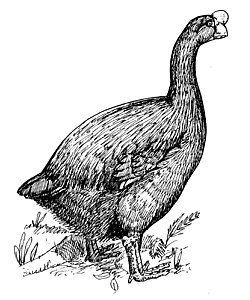
Beyond the giant ducks, other extinct avian remains include the Kaua'i palila, the Kaua'i o'o, the Kaua'i Stilt-owl, the Wahi grosbeak, and the Hoopoe-billed 'akialoa. The site also holds records of the locally extinct Hawaiian hawk and laysan teal. Non-avian losses are also evident, with the discovery of the beetle Blackburnia burneyi and several species of Carelia snails.
Endemic Cave Fauna
Some species are so specialized that they are found almost exclusively within this environment. The Kaua'i cave wolf spider and the Kaua'i cave amphipod are known only from the caves of Kaua'i and a few nearby lava tubes.
Conservation and Modern Recovery
Today, the reserve is active in restoration and Pleistocene rewilding—the practice of introducing modern analogues to fill the ecological roles of extinct prehistoric animals. To control invasive weeds like Paederia foetida and Mimosa pudica, the park maintains an enclosure of seventeen African Sulcata tortoises, which mimic the grazing habits of the extinct giant flightless ducks.
Efforts to replant native trees, such as Kokia kauaiensis and various Pritchardia species, are underway. Many endangered birds are returning to the area, including the nēnē (Hawaiian goose), the Hawaiian duck, and the Hawaiian stilt. The reserve also provides critical habitat for migratory shorebirds like the Pacific golden plover and coastal residents such as green sea turtles and Hawaiian monk seals.
| Category | Notable Species/Examples | Status |
|---|---|---|
| Extinct Birds | Turtle-jawed moa-nalo, Kaua'i mole duck, Wahi grosbeak | Extinct |
| Returning Birds | Nēnē, Hawaiian gallinule, Hawaiian coot | Endangered/Recovering |
| Endemic Invertebrates | Kaua'i cave wolf spider, Kaua'i cave amphipod | Rare/Endemic |
| Native Plants | Kou, Hala, Kokia kauaiensis | Indigenous |
| Coastal Wildlife | Hawaiian monk seals, Green sea turtles | Present |
Frequently Asked Questions
What makes the geology of Makauwahi Cave unique?
It is a sinkhole paleolake formed within eolianite limestone, which has allowed for the preservation of a nearly 10,000-year sedimentary record.
Which extinct birds were discovered at the site?
Key discoveries include giant flightless ducks and geese like the turtle-jawed moa-nalo and the Kaua'i mole duck, as well as the Kaua'i o'o and the Wahi grosbeak.
How are Sulcata tortoises helping the reserve?
They serve as a Pleistocene rewilding substitute for extinct giant flightless birds, helping to control invasive weed species through grazing.
What did the cave reveal about native Hawaiian plants?
The cave provided evidence that kou and hala trees existed on the islands before human settlement, contradicting the previous belief that they were introduced by Polynesians.
Which invasive species contributed to the ecological changes?
The introduction of feral pigs, dogs, cats, Norway rats, Asian tiger mosquitoes, and the Indian mongoose led to drastic ecological shifts and numerous extinctions.