
Manila Broadcasting Company: A History of Philippine Radio and Media
The Manila Broadcasting Company (MBC) stands as a cornerstone of the Philippine media landscape. From its humble beginnings as a department store's radio venture to its evolution into the diversified MBC Media Group, the company has mirrored the political and cultural shifts of the Philippines for over eight decades.
The Heacock Era and Early Origins
The roots of MBC trace back to July 15, 1939, when the Heacock Company—a prominent department store located on Escolta Street in Binondo, Manila—launched station KZRH. The company expanded its reach by acquiring KZRC (now DYRC) from Isaac Beck in Cebu City. However, this early era was interrupted by World War II, during which Japanese forces seized the stations, renaming KZRH as PIAM (Philippine Islands AM) to serve as a propaganda tool.
The Birth of MBC and the Rise of DZRH
Following the war, the Elizalde brothers—Federico "Fred," Joaquin Miguel "Mike," and Manuel "Manolo"—took control of KZRH and KYRC. Under the guidance of station manager Bertrand Silen, operations moved to the Insular Life Building in Plaza Cervantes. On June 12, 1946, the brothers officially established the Manila Broadcasting Company.
The network saw a rapid return to the airwaves on July 1, 1946, with the return of KZRH and the launch of KZMB. Just days later, on July 4, 1946, MBC provided live coverage of the inauguration of the third Philippine Republic and the nation's independence from the United States.
In 1948, following an international telecommunications conference in the U.S., the Philippines changed its first-letter callsign prefix to "D." Consequently, KZRH became DZRH, expanding to over 30 stations nationwide, and KZMB became DZMB.
The late 1940s and 1950s marked a period of innovation and growth. In 1949, DZRH aired the first radio drama, Gulong ng Palad, and MBC launched DZPI (later renamed DWIZ in 1972). By 1956, MBC moved to its own Radio Center on Taft Avenue in Ermita, Manila, coinciding with the "golden years" of AM radio popularity.
Navigating the Marcos Era and Martial Law
MBC expanded into television on April 11, 1962, launching DZRH-TV on VHF channel 11 via its subsidiary, the Metropolitan Broadcasting Company. A dedicated building for the station was inaugurated on January 9, 1972, with President Ferdinand Marcos in attendance.
However, the political climate shifted abruptly in September 1972 when President Marcos declared martial law, leading to the temporary closure of MBC for several months.
By 1975, the company pivoted toward the FM band. DZMB and other music-oriented AM stations, such as DYBU in Cebu, transitioned to FM, creating the foundation for what would eventually become the Love Radio Network.
Expansion and Modernization
In 1985, Fred J. Elizalde succeeded his father, Manolo, as chairman and CEO. Following the 1986 People Power Revolution, MBC aggressively expanded the Love Radio Network while maintaining DZRH's nationwide presence. Ruperto Nicdao, Jr. joined the board in 1988 and later served as president.
The 1990s brought significant technological leaps. In 1994, DZRH became the first station to utilize nationwide satellite broadcasting, rebranding as "One Nation, One Station." In 1997, MBC launched Radyo Natin, utilizing state-of-the-art satellite technology to reach 100 FM stations across the country, accessing previously unreachable audiences.

The company also diversified its portfolio through acquisitions and new brands. In 1995, it acquired DWKS-FM, which became 101.1 Showbiz Tsismis (DWST) before relaunching as Yes FM in 1998. In 2009, DWRK was relaunched as Easy Rock. While Hot FM was launched in 1999 across several major cities, it was unofficially phased out by 2017, with most stations rebranding to Radyo Natin.
Challenges and the Transition to MBC Media Group
MBC's journey has not been without setbacks. In 1992, the National Telecommunications Commission denied the application for DZRH-TV to operate, leading to the channel's eventual acquisition by ZOE Broadcasting Network. Later, on October 2, 2019, a major fire originating from the nearby Star City theme park damaged MBC's main offices and studios.
During the recovery period, operations were temporarily moved to the BSA Twin Towers in Mandaluyong and later to the Design Center of the Philippines.
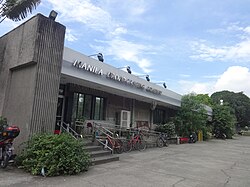
On November 15, 2021, MBC returned to its renovated building at the Star City Complex and introduced the corporate slogan Sama-Sama Tayo, Pilipino!
The most recent evolution occurred on February 6, 2024, when the company adopted the trade name MBC Media Group. While retaining MBC as the corporate name, this rebranding signals a shift toward diversification into digital media, talent management, promotions, and events.
Key Facts
- Founded: June 12, 1946 (as Manila Broadcasting Company).
- Flagship Station: DZRH, which began as KZRH in 1939.
- Major Networks: Love Radio, Yes FM, Easy Rock, and Radyo Natin.
- First Radio Drama: Gulong ng Palad (1949).
- Technological Milestone: First nationwide satellite broadcast in 1994.
- Current Trade Name: MBC Media Group (adopted February 2024).
| Original/Former Name | Current/Final Name | Key Transition Year |
|---|---|---|
| KZRH | DZRH | 1948 |
| KZMB | DZMB | 1948 |
| DZPI | DWIZ (sold 1991) | 1972 |
| DWKS-FM | Yes FM | 1998 |
| DWRK | Easy Rock | 2009 |
Frequently Asked Questions
When was the Manila Broadcasting Company officially established?
The Manila Broadcasting Company was officially established on June 12, 1946, by the Elizalde brothers.
What is the significance of the name change to MBC Media Group?
Adopted on February 6, 2024, the name MBC Media Group signifies the company's diversification beyond traditional broadcasting into digital media, events, promotions, and talent management.
How did the 2019 fire affect MBC's operations?
A fire originating from Star City on October 2, 2019, damaged MBC's main offices. This forced the company to move operations temporarily to the BSA Twin Towers and the Design Center of the Philippines before returning to a renovated building in 2021.
What was the first radio drama aired by DZRH?
The first radio drama aired by DZRH was Gulong ng Palad, which premiered in 1949.
Which network allows MBC to reach the most remote areas of the Philippines?
Radyo Natin, launched in 1997, uses satellite technology to operate 100 FM stations strategically across the nation to reach underserved audiences.