
Margaret Bright Lucas: A Pioneer of Temperance and Women's Rights
Margaret Bright Lucas was a formidable figure in the 19th-century reform movements, bridging the gap between British and American social activism. A devout Quaker, Lucas dedicated her life to the cause of temperance—the movement advocating for the limitation or prohibition of alcoholic beverages—and the fight for women's suffrage. Her journey from a supportive spouse to a global leader in social reform illustrates the evolving role of women in public life during the Victorian era.
Early Life and Family Foundations
On September 6, 1839, Margaret married her cousin, Samuel Lucas, a London corn exchange merchant and fellow Quaker. The couple's life was marked by several moves, relocating to Manchester in 1845 for Samuel's involvement in a cotton mill before returning to London in 1850. During their time in Manchester, Margaret first encountered political activism through the anti-corn law protests of 1845, where she assisted her husband in organizing meetings and securing finances.
Despite her early interest in politics, Margaret's primary responsibilities remained centered on her family until Samuel's death in 1865. She raised two children: Katharine, who later married MP John Pennington Thomasson, and Samuel, who was a deaf mute.
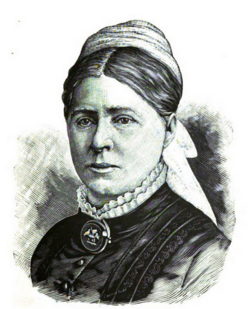
The American Influence and Rise in Activism
Following the marriage of her children by 1870, Lucas sought a way to align her life with her Quaker moral ambitions. While recovering from a chest infection in Halifax, Nova Scotia, she connected with a trans-Atlantic network of reformers. Due to her family ties, she was often welcomed by American suffragists and temperance advocates as "John Bright's sister."
This visit to the United States was a turning point. Lucas was inspired by the "less trammelled social system" of America, which she found congenial. Having taken a temperance pledge at age sixteen, she formally joined the American Independent Order of Good Templars in 1872, eventually becoming a grand worthy vice-templar in 1874. This period also saw the influence of "Mother" Eliza Stewart, whose activism helped spark the creation of the Woman's Christian Temperance Union (WCTU) in 1874.
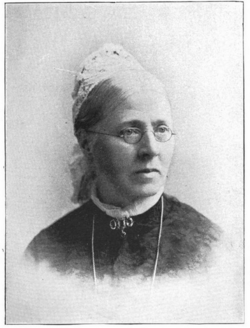
Leading the Temperance and Suffrage Movements
Upon returning to Britain, Lucas became a central figure in organized reform. In 1876, a meeting in Newcastle upon Tyne led to the establishment of the British Women's Temperance Association (BWTA) and the White Ribbon Association. Lucas was elected president of the BWTA in 1878, a position she held until her death.
Expanding the Scope of Reform
While temperance was her primary focus, Lucas was a versatile activist. She served on the executive committees of the Ladies National Association for the Repeal of the Contagious Diseases Acts and the National Society for Women's Suffrage, while also supporting peace initiatives and anti-prostitution work.
Global Leadership
In 1885, Frances Willard, a leader of the American WCTU, appointed Lucas as the first president of the World's WCTU. This appointment signaled the organization's global ambitions. In 1886, Lucas traveled back to the United States to attend the WCTU convention in Minneapolis, further strengthening the Anglo-American reform bond.
Philosophy and Political Strategy
Lucas believed that women possessed a unique moral superiority that could be leveraged within the home to encourage men to abstain from alcohol. However, she was pragmatic about the differences between American and British social protests. While she admired American crusade marches, she believed British women should instead focus on processions, assemblies, and direct lobbying.
In 1879, she achieved a milestone by presenting the first women's petition in favor of Sunday closing to the House of Commons. Over time, Lucas realized that petitions alone were insufficient. By 1883, she concluded that the right to vote was essential for the success of temperance legislation, frequently emphasizing this point during her tenure as president of the Bloomsbury branch of the Women's Liberal Association.
Key Facts
- Role: First President of the British Women's Temperance Association (BWTA) and first President of the World's WCTU.
- Key Achievement: Presented the first women's petition for Sunday closing to the House of Commons in 1879.
- Philosophy: Believed women's moral influence in the home was a primary tool for temperance.
- Political Stance: Advocated for women's suffrage as a necessary means to achieve successful temperance legislation.
- International Link: Acted as a vital connection between British and American reform networks.
| Organization | Role | Year/Period |
|---|---|---|
| American Independent Order of Good Templars | Grand Worthy Vice-Templar | 1874 |
| British Women's Temperance Association (BWTA) | President | 1878–1890 |
| World's WCTU | First President | 1885 |
| Women's Liberal Association (Bloomsbury) | President | Late Career |
Death and Legacy
Margaret Bright Lucas died of tuberculosis on February 4, 1890, at her home in Bloomsbury, London. She was buried alongside her husband in Highgate Cemetery. Contemporaries remembered her as a "tall and stately" woman with a "vigorous" presence and an "earnest" speaking style.
Though the BWTA saw its greatest expansion after her death under Lady Henry Somerset, Lucas remains a pioneer of the movement. In 2007, English Heritage granted listed status to the grave of Margaret and Samuel Lucas in recognition of their contributions to the anti-slavery movement.

Frequently Asked Questions
What was Margaret Bright Lucas's primary goal?
Her primary goal was the promotion of temperance, specifically the reduction or elimination of alcohol consumption, which she believed could be achieved through women's moral influence and legislative change.
How did the United States influence her activism?
Lucas found the American social system more open to reform. Her visits to the U.S. allowed her to join the Independent Order of Good Templars and connect with leaders like Frances Willard, which helped her implement organized temperance strategies in Britain.
Why did she support women's suffrage?
While she began with petitions and lobbying, Lucas eventually concluded that temperance legislation would only be successful if women had the legal right to vote and influence policy directly.
What was the BWTA?
The BWTA stands for the British Women's Temperance Association, an organization Lucas helped found and led as president to advocate for the temperance movement in the United Kingdom.
What other causes did she support?
Beyond temperance, Lucas was active in the women's suffrage movement, peace efforts, and the repeal of the Contagious Diseases Acts, as well as the anti-slavery movement.